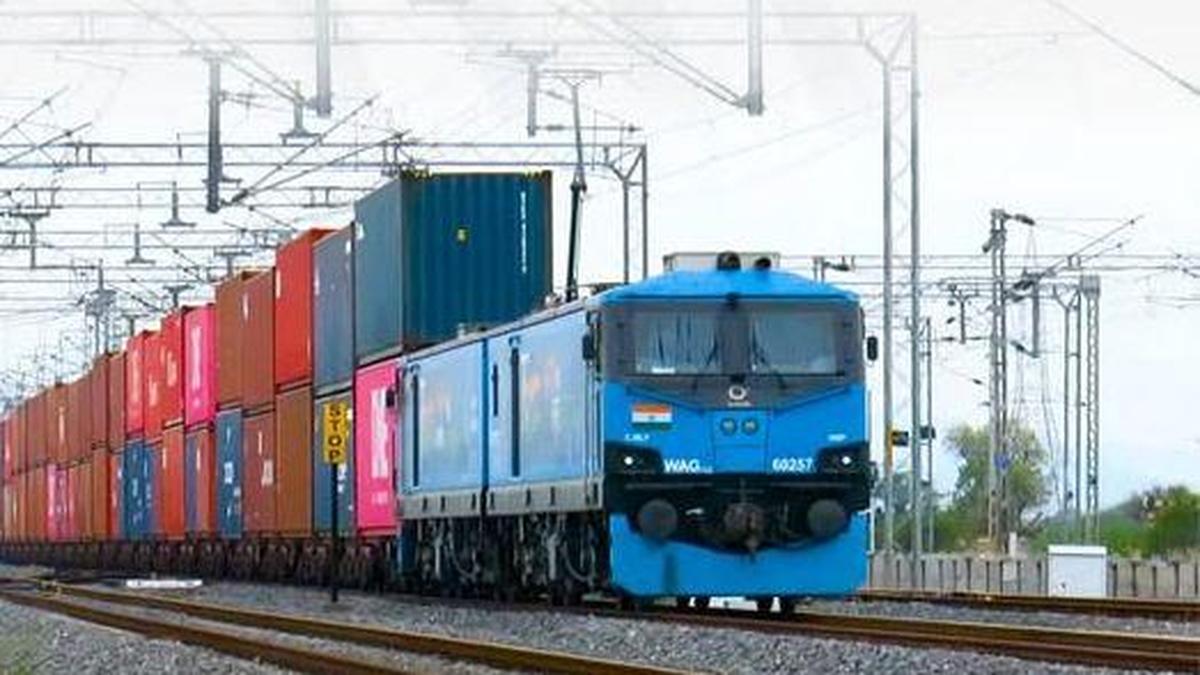
India today manufactures almost every type of railway rolling stock — locomotives, coaches, wagons, metro cars and modern trainsets — in large numbers and at competitive cost. Over decades, the railway manufacturing ecosystem has matured through dedicated Production Units of Indian Railways, PSUs and a large vendor base. Yet, despite this capacity and experience, India remains largely absent from the global market for railway vehicles.
This paradox deserves attention. At a time when the country is aiming to expand its manufacturing exports and position itself as a reliable industrial partner for developing economies, Railway Rolling stocks present a major untapped opportunity.

Across Asia, Africa and Latin America, countries are rapidly expanding rail networks to address urbanisation, energy security and congestion. Many of these nations face the same constraints India faced in earlier decades- limited capital, difficult climatic conditions, heavy passenger loads and mixed-traffic operations. They require reliable and economical solutions rather than the most technologically extravagant ones. This is precisely the segment where India’s experience is most relevant.
Historically, the global railway supply industry has been dominated by a small group of large multinational corporations. Their products are technologically sophisticated but often expensive and maintenance-intensive. For high-income markets this model works well, but for developing and middle-income countries the lifecycle cost and not the purchase price becomes the decisive factor. A train that is cheaper to operate and easier to maintain over 30 years can be more valuable than a more advanced train that requires complex support systems.
India’s railway equipment has evolved under demanding operating conditions- high utilisation, temperature extremes, dust, overloading and diverse track quality. Designs have therefore prioritised robustness, maintainability and operating economy. These characteristics match the needs of emerging railway networks worldwide. In other words, India’s rolling stock is naturally suited to the “Global South” market segment.
However, exporting trains is fundamentally different from manufacturing them for domestic use. International railway procurement does not depend solely on engineering capability. It depends on certification, lifecycle support and long-term institutional confidence. Countries buying trains are effectively entering a 25 to 35 year relationship with the supplier. The purchase therefore becomes not just a commercial transaction but an infrastructure partnership.
The first requirement is alignment with globally recognised technical standards. International tenders generally require compliance with European or international railway safety norms covering structural strength, fire safety and crashworthiness. Indian manufacturers already possess strong engineering competence, but certification to globally recognised standards must become routine rather than occasional. Establishing dedicated certification cells in Quality department to routinely produce Rolling Stocks for international qualification would remove the most common barrier to entry.
The second requirement is appealing aesthetic, ergonomic and user interface facilities designed on sound product development principles. All the touch points of user experience should not only be robust and durable but also providing a comfortable journey experience. The global customer is very discerning in this respect. For this, there is a need to establish exclusive Industrial Design Units in the design departments.
The third requirement is life cycle responsibility. Successful exporters do not merely supply trains; they guarantee performance for decades. This includes after sales support for maintenance, training, spare-parts, remote diagnostics and reliability monitoring. For many countries, assurance of long-term service availability is more important than the train itself. Indian manufacturers must therefore expand from a manufacturing mindset to a service mindset — selling availability rather than hardware.
Another element is coordinated institutional participation. In international infrastructure contracts, engineering capability alone rarely secures orders. Financing arrangements, government cooperation and project management integration often determine outcomes. India already has a strong advantage in this respect through its experience in development partnerships and lines of credit to partner nations. When manufacturing capability is combined with project consultancy and financing support, the offering becomes significantly more attractive.
Equally important is building an export oriented supply chain. Railway vehicles are assemblies of many specialised systems – braking, control electronics, doors, passenger information and air-conditioning. A coordinated vendor ecosystem capable of supporting overseas projects can ensure reliability and faster response. Export success depends not on a single factory but on an integrated industrial network.
There is also a strategic dimension. Railway exports can become an instrument of economic diplomacy. Many developing countries prefer partners who offer technology sharing and training rather than simple equipment supply. India’s long experience in operating and maintaining large public transport networks makes it uniquely positioned to provide this collaborative model. Offering training programs and technical cooperation alongside equipment supply strengthens long-term partnerships.
The global market is increasingly shifting toward suppliers who provide complete mobility solutions rather than standalone products. A train is now expected to come with maintenance planning, digital monitoring and workforce training. By embracing this approach, India can position itself not as a low-cost alternative but as a dependable long-term partner for railway development.
The opportunity is timely. Many countries are planning rail expansion as part of sustainable transport and climate commitments. Electrified railways are among the most energy-efficient transport modes, and demand for affordable systems is likely to grow significantly over the next two decades. Entering this market now would allow India to build presence while demand is expanding rather than after it stabilises.

For India’s manufacturing ambitions, railway exports offer advantages beyond revenue. They stimulate domestic industry, encourage standardisation, improve quality practices and enhance global credibility. Success in this sector would demonstrate that the country can deliver complex engineering systems internationally — an important signal for other infrastructure exports.
The path forward is therefore clear. India must move from building trains only for itself to building trains for partners. This requires designing for international certification, user experience, committing to lifecycle service, integrating consultancy and financing support and promoting coordinated industrial participation.
If approached systematically, Railway Rolling stock could become one of India’s signature engineering exports — much like pharmaceuticals or information technology services in earlier decades. The capability already exists; what remains is the decision to treat trains not merely as domestic infrastructure but as a global opportunity.
(The writer is Ex Addl Member, Railway Board)
Published – March 09, 2026 04:33 pm IST