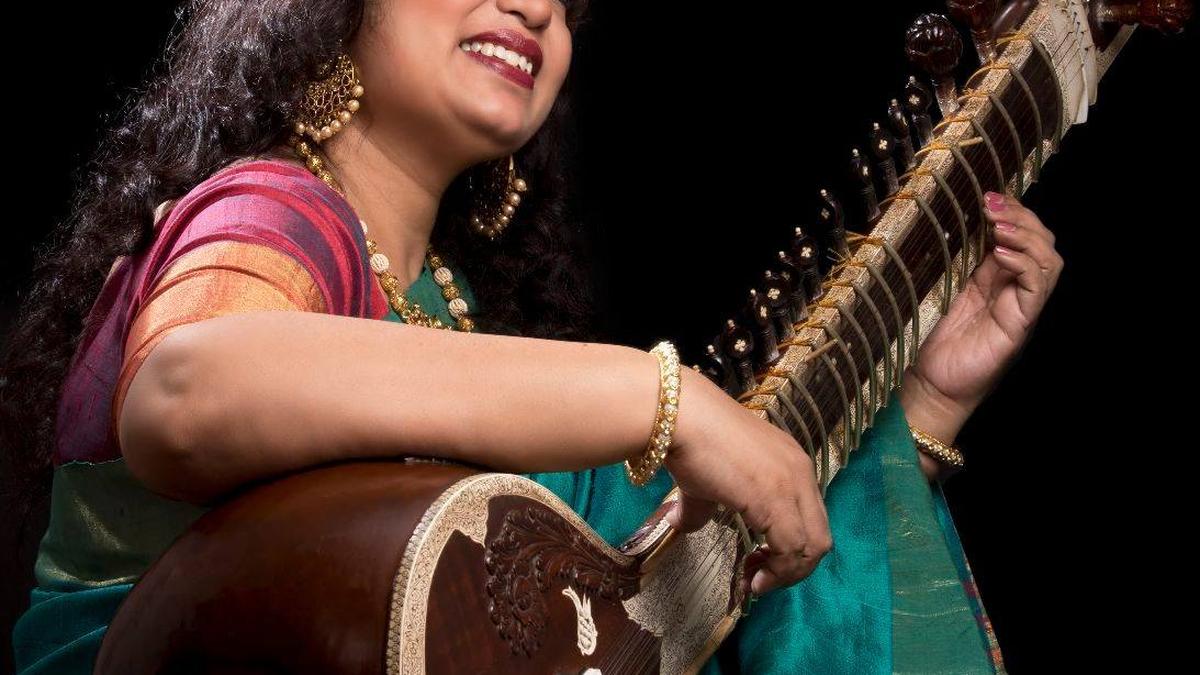

Sitarist Sahana Banerjee
| Photo Credit: Special Arrangement
An ‘Evening of Basant’, aesthetically showcased by the Ramakrishna Mission Institute of Culture at Vivekananda Hall, Kolkata, opened with a recital by well-known sitarist Sahana Banerjee. Interestingly, raag Shahana, the source of her name, represents the spring season, so does her chosen raag Kaushik Dhwani (also known as Bhinna Shadaj in dhrupad parlance). Quite adept at dhrupad ang baaj, thanks to her training in Senia Rampur School, Sahana’s sitar explored the depths of mandra and ati-mandra with plenty of meend-laden phrases. The power behind the sweet flow of melody was palpable, especially in the thhonk taans.
With a graceful uthaan, tabla exponent Ujjwal Bharti joined in the skillful slow and fast teental gatkaris and enhanced their appeal with excellent jawabi sangat. The jhala could have been more gentle.
Two well-tuned tanpuras and a soothing swarmandal transformed the ambience before Supriyo Dutta, flanked by Chiranjit Mukherjee (tabla), Debashis Adhikary (harmonium) along with Debarshi Das and Sudarshan Khatua (tanpura and vocal support) decided to delineate the all-time favourite raag Bihag. Supriyo selected bandishes describing Holi and its hero Krishna for the ‘Basant’ evening. One was happy to note the importance accorded to the lyrics of khayal bandishes.
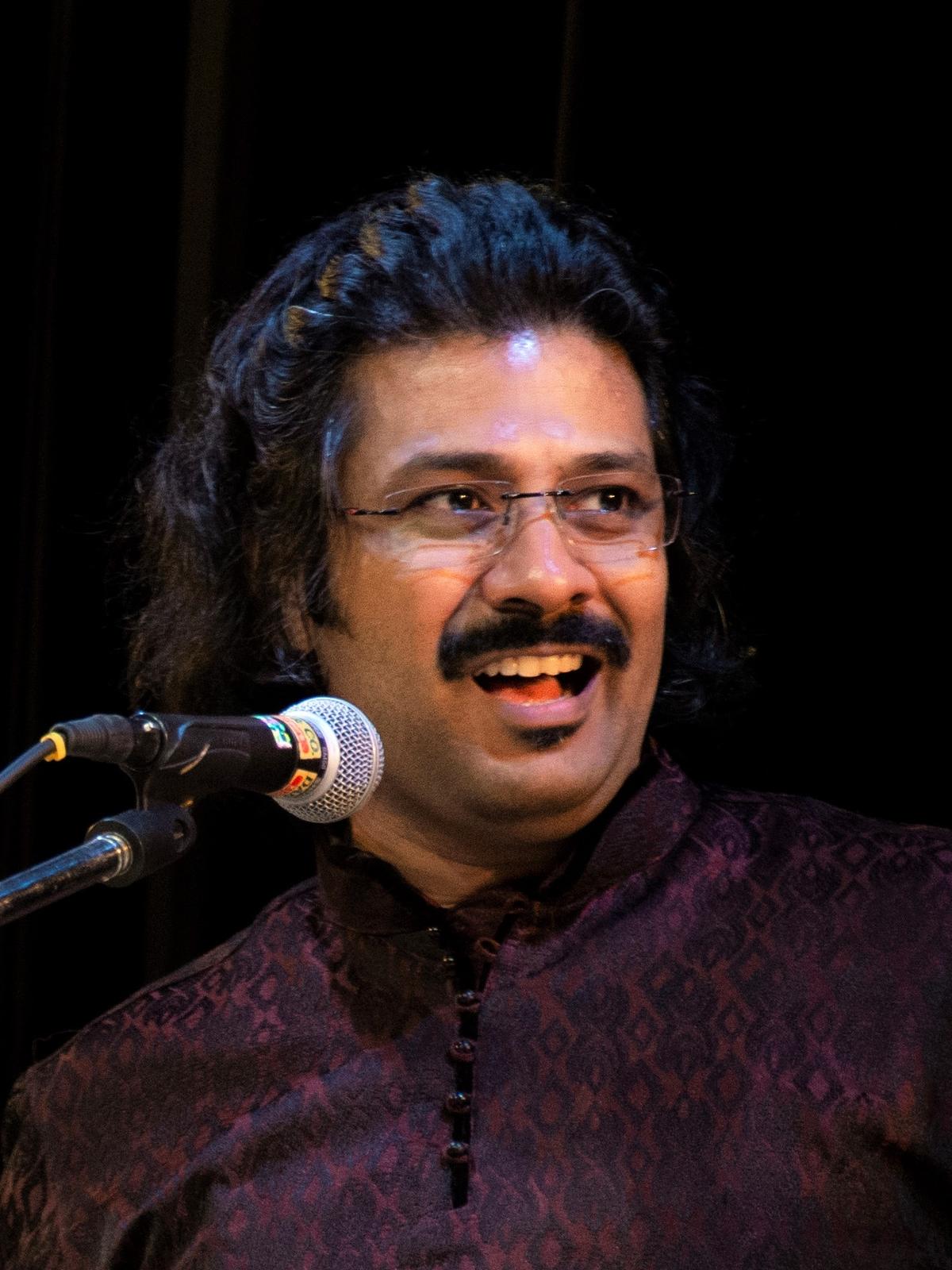
Vocalist Supriyo Dutta
| Photo Credit:
Special Arrangement
Supriyo’s deep, resonant voice is his biggest asset and it brought out the pathos in the Bandish ‘Kaise sukh sove’ set to Jhumra taal. The step-by-step progression facilitated ‘chit chadhi’ that lingered gracefully on the upper tonic. It invited antara which spread its wings and went up to ‘Ma’ with a voice dipped in emotion. The variety of sargam, or extremely fast aakar taans’ thrilling arrival on ‘sam’, maintained its tight pattern till the last beat.
Supriyo’s impeccable rhythm sense inspired Chiranjit to unleash his own skill and the duo revelled in the playful mood of ‘Kanha bhar-bhar mare pichkari’ (Teental). Short sargam pieces, in barabar ki laya, followed by complex and sharp taans exuded joy. Harmonium exponent Debashish Adhikary gave his best when Sahana joined the vocalist’s to offer a Hori jugalbandi, which made for a unique finale. Her pleasingly sitar began the Khamaj phrases, laced with beautiful filler on the harmonium. Supriyo rendition of ‘Pichkari na maro nandlala re’, set to dadra and taal pherta interludes in Keharwa was vibrant. The piece led by Supriyo and Sahana showed what two skilful musicians can do when they come together.
Published – March 13, 2026 05:15 pm IST