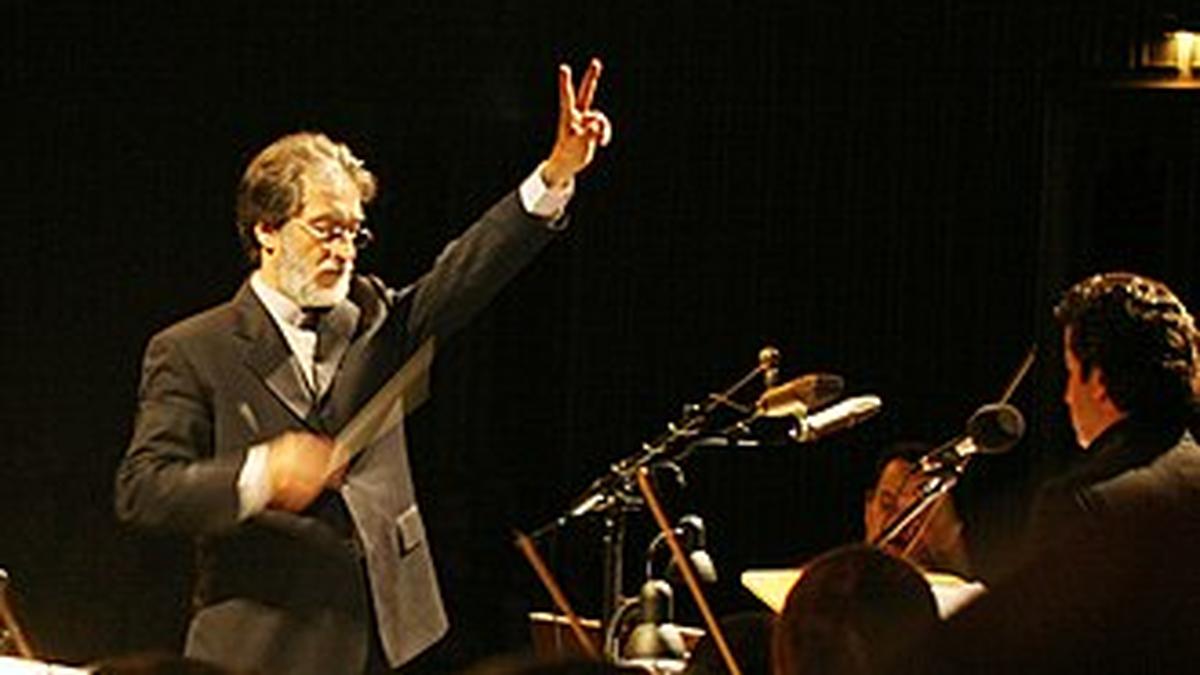
Even as Operation Epic Fury, a joint U.S.-Israel military campaign against Iran, shows no sign of letting up, another ‘Epic’ has sudddenly experienced a surge in popularity. The ‘Epic of Khorramshahr’, which has been trending on social media, particularly Instagram, from early this year, is a monumental symphonic work by Majid Entezami, one of Iran’s most influential contemporary composers. Not just the original composition, but even its remixes are being widely shared.
Entezami crafted this work with sweeping passages of haunting rhythms, powerful melodies and dramatic crescendos in 1982, to commemorate Iran’s liberation after the Iran-Iraq war. He musically chronicled the huge loss of lives and devastation, as well as sacrifices and the spirit of survival in Khorramshahr, a city on the Iran-Iraq border. Because of its narrative quality, the composition is often referred to as a ‘symphony of storytelling’. First conducted by Entezami himself and performed by the Tehran Symphony Orchestra, ‘Epic of Khorramshahr’ was structured in four movements – Uruj (ascension), Ruyesh (flourishing), Omid (hope) and Mukavemet (resistance).
More than four decades after it was composed, this music re-emerged earlier this year during the Iranian protests, and now again amid the current conflict. Over the years, the ‘Epic of Khorramshahr’ has been embraced by Iranians as an anthem of resistance and remembrance. An Instagram post by @museumartof, an independent digital art and museum curation platform, describes it as “the grand scale of history through sound and a pillar of modern classical compositions”. The post adds that “the most enduring monuments are often built not of stone, but of melody, conviction and collective memory”.
Apart from creating over 10 deeply evocative suite symphonies in which Entezami seamlessly blends Iranian mythology and musical elements with western symphonic techniques, he has also composed scores for nearly 80 films including The Cyclist, The Glass Agency, The Fateful Day and From Kharkheh to Rhine. One reason his works are being revisited and widely discussed today is that, in times of conflict, people often seek refuge in art, which is regarded as a healer. This renewed attention also reflects a deeper truth: one of the most devastating fallouts of war is cultural disruption.
Iran’s Golestan Palace, a UNESCO world heritage site, has been severely damaged, while galleries, museums and other cultural venues have closed their doors. While Iran is globally known for its vast oil reserves, it also boasts rich artistic heritage. Its musical tradition, dating back to thousands of years, encompasses the nuanced Persian classical music known as Radif, alongside remarkably diverse regional folk styles.
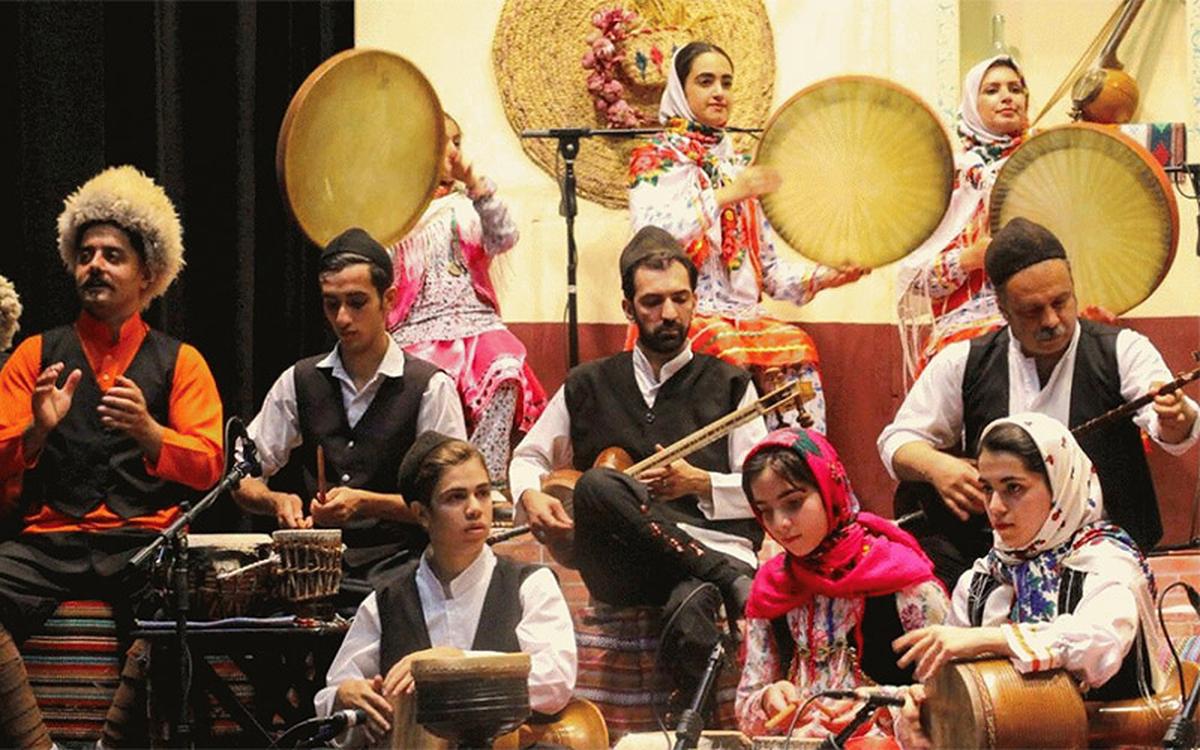
Iran’s musical instruments have influenced the musical landscape of Central Asia and the broader Asian soundscape.
| Photo Credit:
Special Arrangement
Iran’s greatest contribution to the world of music, however, is its instruments. They carry centuries of musical history. The Tar, a six-stringed lute along with the gentle-sounding four-stringed Setar plays a key role in its classical music. The deeply resonant sounds of the Kamancheh, a bowed string instrument, and the Santoor, a hammered dulcimer, add layers of melody. Persian folk traditions are enriched by the Dotar (two-stringed), Oud (a pear-shaped lute) and the Gheychak (fiddle). Iranian musicians also use various kinds of drums including the Tombak (goblet drum) and Daf (frame drum). Together, these instruments have greatly influenced the musical landscape of Central Asia and the broader Asian soundscape.
India’s Hindustani classical music and folk traditions have imbibed many of these elements. For instance, the Sarod traces its lineage to the Persian Rabab. Ustad Amjad Ali Khan, one of its finest exponents, has often highlighted this connection, explaining how the wooden body and gut strings of the Rabab evolved into a metal fingerboard and steel strings to suit the intricate swar-laya patterns of Indian classical performances. Similarly, the Santoor, which became an intrinsic part of Kashmiri folk music was elevated to the classical stage by Pt. Shivkumar Sharma. He refined its tuning and technique to accommodate the complexities of raga-based music. Beyond the classical sphere, instruments such as the Oud and Dotar found echoes in Indian folk traditions, enriching storytelling and devotional practices, just as the Daf and Tombak became integral to qawwali and sufi performances.
Despite such a vast cultural inheritance, in recent years, music turned into a powerful tool of protest in Iran, with artistes using their craft to criticise the authorities for repression and discrimination. Women performers, in particular, have borne the brunt of restrictive policies, often being barred from appearing on stage. Many musicians have been forced to practice and perform underground without official approval. Some of them such as singer-songwriter Shervin Hajipour and rapper Toomaj Salehi even faced arrest. Several musicians chose to leave the country in pursuit of creative freedom, yet continue to create works that preserve the sounds and stories of their homeland.
Internal protest or external aggression, art somehow finds a way to outlive conflict and control.
Published – March 18, 2026 01:20 pm IST