During an interview for the recent Telugu film Paradha, actor Anupama Parameswaran brightened up when asked about the presence of women in director Praveen Kandregula’s unit. “Generally, apart from me and my hairdresser, most of the crew would be men. That isn’t wrong. But, for a film that discusses female friendships, the presence of women in the direction, cinematography, costume and other departments helped an easy exchange of ideas. It was also comforting when I was unwell,” she stated.
Earlier, Shruti Haasan had echoed a similar sentiment while speaking to this journalist in the context of her international film, The Eye, a psychological thriller produced by Melanie Dicks, directed by Daphne Schmon with screenplay by Emily Carlton. Shruti stated that she had been wanting to work with a female director, years after she had worked with Aishwarya Rajinikanth for the Tamil film 3.
“The writer and the director of The Eye knew each other since they were kids. I stepped into a pre-existing sisterhood. It is wonderful when women share stories from a space of empathy,” said Shruti, adding, “When a team of women work together, there is more depth in the storytelling.”
This brings up the larger discussion of gender in film units. Are film units tough spaces for women to navigate, given the long hours of work and the predominantly male workforce?

Merit matters
Puja Kolluru, who is directing the Telugu superhero film Mahakali, remembers the film units she worked with in Los Angeles and Florida, where women constituted nearly 40% of the workforce. An alumnus of Ringling College of Arts and Design, USA, Puja notes, “What made it special was each unit member was selected on merit. There weren’t many women in technical departments like cinematography, but the costume and production design departments had several women.”
Years later, when Puja directed Martin Luther King, the Telugu remake of the Tamil film Mandela, a few women joined her team. On the sets of Mahakali, she has two female assistant directors (ADs), alongside eight male ADs. “I saw the fire in these girls; that was a qualifying metric.”
However, Puja points out that very few women applied to be an AD. “If I received 80 applications from men, there would be just 10 from women. Pre-conceived notions about the film industry makes women reluctant to come forward, but more need to take that first crucial step. As a director, my effort is to make the work experience equitable for all genders.”
Director Praveen Kandregula echoes a similar thought. At the scripting stage as well as on film sets, regardless of whether the story is male or female-centric, he tries to create a workspace where there’s mutual respect between genders. “Art and technique come together in script writing, direction, cinematography, and production design. You need the right people.”
Praveen explains that his choice of Mridul Sen as the director of photography for Subham (Samantha Ruth Prabhu’s maiden production) and Paradha had nothing to do with the fact that both these stories had several female characters. “I chose Mridul because her lensing and sense of light were remarkable in her earlier films. Similarly, for my first film Cinema Bandi I approached Apoorva Anil Shaligram since she had worked on indie films earlier.”
The stereotypes
Praveen observes that one often finds women as assistants in varied departments, though he prefers they lead some of them. Krishna Pratyusha, who contributed to the screenplay of Cinema Bandi, was roped in as script doctor for Paradha, which was written by Poojitha Sreekanti and Prahaas Boppudi.
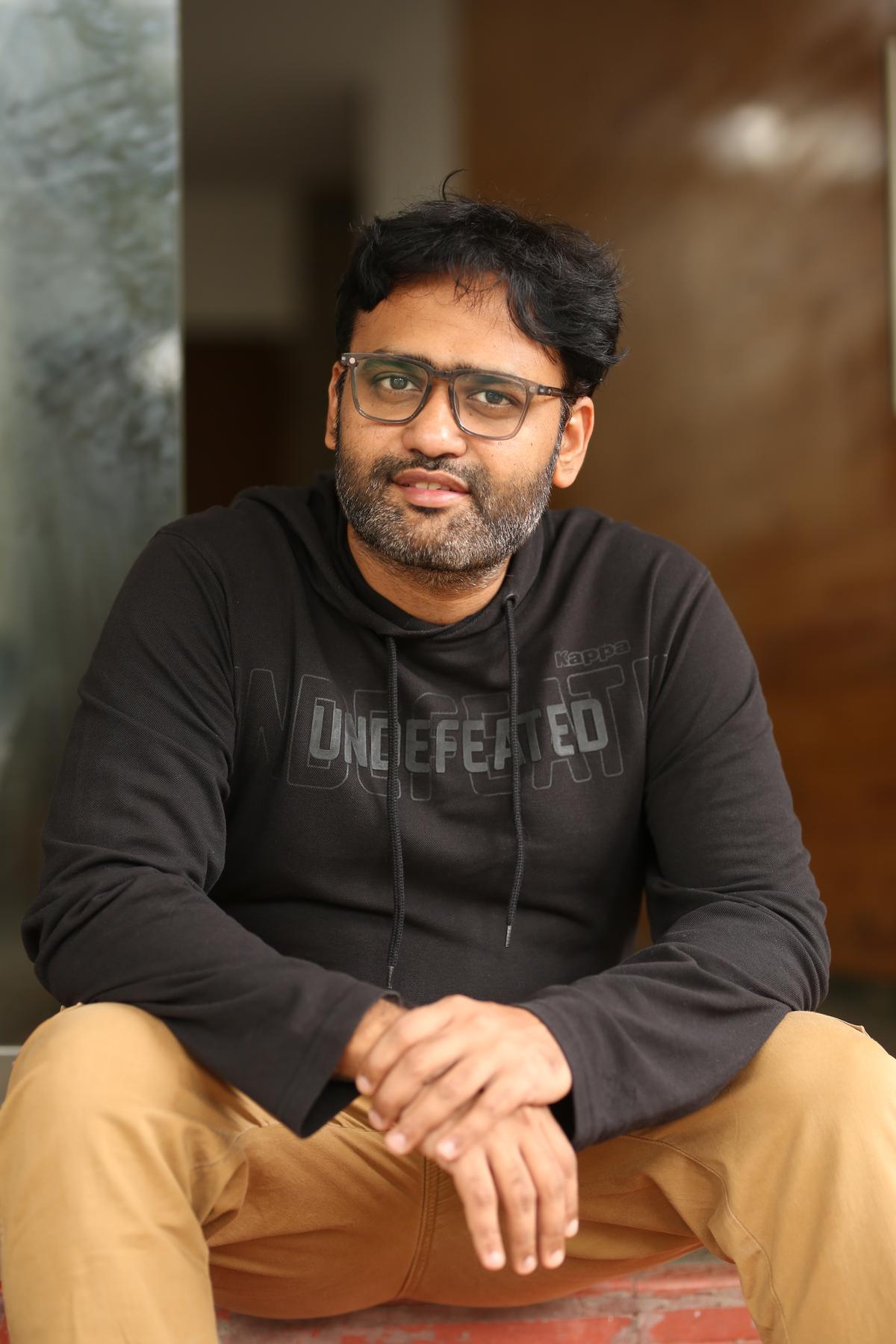
Praveen Kandregula
| Photo Credit:
Special Arrangement
Praveen reiterates that it’s time film units and society look past stereotyping and understand that gender cannot be a determining factor in writing or directing a film.
Some of the most popular examples would be directors Zoya Akhtar and Farah Khan. With Zindagi Na Milegi Dobara and Gully Boy, Zoya broke the notion that female directors lean towards women-centric stories. It was a similar story with Farah’s hugely entertaining Om Shanti Om and Main Hoon Na.
Puja adds, “Mahakali is an action entertainer, and the first female superhero film in the Prasanth Varma Cinematic Universe (the first of which was Hanu-Man). Martin Luther King had a male protagonist. Female writers can bring sensitivity to male characters and male writers can bring in ‘macho-ness’ to female characters. Ultimately, it should benefit the storytelling.”

On ground, there are battles to be won.
Srividya Vanamalai, an engineer-turned-AD who aspires to direct a film, admits that there’s a tendency in film units to limit a female assistant director with the task of coordinating with the costume department. When she was a newcomer on the sets of Vivek Athreya’s Brochevarevarura, she was pleasantly surprised when asked to coordinate with the art and production design department. “There were logistical issues each day, and it was a good learning experience. Initially, it was tough for some people to take instructions from me, but I learnt that when you speak with respect, it is reciprocated.”
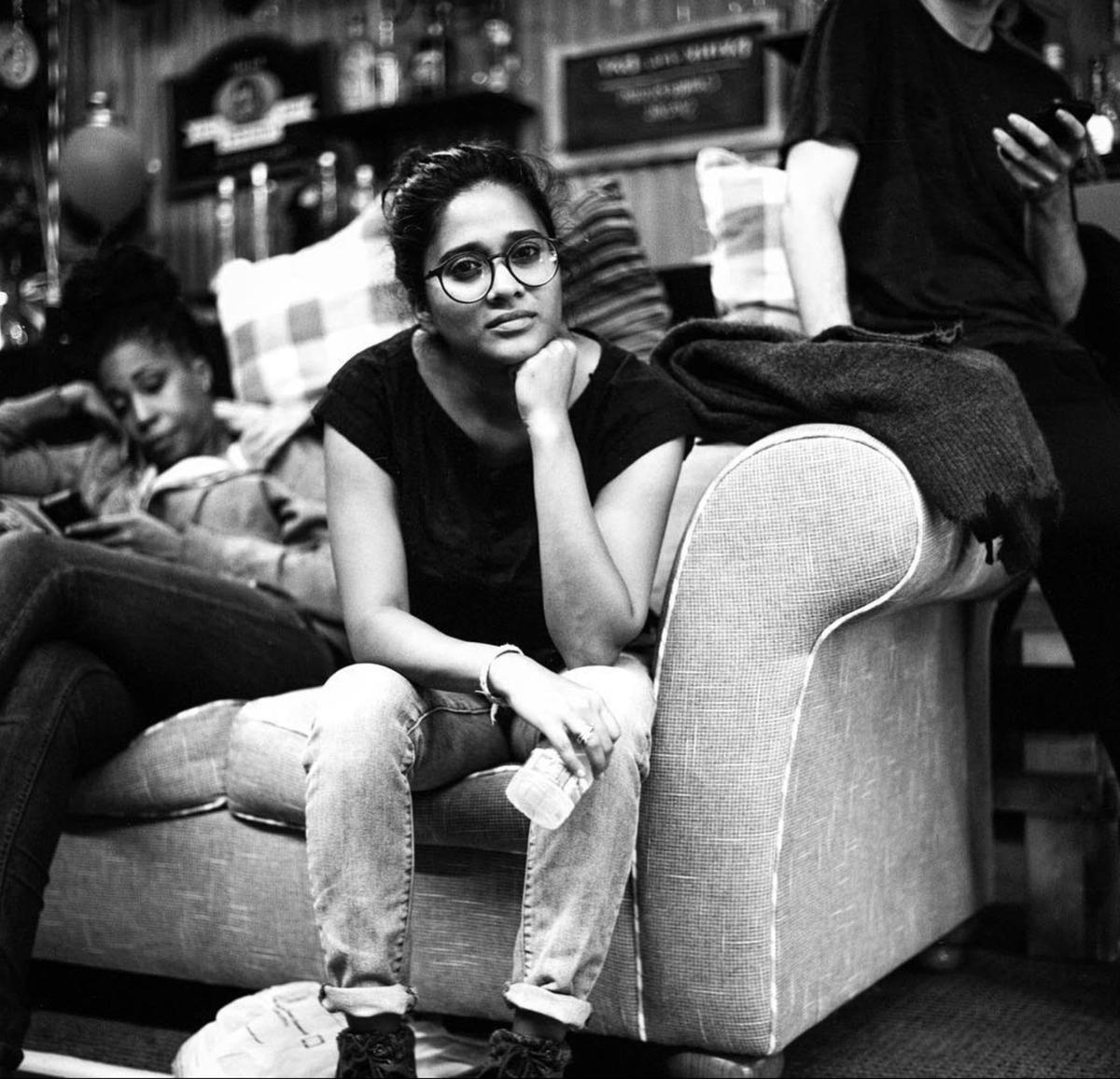
Mridul Sen
| Photo Credit:
Special Arrangement
The experience also put to rest her and her parents’ fear of whether the industry is a safe place to work. “I was the only female AD but the work experience was fantastic.”
She then worked with Vivek’s team for Ante Sundaraniki. This time, production design was led by Latha Naidu, who also had female assistants. “There were at least 10 women on set,” says Srividya, adding, “In the seven years I have worked in films, I’ve seen more women stepping in.”
Recently, Srividya was the Tamil dialogue coach for Nagarjuna Akkineni in Coolie.
Leading by example
In Telugu cinema, directors such as Sekhar Kammula, Nag Ashwin, Vivek Athreya and Nandini Reddy are known to have women on set, in different departments. When a director or producer at the helm takes a gender sensitive approach, the atmosphere percolates through the unit. For debut director Vidyadhar Kagita’s Gaami, production design was led by Pravalya D.
Srividya points out that in the units that she has worked with, it hasn’t been troublesome when she had to hand out instructions to male counterparts. But there is scope for improvement. There are casual references to women as “aa ammayi (that girl/woman)” rather than addressing by name. She also observes how some of her female friends moved away from cinema, disgruntled by the treatment meted out. “We all seek validation for our work, since we hope to write and direct our own films. There are cases when suggestions by female ADs are brushed aside. Friends have told me about being constantly shown their place, or not being paid enough even when they worked twice as hard as men.”

Another concern is the access to clean washrooms, especially in outdoor locations. This is one of the aspects highlighted in a report submitted to the Telangana State government, on the working conditions of women in Telugu cinema, which is still awaiting approval for implementation.
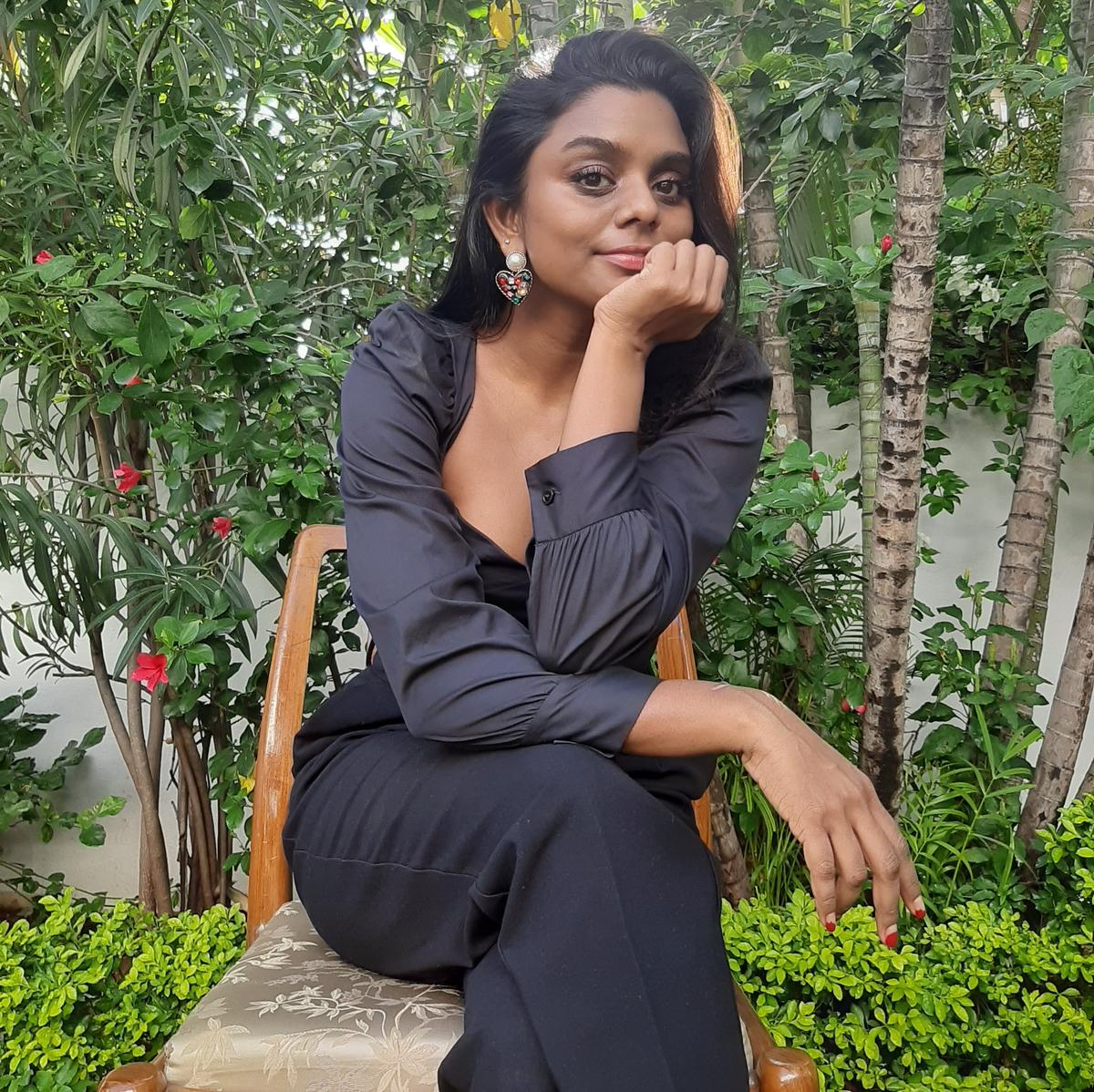
Archana Rao
| Photo Credit:
Special Arrangement
Credit and recognition for work is also on the wishlist. Archana Rao, who has worked on costumes of Telugu films such as Mahanati, Kalki 2898 AD, Lucky Baskhar, and the Malayalam female superhero film Lokah – Chapter One: Chandra, hopes that costume design gets recognised in the main credits or posters of a film. “Costumes are integral to storytelling, and yet the credit is often overlooked. Giving it better visibility would go a long way in acknowledging the contribution of the craft. Kalki 2898AD set an example by doing this..”
Archana, who won the National Award for Best Costume Design for Mahanati, says she relies on instinct to take up a film: “It may sound clichéd, but instinct has always been my compass. Every time I’ve ignored it, I’ve had difficult experiences. I need to feel like I truly belong in that world, and when I do, my best work happens.”
Since the time Archana stepped into film sets, she has worked with women across departments: “On Lokah, for example, Santhy Balachandran (writer) was someone I could bounce ideas off while designing costumes. Those exchanges made the process more layered.”
Archana reckons that she has always loved working with women in leadership roles. “They are intuitive, and that sensitivity trickles down into how a team functions. It makes the set feel like home, and it’s a comforting space to be in.”