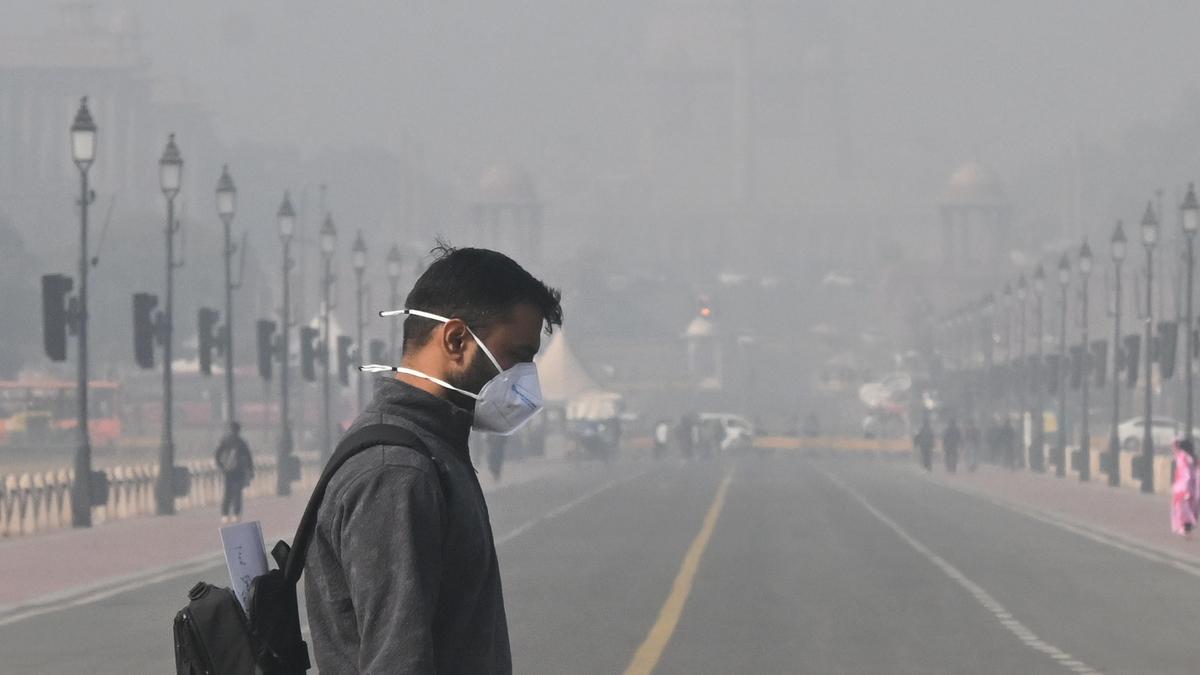
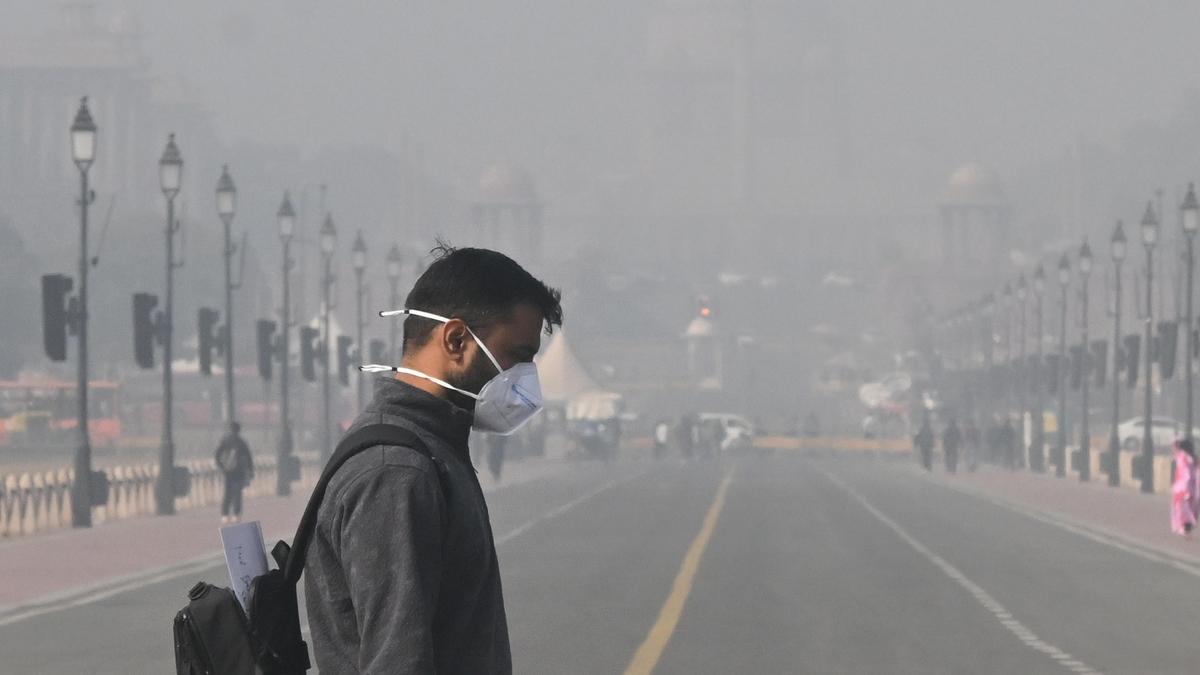
Appearing before a Bench headed by Chief Justice of India Surya Kant, senior advocate Menaka Guruswamy, for parents, said “when you shut down primary schools, you are shutting down the mid-day meal for these children in MCD and government. This is the most nutritious meal they probably get in the day”.
| Photo Credit: Sushil Kumar Verma
The Supreme Court on Wednesday (December 17, 2025) chose to stay clear of the quandary over whether primary school children should be sent to school or compelled to remain home to save them from air pollution, banking on the upcoming winter break to improve the AQI in the smog-engulfed national capital.
The discussion focused on a December 15 circular issued by the Delhi government shutting down classes from nursery to grade five.

Appearing before a Bench headed by Chief Justice of India Surya Kant, senior advocate Menaka Guruswamy, for parents, said “when you shut down primary schools, you are shutting down the mid-day meal for these children in MCD and government. This is the most nutritious meal they probably get in the day”.

Ms. Guruswamy argued that for poor children school was a better place than home during these days of high pollution. Their homes probably would be bordering the road. Their parents, who may be domestic workers or labourers may have to go for work, leaving these children alone at home.
“How do these children contribute to pollution… Most of them walk to their school,” Ms. Guruswamy said.
The senior counsel said for the poor, who could not afford air-purifiers, staying at home, away from school, deprives them of education, a mid-day meal and no safety from pollution. For them, the intensity of pollution at home may be worse than in school.
“Every time you shut down schools, you are making sure the poor child does not eat… If rich parents want hybrid, they can have it in their fancy schools. Poor parents, who make the city run, their children are sitting at home. How are they in any way protected from pollution in their homes? They are still parking our cars, sweeping and dusting our homes. They do not have air purifiers at home,” Ms. Guruswamy submitted.
Chief Justice said these were “policy matters”, and courts were not “super-specialists” to decide whether children were better off at school or home during pollution.
Giving an alternative view, the CJI said if children fall sick from going to school, would the poor be able to afford their medical expenses, leave alone the trauma of ill-health the child would have to undergo.
Amicus curiae and senior advocate Aparajita Singh said the Delhi government circular was contrary to the Graded Response Action Plan (GRAP) which provided a hybrid option.
But the CJI said the hybrid option had an “inbuilt” sense of discrimination. Those who could afford hybrid would be able to have their children access education at home, while those unable would be compelled to send their children physically to school for classes.
“Let us not divide society like this. Let us think of practical and pragmatic solutions to the problem. These are knee-jerk reactions. If something happens to a child. If it is a poor child, what about the expense for medical care?” Chief Justice Kant posed.
Finally, the court turned to school vacation around the bend and a prayer that the pollution would subside by the time of re-opening.
“It is only a matter of one week or so, meanwhile schools will close for winter break. Let us pray the AQI comes down…” Chief Justice Kant said.
Meanwhile, the court asked the Commission of Air Quality Management to also consider the problem.
Published – December 17, 2025 11:26 pm IST