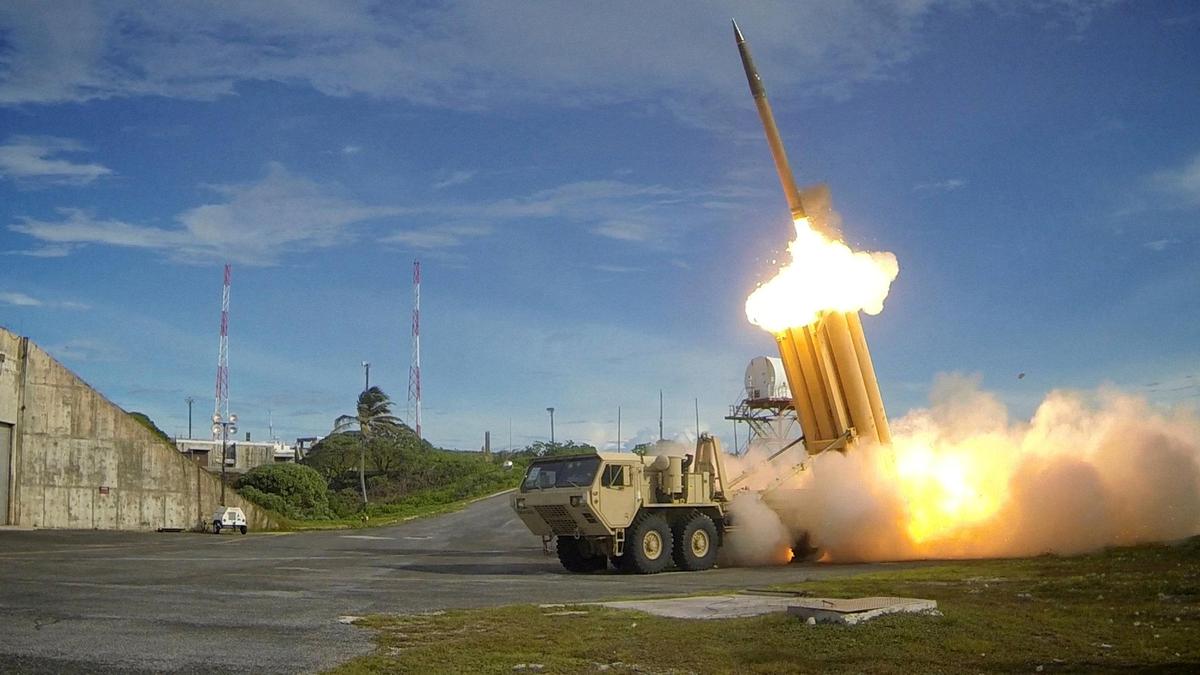
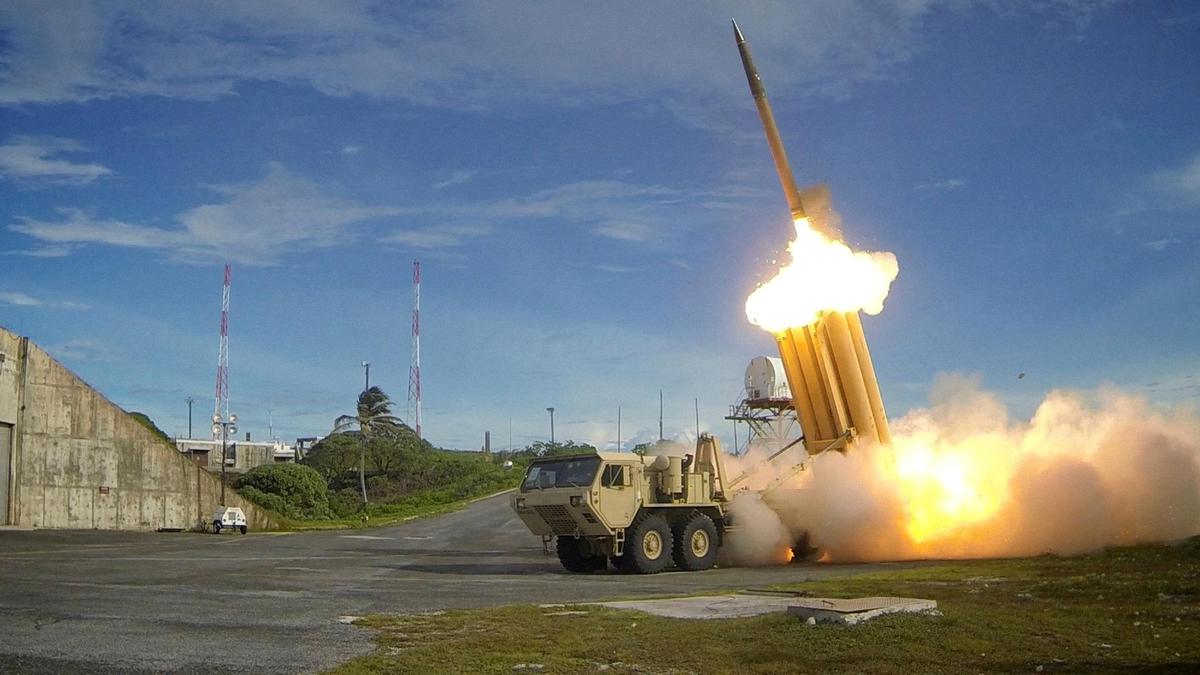
A Terminal High Altitude Area Defence (THAAD) interceptor is launched during a successful intercept test, in this undated handout photo provided by the U.S. Department of Defence, Missile Defence Agency. U.S. Department of Defence, Missile Defence.
| Photo Credit: Reuters
The Terminal High Altitude Area Defence (THAAD) system is one of the most advanced missile defence platforms developed by the United States to counter ballistic missile threats.
Designed to intercept missiles during the final stage of their flight, THAAD can destroy incoming threats both inside and outside Earth’s atmosphere, providing a critical defensive layer against short-medium-and limited intermediate-range ballistic missiles. The U.S. deployed additional THAAD batteries to the West Asian region before it launched the invasion of Iran on February 28, along with other weapons.

Unlike many traditional air defence systems that rely on explosive warheads, THAAD uses “hit-to-kill” technology. This means its interceptor missiles destroy incoming targets by directly colliding with them at extremely high speeds, relying on kinetic energy rather than an explosive blast.
This approach significantly improves precision and reduces the risk of debris from explosive interceptors affecting populated areas. THAAD can engage ballistic missile targets at ranges of roughly 150–200 kilometres, intercepting them at high altitude before they descend toward their intended targets.
Key components
The THAAD weapon system is a major element of the broader Ballistic Missile Defence System (BMDS) architecture and consists of several integrated components: interceptors that destroy incoming missiles through kinetic impact; truck-mounted launchers used to deploy the interceptors; and the powerful AN/TPY-2 radar, which detects and tracks missile threats at a long range; a tactical fire control and communications unit that coordinates targeting and engagement; and additional logistics and support equipment.
A typical THAAD battery includes around 90 personnel, six launchers, and 48 interceptors, with each launcher carrying eight missiles.
THAAD is designed to operate as part of a layered missile defence network. It can integrate with other systems such as the MIM-104 Patriot, including the Patriot Advanced Capability-3 (PAC-3), as well as the Aegis Ballistic Missile Defence system used by naval forces.

In recent tests, THAAD has demonstrated its ability to launch PAC-3 missile segment enhancement (MSE) interceptors, highlighting growing interoperability within the U.S. missile defence architecture.
The THAAD system is highly mobile and rapidly deployable, allowing the U.S. Army to position it in regions facing missile threats. The first operational THAAD battery was deployed to Guam in 2013. Internationally, the UAE became the first foreign buyer in 2011, followed later by Saudi Arabia.
The system has been in the spotlight ever since the latest war on Iran began on February 28. Iran has reportedly destroyed a key radar associated with the THAAD system used by the U.S. to detect and intercept ballistic missiles in West Asia, dealing a major blow to Washington’s regional missile defence network as the war on Iran enters its second week, according to media reports.

Satellite imagery cited in the reports suggests that an AN/TPY-2 radar, valued at around $300 million and manufactured by RTX Corp., along with its support equipment, was destroyed at Muwaffaq Salti Air Base in Jordan during the early days of the conflict. The radar plays a critical role in guiding U.S. missile defence batteries deployed across the Persian Gulf.
But despite such setbacks, THAAD remains a critical piece in America’s defensive shield. Ballistic missiles travel at extremely high speed and high altitudes, leaving little time for defence once they approach their targets. Systems like THAAD are designed to intercept these threats far from population centres and critical infrastructure, increasing the chances of neutralising them before impact.
As missile technology continues to evolve, THAAD remains a key element of the U.S. strategy to build a multi-layered missile defence shield capable of countering a wide range of ballistic missile threats.
Published – March 08, 2026 01:22 am IST


