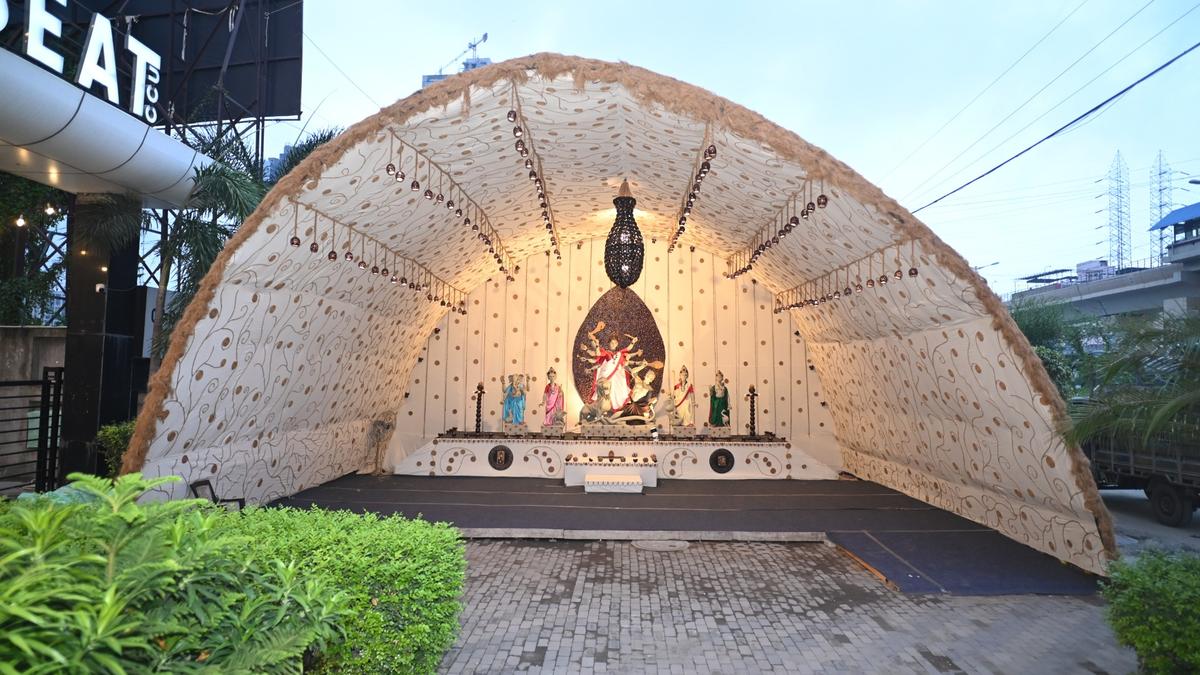
The pandal is called as Nariyal Katha. It has been designed to give visitors the feel of stepping inside a coconut — a symbolic womb of nature, nurture, and nourishment. Photo: Special Arrangement
The coconut, not only integral to Hindu rituals including the ones followed in Durga Puja but also the key ingredient of a sweet served during this time of the year in Bengal, happens to be the theme of one of the pandals in Kolkata promoting sustainability. More than 2,000 discarded coconut shells have been used in the decoration of this pandal, located in the neighbourhood of Topsia.
“The entire structure and decoration are an ode to the versatility of the coconut tree, which provides food, drink, shelter, fibre, fuel, and countless materials for traditional and modern uses. Coconut shells, coir, dried leaves, and husk have been used to decorate the space, making it look earthy and an ethereal home for Goddess Durga,” said installation designer Sujata Chatterjee about the pandal.
“We are calling the pandal Nariyal Katha. It has been designed to give visitors the feel of stepping inside a coconut — a symbolic womb of nature, nurture, and nourishment. It serves as a true reminder of sustainability, for it is not only constructed of eco-friendly materials but is, in fact, a zero-waste installation, where every part will again be reused or repurposed,” Ms. Chatterjee, an engineer by qualification, said.
In the pandal, coconut shells/bowls have been used for lights; broken coconut pieces for background artwork; coconut husk for exterior decorations; coconut shell jewellery for the goddess and her children; dried coconut leaves as crowns; coconut ropes and leaves for inside décor; and coconut leaf stalk for asura’s neckpiece.
“The idea struck while I was distributing narkel naru (coconut sweet) during Bijoya after last year’s Durga Puja. We place the coconut on the pot during every ritual, we break the coconut whenever we buy something new or start a new project, we distribute narkel naru during happy occasions, yet the coconut never seemed to get the highlight it deserved,” she said.
“The design started nearly 10 months back, and the last three to four months were engaged in hands-on work. Every component, from the patterns on the wall to the chandelier lights on the ceiling to the jewellery on the goddess, has been hand-crafted. It was particularly time-consuming to transform more than 2,000 discarded shells, collected from markets, street food sellers, confectioners, into creations,” said Ms. Chatterjee, whose team included craftswomen from her organisation, Twirl.store, which manufactures what it calls waste-to-wonder products, and also student volunteers from Chitraka of Techno India University.
Published – September 29, 2025 01:41 pm IST