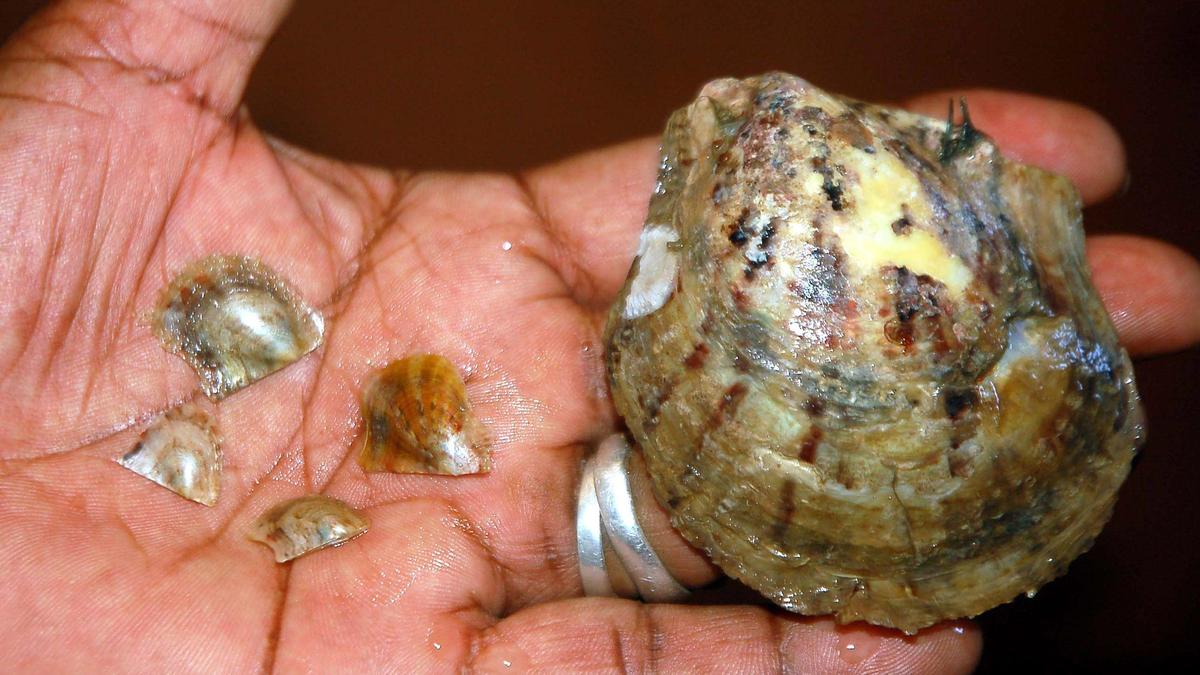
Thoothukudi, popularly known as the ‘Pearl City’, derived its identity from a rich and ancient legacy of pearl fishing.
| Photo Credit: N. RAJESH
The Thoothukudi pearls harvested from the Gulf of Mannar are among the world’s oldest recorded natural pearls, with a history spanning over 2,000 years, the Thoothukudi Muthu Urpathiyalargal Sangam has said.
Seeking a Geographical Indications (GI) tag, the association highlighted the cultural and symbolic significance of Thoothukudi pearls in Tamil tradition, where they were associated with purity, divinity and royal power. The pearls were traditionally used in temple offerings, royal ornaments and diplomatic gifts.
Thoothukudi, popularly known as the ‘Pearl City’, derived its identity from a rich and ancient legacy of pearl fishing. The Gulf of Mannar – one of the world’s most renowned natural pearl banks – was host to the growth of the Indian pearl oyster.
“These pearls are naturally formed and occur in round, semi-round and button-shaped forms, with smooth surfaces and a fine texture. Their colours range from pure white and cream to pale yellow, pink and silvery white, and are distinguished by a highly brilliant nacreous lustre often described as a ‘milky shine’,” the association said in its application submitted to the GI Registry.
Historically, Thoothukudi pearls were globally valued for their thick nacre layers, long-lasting brilliance and superior finish, making them highly sought after in Indian, Roman, Greek, Arab, Mediterranean and East Asian markets. The ancient port of Korkai, near the present-day Thoothukudi, was the earliest centre of pearl trade and celebrated in Sangam literature such as ‘Pattinappaalai’ and ‘Maduraikkanchi’.
During the colonial era, the Portuguese, Dutch, French and British controlled and taxed the pearl fishery, conducting auctions in Thoothukudi that attracted international merchants.
Pearl fishing shaped not only the regional economy but also the cultural identity of coastal communities, especially the Paravas, who were historically involved in pearl diving.
The association said the geographical area of production of Thoothukudi pearls was along the southern coast of Tamil Nadu, particularly in the Gulf of Mannar region between Thoothukudi and Sri Lanka, which offered a rare natural habitat for pearl oysters.
The region was characterised by shallow waters, coral reef systems, moderate salinity and high plankton concentration that were ideal conditions for the growth of the Indian pearl oyster.
Stating that Thoothukudi pearls were exported to Rome, Arabia and China, linking the region to ancient maritime trade routes, the association said the trade contributed to the wealth and prestige of the Pandya and Chola kingdoms, and later of Portuguese, Dutch and British colonial powers.
The Parava community contributed unique cultural knowledge through their free-diving skills and traditional harvesting practices, a human heritage element unmatched in any other pearl fishery worldwide, the association, represented by IPR attorney and GI nodal officer P. Sanjai Gandhi, said.
Published – December 16, 2025 12:32 am IST