
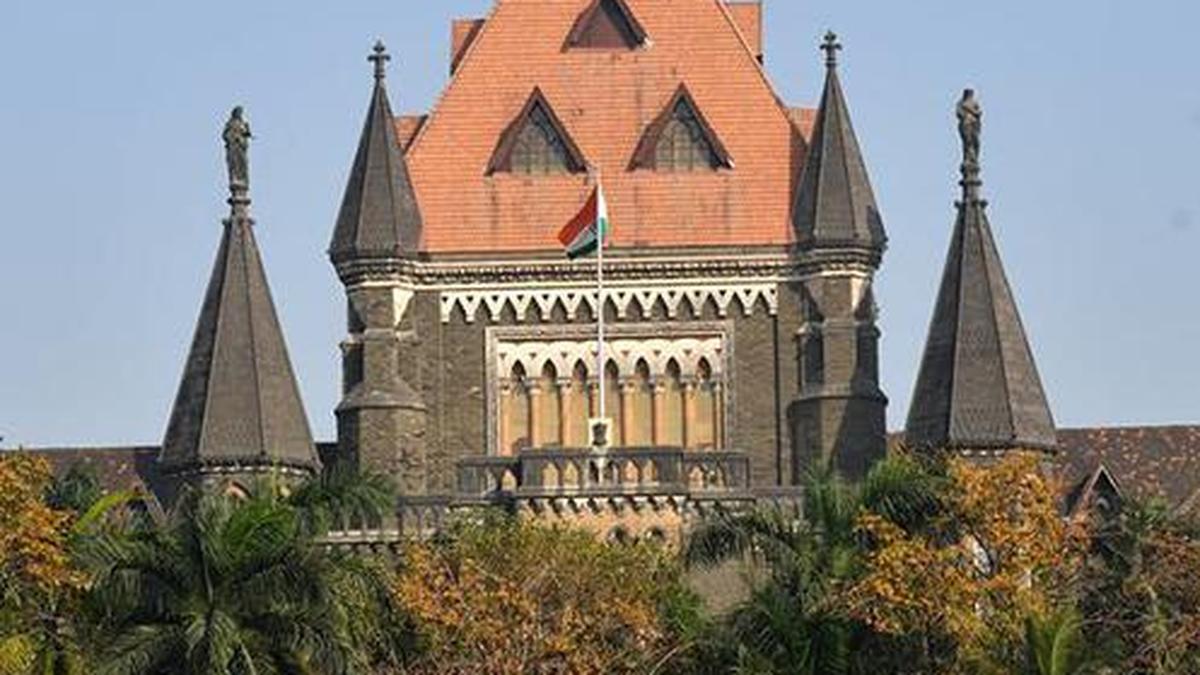
A file image of Bombay High Court.
| Photo Credit: The Hindu
In an urgent evening sitting on December 30, 2026, the Bombay High Court restrained the Brihanmumbai Municipal Corporation (BMC) from requisitioning High Court and subordinate court staff for election duty and directed the Municipal Commissioner-cum-District Election Officer to file a personal affidavit explaining the authority under which such directions were issued.
A Division Bench of Chief Justice Shree Chandrashekhar and Justice Ashwin D. Bhobe convened at the Chief Justice’s residence at 8 p.m., “in view of the urgency in the matter when the records were produced by the Registry before one of us (Chief Justice) in the afternoon.” The Registry had informed the Court that the Advocate General was travelling, so Additional Government Pleader Jyoti Chavan appeared for the State.
When the Court first assembled, BMC counsel Komal Punjabi sought a brief adjournment to obtain instructions; the Court reassembled at 8.45 p.m., when Punjabi sought to withdraw the impugned communication, a request the Bench declined.
The Court took suo motu cognisance after letters were sent directly to court staff by the Municipal Commissioner-cum-District Election Officer. A December 22, 2025, communication directed subordinate court staff to report on December 30 between 3 p.m. and 5 p.m. Despite the In‑Charge Chief Metropolitan Magistrate informing the Collector and the BMC Commissioner of the High Court’s administrative decision to exempt court staff, and despite the Registrar emailing the Commissioner on December 26 with the General Order dated March 31, 2009 attached, the Commissioner on December 29 wrote to the Chief Judicial Magistrate declining exemption.
Recalling the Administrative Judges’ Committee decision of September 16, 2008, that court staff are exempt from election duty, the Bench underscored the constitutional framework governing control over the judiciary personnel. “Under Article 235 of the Constitution of India, the High Court exercises complete control and superintendence over the subordinate Courts, including the staff,” the judges observed.
The Bench explained that Article 243K vests the State Election Commission with superintendence, direction and control over elections to Panchayats, while Article 243ZA does the same for Municipalities. These provisions empower the SEC to conduct local body elections, but they do not override Article 235, which gives the High Court exclusive control over judicial officers and staff.
On the statutory scheme for election staffing, the Bench referred to the Representation of People Act, 1951. “On a glance at sub‑section (2) we find that the High Court or the subordinate Courts do not find mention therein,” it said, after citing Section 159 which obliges certain authorities to make staff available for election work. The order also pointed to the ECI’s communication dated June 7, 2023, “The present practice of obtaining the prior approval of the High Court before engaging judicial officers/staff, under exceptional circumstances, for election work to continue.”
Issuing directions, the Bench said, “We hereby direct the Municipal Commissioner, BMC‑cum‑District Election Officer not to take any action pursuant to the ex‑parte communication dated 22nd December 2025 directly sent to the Court staff.” It added, “The Municipal Commissioner, BMC‑cum‑District Election Officer is restrained from issuing any letter/communication to the Court staff of High Court or subordinate Courts requisitioning their services for election duty.”
When BMC sought to withdraw its December 29 letter, the Court refused, stating, “This request is declined and the Municipal Commissioner‑cum‑District Election Officer is directed to file his own personal affidavit indicating the powers and jurisdiction under which he has issued directions to the subordinate staff of the District Judiciary to report for election duty.” The affidavit, the Bench directed, “shall be complete in all respect with proper averments and supporting documents.” Affidavits are also to be filed by the State Election Commission, Election Commission of India, and State of Maharashtra “within the same time.”
The matter has been listed for January 5, 2026, “to be taken up as first matter at 11:00 a.m.” A copy of the order is to be communicated to counsels “through usual modes as well as email, WhatsApp etc.” The Bench also noted that courts have consistently held that judicial and quasi-judicial staff cannot be requisitioned for election work without High Court approval.
Published – January 01, 2026 11:49 am IST


