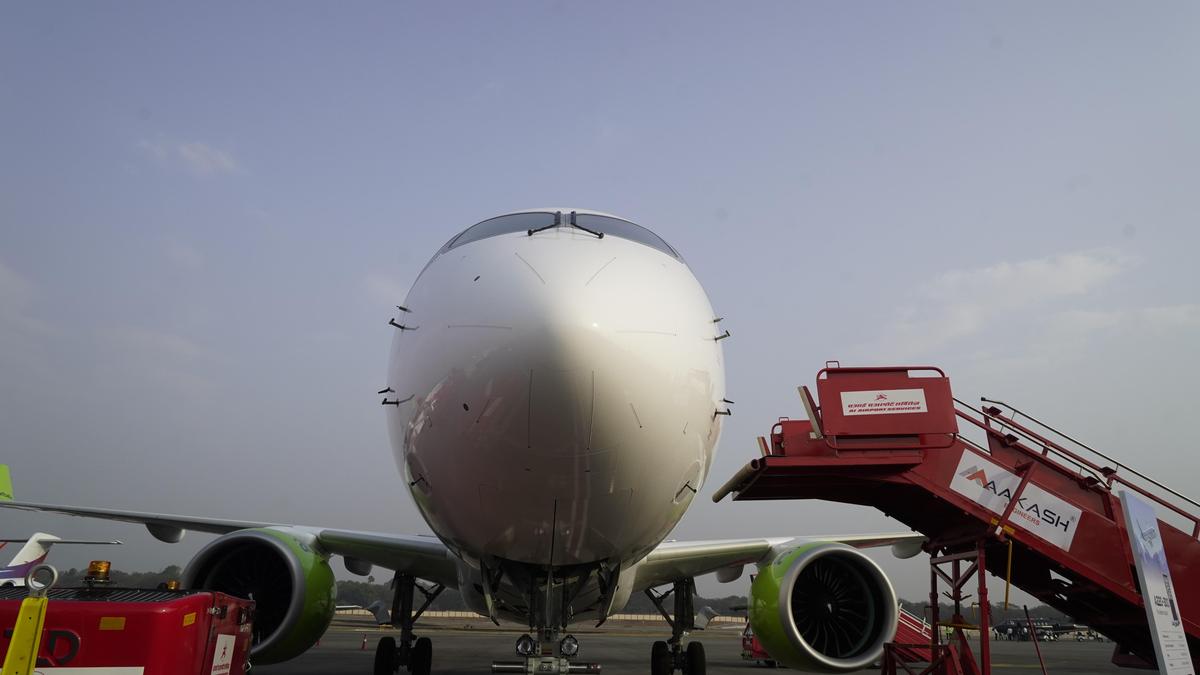
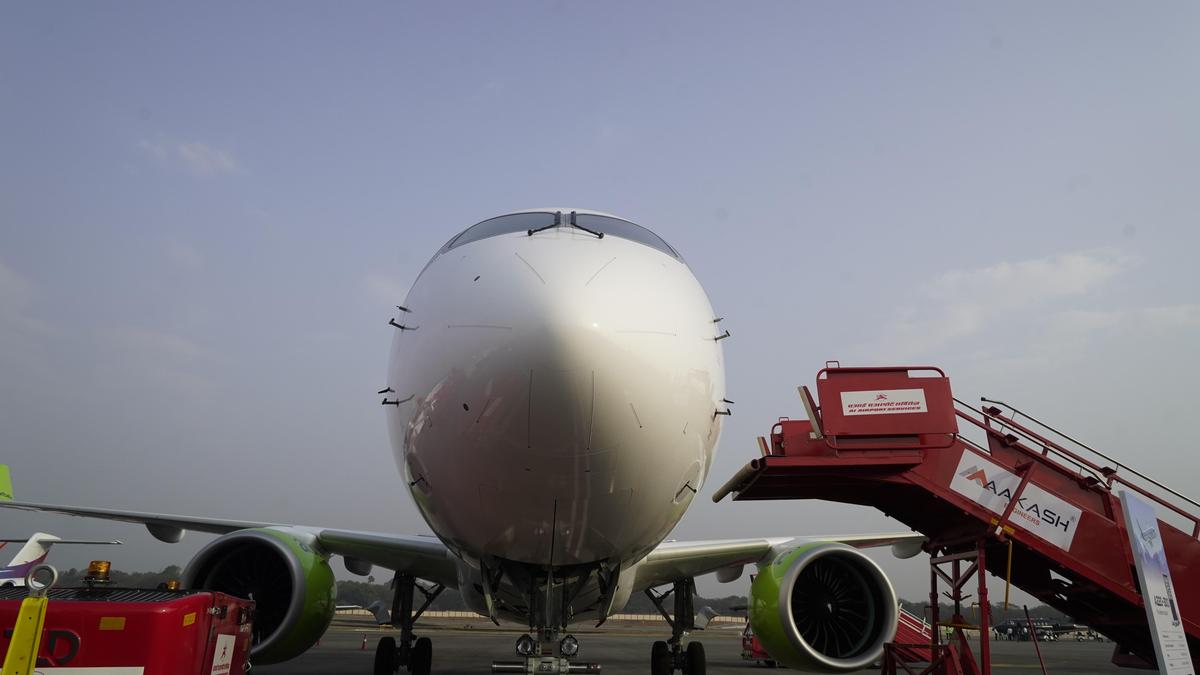
Structural challenges which could slow momentum of India’s business and general aviation sector were flagged at a panel discussion held as part of Wings India 2026 at Begumpet airport, Hyderabad, on Thursday. The image is used for representative purposes only.
| Photo Credit: SIDDHANT THAKUR
India’s business and general aviation sector is entering a phase of sharp expansion, driven by rising demand across the travel spectrum and a growing role in regional connectivity, but its long-term growth will depend on how effectively infrastructure and skill gaps are addressed, speakers said at Wings India 2026.
Speaking at a panel discussion on business aviation and small aircraft on day two of the event at Begumpet Airport on Thursday (January 29, 2026), Asangba Chuba Ao, Joint Secretary at the Ministry of Civil Aviation, said the country’s aviation ecosystem has undergone a fundamental shift in recent years.
“There is now a clear distinction between helicopters, fixed-wing aircraft, regional transport aircraft and business aviation,” the official said, adding that the Directorate General of Civil Aviation has begun recognising these segments separately. This shift, he said, has been driven by demand and a growing understanding within Government of how business and general aviation differ from scheduled commercial operations. “We do have a lot of catching up to do, but the Government is fully committed to doing that and to supporting the industry as it moves forward,” he said.
Mr. Chuba Ao said the growth trajectory of Indian aviation is “highly exponential”, pointing to expansion at both ends of the market. At the lower end, the Ude Desh ka Aam Naagrik (UDAN) scheme is enabling large numbers of first-time flyers and strengthening regional connectivity, while at the upper end, the increasing induction and use of business jets reflects growing demand from corporates and private users. “When there is growth, it is visible both at the top and the bottom,” he said, noting that global and Indian aircraft manufacturers, operators and prospective entrants are now actively engaged in this segment as more and more small aircraft are now being deployed for regional connectivity.
However, industry participants cautioned that several structural challenges could slow momentum if left unaddressed. Maintenance infrastructure, the availability of spare parts and a shortage of trained pilots for various kinds of aircraft were flagged as key constraints. Panellists stressed that targeted and segment-specific policies would be essential to support sustained growth.
C.M. Ananda, Chief Scientist and Programme Director for Civil Aviation at the National Aerospace Laboratories, said pilot availability remains a critical bottleneck. He described pilot training as a core infrastructure requirement that must be integrated into aircraft design and operational planning. “If you want an aircraft flying, pilot availability is fundamental,” he said, adding that serviceability, ease of maintenance and aircraft-specific training must be prioritised by manufacturers and operators alike.
Mr. Ananda also underlined the need for aircraft design to reflect India’s regional requirements. He said considerations around maintenance and operational support should be embedded from the design stage itself, rather than addressing after aircraft enters service.
The panel also discussed the growing overlap between business aviation and advanced air mobility. Kanika Tekriwal, chairperson of the FICCI Advanced Air Mobility Taskforce and co-founder and CEO of JetSetGo, said electric vertical take-off and landing aircraft (eVTOLs) are likely to see early adoption among private jet users.
However, she acknowledged delays in timelines. “We had earlier envisioned eVTOLs in India by 2026–27, but realistically we are now looking at operations around 2029,” she said, adding that large-scale adoption at costs comparable to ride-hailing services may only be feasible by 2030–31. Despite this, Ms. Tekriwal said interest in the segment is strong and eVTOLs represent the future of aviation.
Published – January 29, 2026 01:14 pm IST