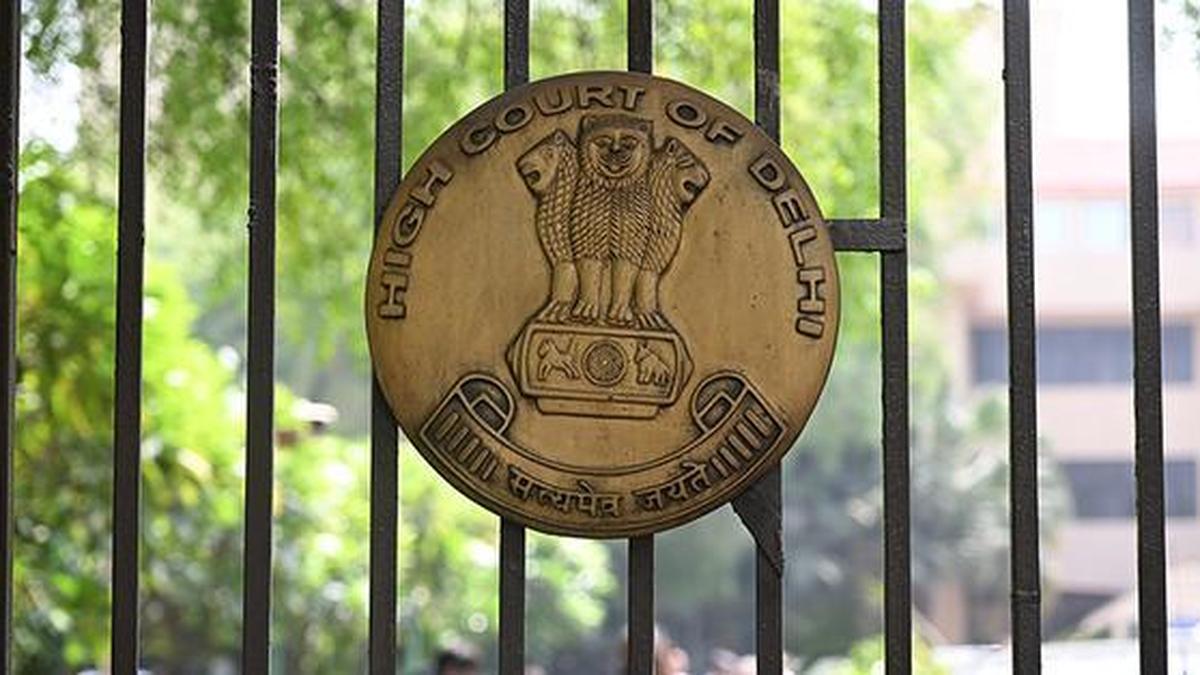
A view of the Delhi High Court. File
| Photo Credit: The Hindu
The Delhi High Court has upheld the conviction of a husband and his son for killing their wife and mother by pouring kerosene on her and setting her ablaze, relying primarily on the dying declarations made by the victim in April 2002.
While the husband, Didar Singh, died of cancer during the pendency of the case, his son and co-accused Maan Singh, has been absconding as police has not be able to trace him since he was let loose on bail in 2004.
A bench of Justice Subramonium Prasad and Justice Vimal Kumar Yadav began the judgment delivered on November 14, noting, “A mother is the only person who carries you for nine months in her belly, three years in her arms and forever in her heart”.
It remarked that, “Deceased (Gian Kaur) had no reason to name her grown up son or husband to falsely implicate them. She had nothing to gain” while ruling that her dying declaration recorded by the Doctor attending her at Safdarjung Hospital as “free from any taint like undue influence, fabrication, pressure, inducement”.
The incident dates back to the early hours of April 5, 2002, when Ms. Gian Kaur was sleeping on the terrace of her home when neighbours raised an alarm. Her daughter, Taranjeet Kaur, rushed to the terrace and found her mother engulfed in flames. With the help of her brother Maan Singh, she took her mother to Safdarjung Hospital, where doctors found her with 100% burn injuries.
At the hospital, the attending doctor recorded the first dying declaration at around 9:30 a.m., in which Ms Gian Kaur stated that her husband and son had poured kerosene on her and set her ablaze. A second statement given to the Investigating Officer reiterated the same accusation. She succumbed to her injuries later that night at around 11:15 p.m.
A case was registered under section 302 (murder) IPC, and other offence against the husband and the son of the deceased, Didar Singh and Maan Singh respectively. They were subsequently convicted by a trial court here in 2002 for the offence of murder.
The father-son duo, then moved the high court challenging the trial court order the same year.
The high court, in the 17-page judgment, clarified that, “It is not necessary that a dying declaration must be recorded by a magistrate. A dying declaration may be recorded by a doctor, a policeman, or even any other person, and so long as the statement satisfies the requirement of being genuine and made by the person in a fit state of mind, it can be accepted”.
“Death can either be an accident, a suicide, or a homicide. In the present case, it is neither of the first two, as there are no traces suggesting that the fire was accidental or that the deceased committed suicide,” the high court concluded.
A dying declaration is a statement made by a person who is about to die, explaining the cause of death or the circumstances leading to it. The court said it is considered admissible evidence because it is believed that a person facing death is unlikely to lie. These statements can be oral or written and are admissible in cases where the person’s death is in question, serving as an exception to the rule against hearsay evidence.
Published – November 16, 2025 08:11 am IST