New York-based Li Chung (Sandi) Pei, 75, attributes his master-architect father’s design of the Everson Museum of Art in Syracuse in the early ’60s, as probably having influenced his own decision to become an architect. For two decades, he assisted his father, the iconic I.M. Pei (1917-2019), in award-winning projects like Bank of China Tower (1989) in Hong Kong and Suzhou Museum (2006). In 1992, he founded Pei Partnership Architects with his brother, the late Didi Pei.
Sandi helped usher the first retrospective ever mounted on his father, I.M. Pei: Life is Architecture. The exhibition opened in Hong Kong, is now in Qatar, and will travel internationally over the next two years.

In this exclusive email interview, Sandi talks about the ongoing retrospectives in Doha — the other is I.M. Pei and the Making of the Museum of Islamic Art: From Square to Octagon and Octagon to Circle — and his father’s transcultural legacy. Edited excerpts:
Question: If you were to describe your father and his architectural style in one word, what would it be?
Answer: Many call him a ‘modernist’, but I think that’s too narrow. It focuses on the form of his buildings rather than their context and sense of place. Yes, his work embraced strong geometries, clean lines, and technological innovation — but it also reflected cultural sensitivity and a pursuit of harmony.
So, I would describe him not as a modernist, but as a humanist. He cared about human scale and experience, respecting history and local traditions, and about integrating arts and sciences.
‘I don’t want to be first’, he would say, ‘I want to be the best!’
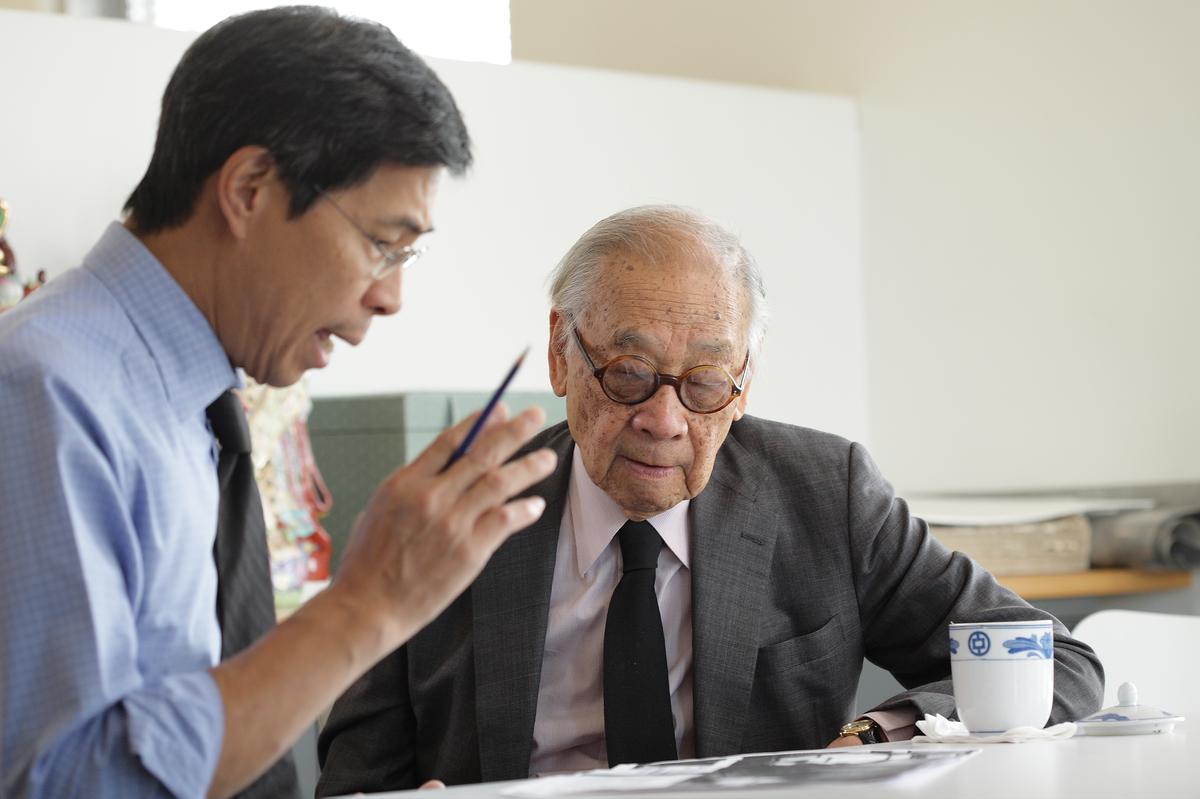
Sandi with father I.M. Pei in his New York office.
| Photo Credit:
Courtesy Pei Architects
Q: Why was your father averse to a retrospective of his works?
A: He resisted exhibitions that spotlighted him. He believed buildings should be judged not by their designer but by how they serve their communities. He would deflect by saying he was still active, so any assessment of his career would have to wait until retirement — a retirement he mischievously never concluded.
He enjoyed praise when a new building debuted, but he was sceptical of the media’s tendency to focus on the essayist rather than the essay. When asked, he preferred to talk about the client or the challenges of the site. This wasn’t false humility — it reflected his belief that architects come and go, but their creations live on, for better or worse, as part of a long historical continuum.
Q: What are your impressions of this retrospective?
A: Honestly, I think it’s superb. Of course, I’m not unbiased — I supported the exhibition and provided a lot of source material — but what I find most compelling is its central idea: that my father’s transcultural background, especially his Chinese heritage, shaped everything about his life and career. If ever there was proof of the richness of the immigrant experience, this is it.
The show also highlights different chapters of his career — from post-war real-estate development, to pioneering new materials and technologies, to reintroducing art and artists into the architectural conversation. What comes through consistently is his conviction that architecture is a dialogue between past and present, tradition and innovation.
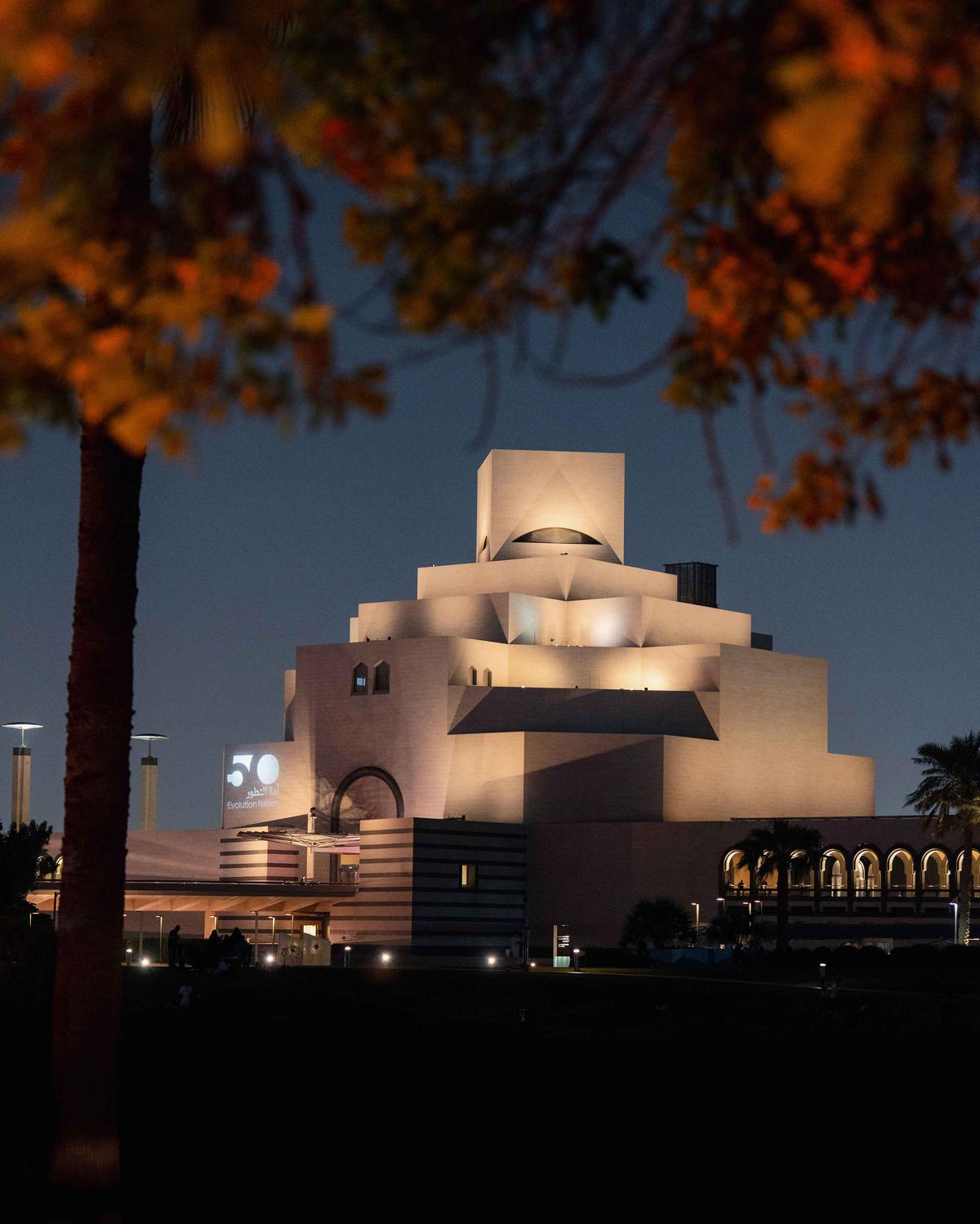
Museum of Islamic Art, Doha.
| Photo Credit:
Copyright Museum of Islamic Art, Doha
Q: What are your personal favourites from the two shows?
A: Each project is superb in its own way, responds to different challenges. I deeply admire his pioneering work in low-cost housing, and his lifelong obsession with advancing concrete technology. The house he designed for our family is one of his most exquisite projects — it embodies every principle and philosophy he applied to his later work.
But if I had to choose his most consequential project, it would be the Grand Louvre, completed in 1989. That commission engaged every aspect of his skill set: architect, tactician, historian, diplomat.
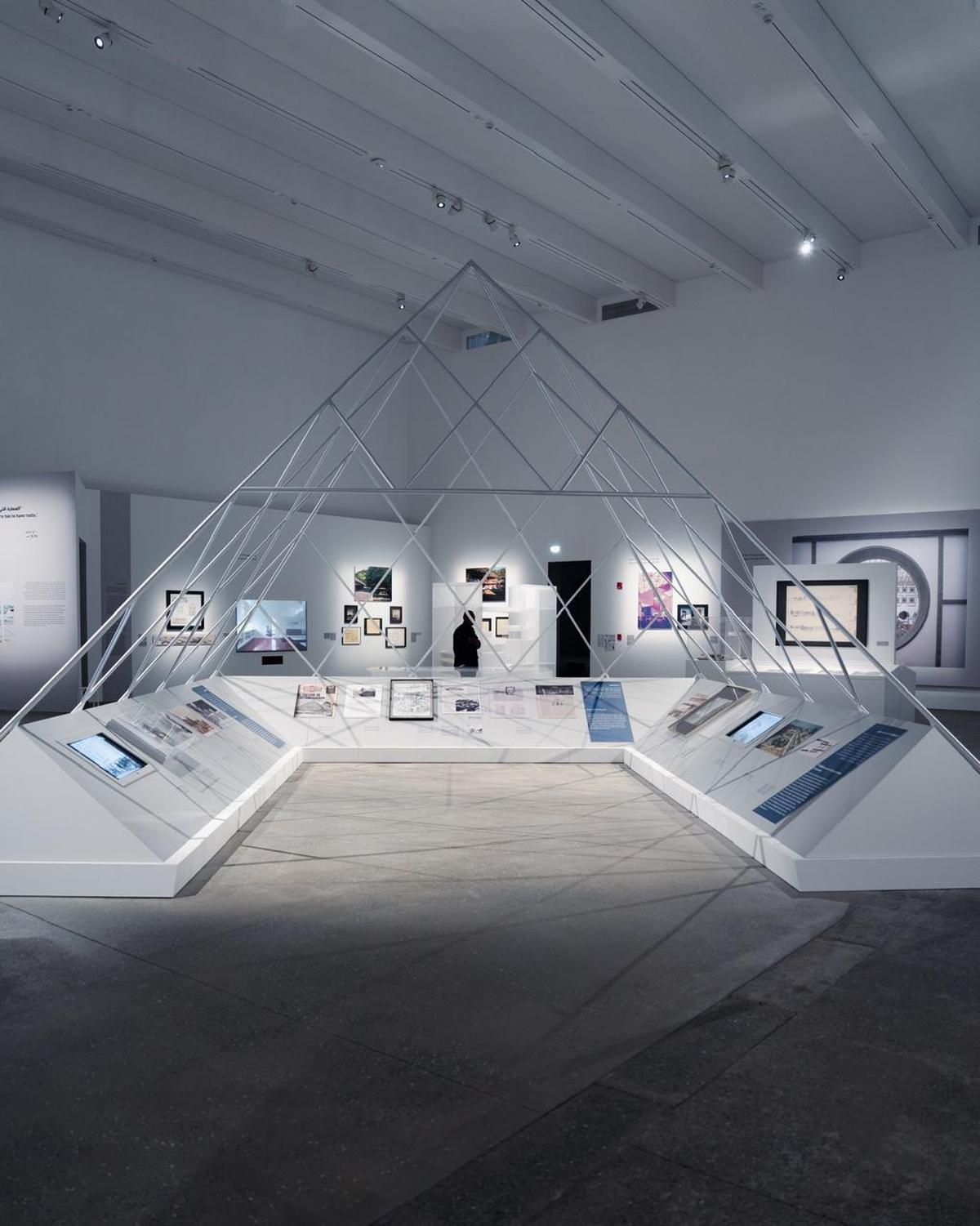
The model for Louvre Pyramid at IM Pei: Life in Architecture show.
| Photo Credit:
Image courtesy of Qatar Museums
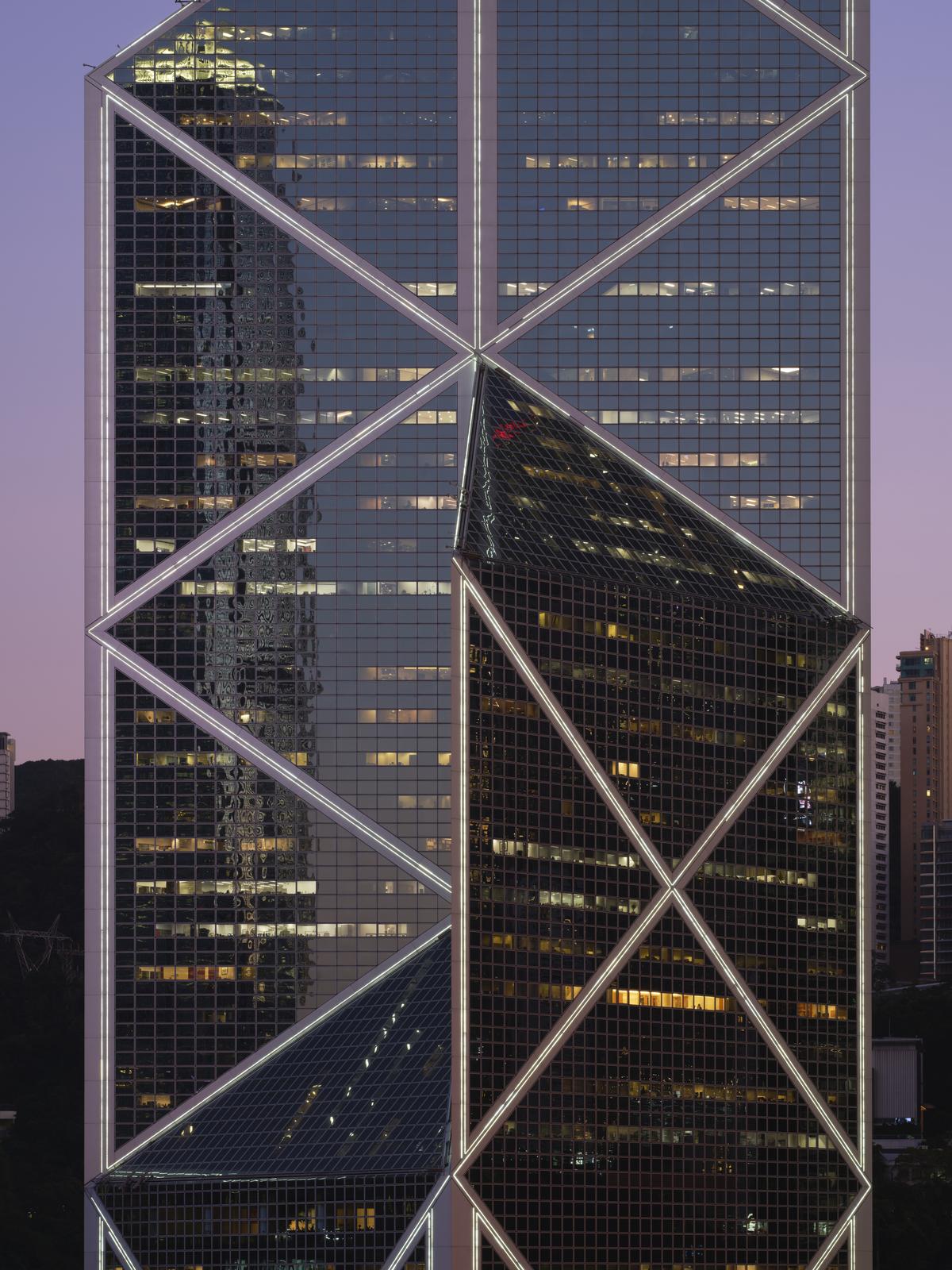
Sandi Pei was Project Architect on the Bank of China Tower in Hong Kong, completed in 1989.
| Photo Credit:
Copyright South Ho Siu Nam / Courtesy M+ Museum, Hong Kong

Photographs and documents of I.M. Pei’s works on show at Al Riwaq gallery, Doha.
| Photo Credit:
Image courtesy of Qatar Museums
Q: Since the retrospective has travelled from Hong Kong to Qatar, what has its reception been like?
A: In Hong Kong and Shanghai, the exhibition was met with great anticipation and celebration. My father’s heritage has secured him a place in the nation’s pantheon of historical figures.
In Doha, the response has been equally positive. He designed the Museum of Islamic Art there, which has become a national landmark. The exhibition introduced his career to a new audience — many young Arabs who seemed impressed, maybe even inspired by his example.
Q: As an architect, your father had an eclectic sense of taste and brought western and eastern design styles into his discipline. In particular, with the current shows, what stands out as unique for you?
A: My father was truly a global citizen. He had this uncanny ability to flourish in different contexts and communities at the same time. He was charming and sophisticated, but also approachable and down-to-earth. A real people person — engaging, curious, and warm.
As an architect, he was fascinated by the cultures he encountered and the traditions that shaped their architecture — form, materials, spaces, all of it. I wouldn’t call his work ‘eclectic’, though. I’d say it was contextual, always rooted in the spirit of place. His buildings were harmonious with the past, yet sophisticated in craft, rigorous in detail, and technologically advanced.
What people admire most, I think, is how comfortably his buildings fit into their environment and how much respect they show to the communities they serve. The exhibition captures this beautifully — tracing his career from early low-cost housing to the civic buildings and museums he’s most celebrated for. Throughout, you see his single-minded focus on quality, refinement, and appropriateness. He lived by Vitruvius’ values of ‘firmness, commodity, and delight’, leaving behind buildings of enduring value and civic pride.

Architect I.M. Pei sits near the Louvre’s Pyramid Entrance, which he designed.
| Photo Credit:
Getty Images
Q: Your father courted controversies, how would he respond to criticism?
A: With patience and affability. He would calmly defend himself against criticism he thought was misguided. I never knew him to put a line on a drawing without careful thought, and he trusted that over time his buildings would quiet dissent.
And really, what better measure of success? Out of nearly 100 projects built during his career, only a handful have been demolished. The majority have become cherished, protected icons.
Q: Any design or architectural lesson from your father that has stayed with you?
A: There are so many lessons. Some are direct quotes, like ‘choose your client, not your project’ or ‘good architecture lets nature in’. Others, I learnt simply through observation.
He remained curious and inquisitive to the end, always eager to learn and understand the world around him. He was comfortable in the company of presidents, ministers, royalty — people who admired his sophistication, intellect, and vision. But he was equally relatable to the masses, the public-at-large who were his true users. He loved cultures, places, and people, and came to embody the productivity of immigrants and the richness of diversity. Living so close to that example, it was impossible not to be influenced.
tanushree.ghosh@thehindu.co.in