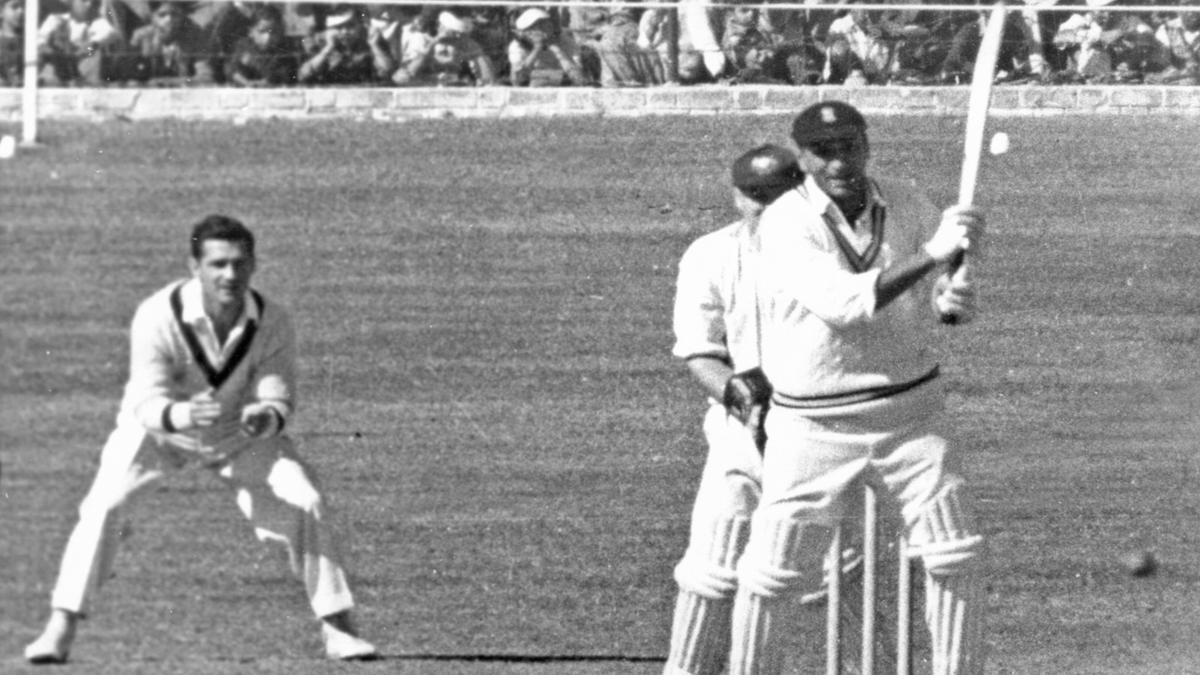
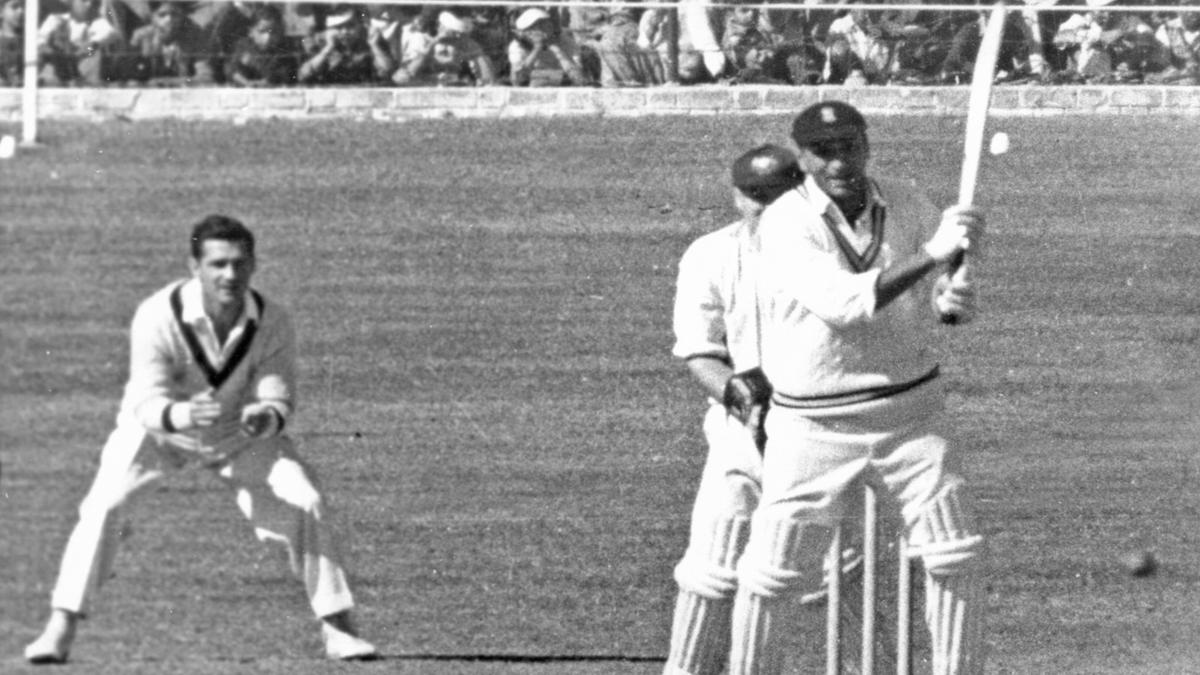
Polly Umrigar in action against Australia in the 1959 Kanpur Test.
| Photo Credit: THE HINDU ARCHIVES
Columnists are sometimes carried along by the rush of events, often feeling obliged to comment on the here-and-now. Thus, the progress from the build-up to the T20 World Cup to its unfolding to the final, to the post-mortem of the event. And when that’s over, the IPL gets similar treatment. Occasionally, however, it is rewarding to look back rather than forward, and place today in the context of yesterday.
March 28, for example, is a significant date this year. It sees the start of the IPL. It is also the birth centenary of one of India’s finest, Pahlan ‘Polly’ Umrigar. In the 1950s and early 1960s, when Indian batting still sought global respect, Umrigar was its most solid ambassador. He was tall and composed. The crowd rarely gasped when he took guard. Yet by the time he finished, he had rewritten much of India’s early batting history. Today, he would have been an IPL star too!
Known in the West Indies as ‘Palm tree hitter’, Umrigar was the bridge between origins and modernity. He played his first Test under independent India’s first captain, Lala Amarnath, in a team with Indian cricket’s early heroes: Vijay Hazare and Vinoo Mankad. His final Test came under Tiger Pataudi, who ushered in modernism.
For long Umrigar was India’s most experienced Test cricketer, maker of most runs and centuries and the country’s first Test double centurion. He cleared the path for champions Sunil Gavaskar, Sachin Tendulkar and Virat Kohli. Yet, it is a curse of sport that he is often remembered for one bad series in England.
In the fourth Test at Port of Spain in 1962, Umrigar claimed five for 107 in 56 overs, then made 56 and 172 not out after India followed on, and bowled 16 overs for 17 runs as the West Indies won. No one calls this ‘Umrigar’s Test’ in the manner they did of the Lord’s Test of 1952 when Mankad returned similar figures. Perhaps because those days only cricket writers from England could bestow such honours and none was present. India’s K.N. Prabhu, however said it was “fit enough for verses and ballads.”
This came a decade after Umrigar’s bad series in England, where he had a highest score of 14 and was palpably uncomfortable against fast bowler Fred Trueman. It mattered what you did in England; their writers ensured that epithets stuck. Umrigar finished with 1688 runs on the trip with double-hundreds against Lancashire, Kent and Oxford. He made a century in Manchester on the next trip, but he couldn’t get rid of the ‘reputation’ from 1952, although Trueman bowled on that later tour too.
The previous home season, his 130 had played a lead role in India’s first-ever Test win, against England. Seven years later, when India beat Australia for the first time, Umrigar claimed four for 27 in the second innings (the hero of that match, Jasu Patel had 14 wickets), including the wickets of Neil Harvey and Norman O’Neill.
Indian players of the past tended to be pigeon-holed by media descriptions that initially described them and later identified them. Such words were often out of use in regular conversation but survived on the sports pages of newspapers. Thus Lala Amarnath was the stormy petrel — every generation had to look up ‘petrel’ (it is, in fact, a sea bird that flew far from land). Umrigar was the ‘bulwark’ of Indian batting. I don’t see that word too often these days; Rahul Dravid might have inherited it, but he was known by the simpler alternative: The Wall, a nickname he was not fond of.
“The early Umrigar,” wrote Sujit Mukherjee, “indicated the lines along which contemporary batsmanship in India was going to develop….here was a workman whose craft had been fashioned in a polytechnic, not at home or in the privacy of a wicket behind a palace…”
He was too that other Indian rarity of his time — a safe catcher in the slips, possessor of what were sometimes known as ‘bucket’ hands.
As the game filled with stroke-players and television heroes, Umrigar’s name began to sound almost old-fashioned, like a well-loved club pavilion. But cricket remembers such men kindly. Without them, the flamboyance of later generations would have had nothing sturdy to build on.
Published – March 17, 2026 11:07 pm IST