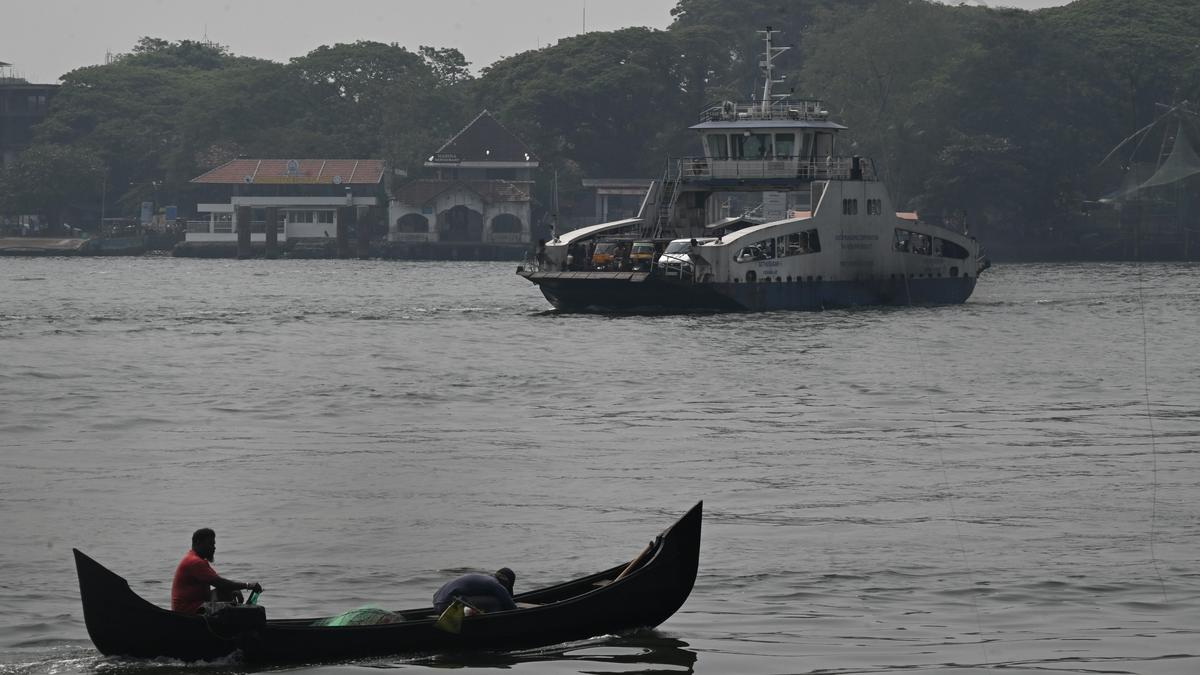
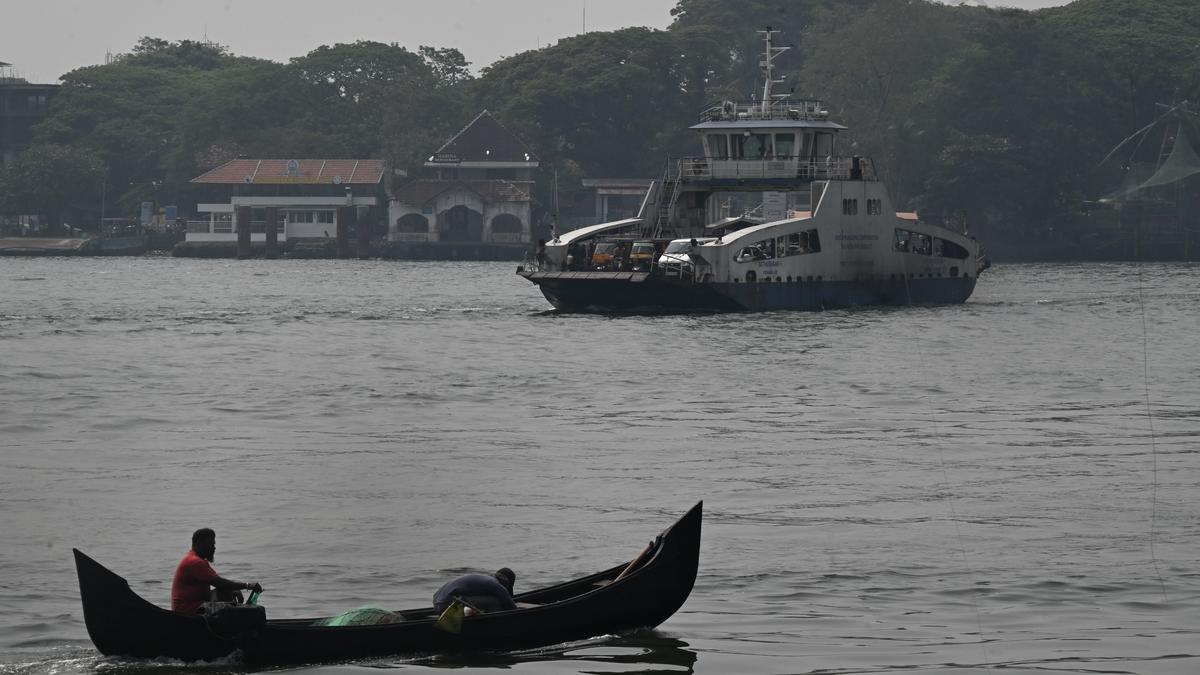
With a new ro-ro vessel set to join the existing fleet of two shortly, the civic body expects operational expenses to further escalate.
| Photo Credit: H. VIBHU
The Kochi Corporation is exploring the possibility of roping in a new agency, including Kochi Metro Rail Limited (KMRL), to take over the operation and maintenance of its roll-on roll-off (ro-ro) vessels.
The move comes after the current operator, Kerala Shipping and Inland Navigation Corporation (KSINC), has consistently reported losses ever since the launch of the services six years ago. With a new vessel set to join the existing fleet of two shortly, the civic body expects operational expenses and losses to further escalate. The Corporation is already examining an estimate of ₹4.50 crore submitted by Cochin Shipyard Limited for the annual dry dock of the existing vessels, and negotiations are under way to bring down the cost.
“Ro-Ro services have been a drain on Corporation resources since their launch as they have been reporting huge losses. We are looking for a new agency, including the possibility of roping in KMRL, to hand over their operations,” said Mayor V.K. Minimol.
Previously, the Corporation renewed its agreement with KSINC annually, which has since been extended until a special purpose vehicle (SPV) is formed. A proposal for a tripartite agreement involving the Kochi Corporation, KSINC, and the Cochin Port Authority, moved years ago, though, has made little progress.
KSINC sources attributed the mounting losses to unchanged fares dating back to the time of jhankar services, which preceded ro-ro, despite fuel charges nearly doubling since the launch. “While the jhankar consumed only about 100 litres of fuel a day, ro-ro consumes around 350 litres. The fuel cost has risen from ₹52 a litre at the time of the launch to ₹96 now, yet user charges have not been increased by even a rupee. Moreover, most components of Ro-Ro vessels are imported and hence costly,” a KSINC source said.
Shiny Mathew, Fort Kochi division councillor, alleged that the nearly one-and-a-half to two-hour lunch break taken by ro-ro staff during peak traffic was creating problems. KSINC sources dismissed the complaint as baseless, pointing out that only a 45-minute break was taken, and that too alternately, ensuring one vessel operated at all times. Twenty staff members are engaged across the two vessels.
Ro-Ro services charge ₹3 for passengers, ₹10 for two-wheelers, ₹40–₹50 for small four-wheelers, and ₹55–₹65 for larger four-wheelers. A ro-ro vessel operates a minimum of 60 trips a day. While one service runs from 6 a.m. to 8 a.m., the other operates from 8 a.m. to 10 p.m.
Published – February 11, 2026 12:58 am IST