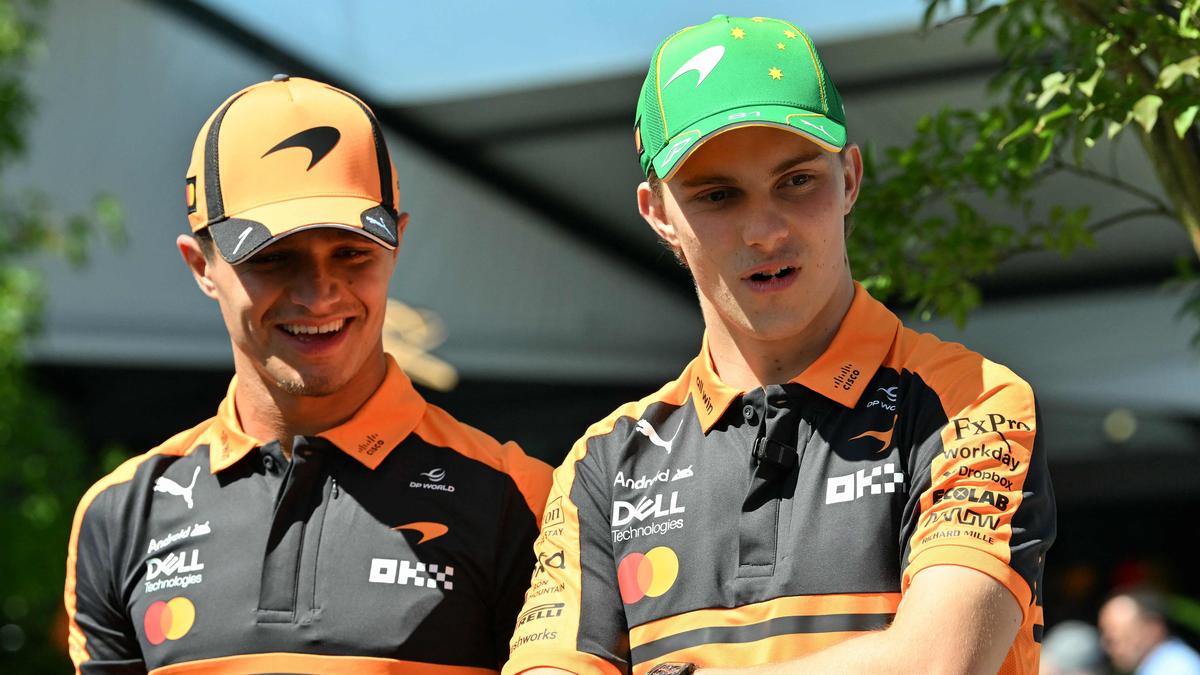
The McLaren duo of Norris and Piastri will look to continue its domination.
| Photo Credit: AFP
As Formula One enters a new era with this weekend’s Australian Grand Prix in Melbourne, there is a sense of excitement but also trepidation about what will unfold.
Ahead of the 2026 season, F1 has introduced a drastic overhaul of regulations for power units and chassis.
Pandora’s box
However, these changes might have opened a Pandora’s box of problems whose effects are not yet fully understood.
The new 2026 engine formula is a major leap in technology, with nearly 50% of the power delivered from an electric source, recharged by converting energy lost under braking.
F1 had already embraced hybrid technology in 2014, but the traditional Internal Combustion Engine part of the Power Unit remained dominant, contributing 80% of the total output.
The problem, though, under the new rules, is that cars can be energy-starved, meaning they may not have full power at all times.
This can be especially concerning on tracks without large braking zones to recover enough energy to recharge the battery.
The first race at Albert Park is a prime example: drivers are on the brakes only 10% to 11% of the total race duration, or about eight to 10 seconds per lap, according to brake supplier Brembo.
If the battery can’t be recharged enough while braking, the alternative is to divert the engine’s power through an electric motor to shore up the battery. And this is where the problem begins, because doing this means the engine power will not reach the rear wheels, which will affect speed.
There are concerns that drivers and teams will have to slow through high-speed corners, or even at the end of straights, to replenish the battery.
These adjustments to driving styles have irked the drivers considerably, as they require them to be more constrained.
During pre-season running in Bahrain, two-time champion Fernando Alonso quipped that his team’s chef could drive the car, considering how much he had to lift out of a high-speed corner compared to previous years.
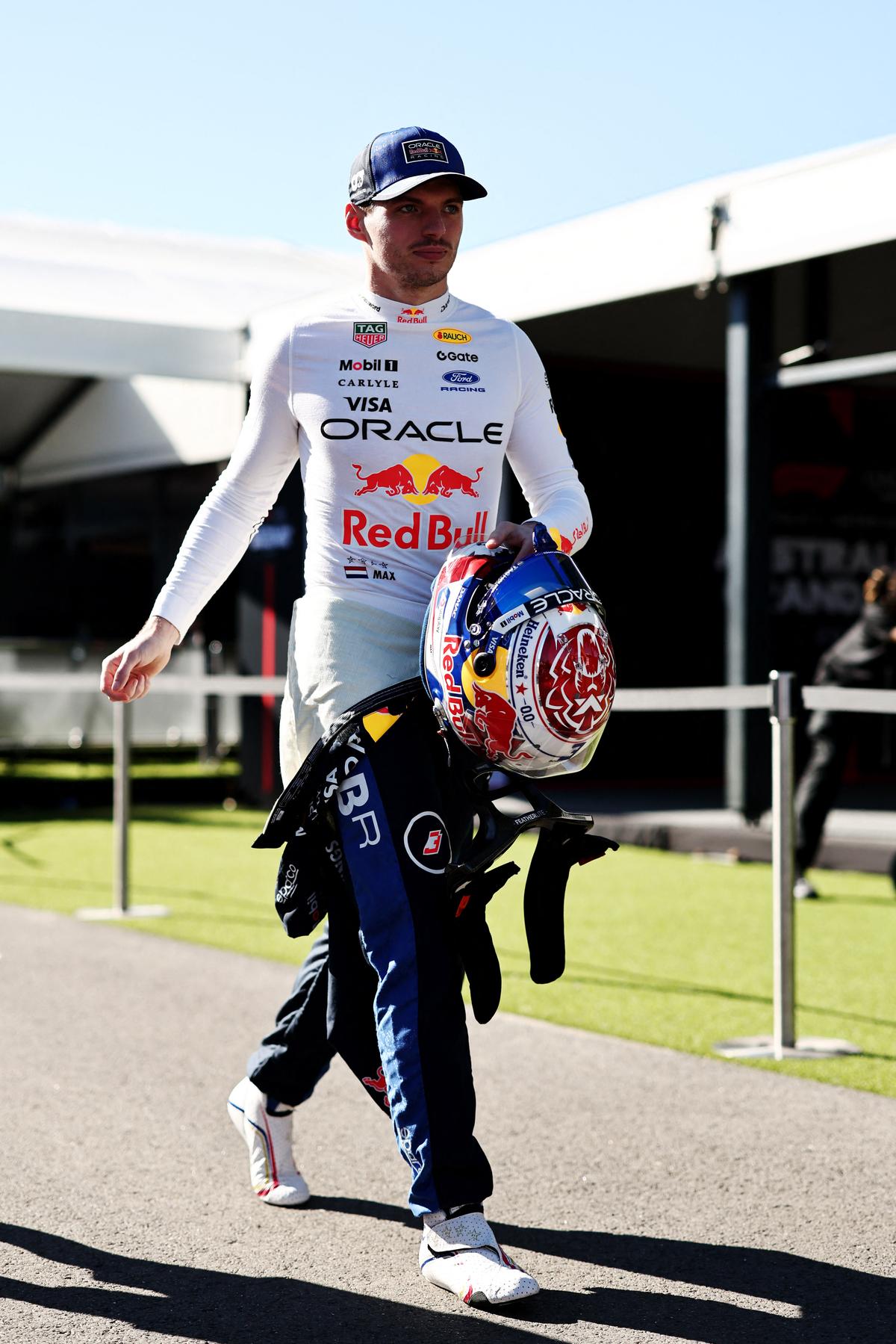
Verstappen.
| Photo Credit:
AFP
‘Anti-racing’
Max Verstappen was even more critical of the new rules, calling them “anti-racing”.
“As a pure driver, I enjoy driving flat out. And at the moment, you cannot drive like that. A lot of what you do as a driver, in terms of inputs, has a massive effect on the energy side of things. For me, that’s just not Formula One,” said Verstappen during pre-season testing.
On the one hand, drivers still face challenges adapting to new variables, such as harvesting and deploying energy, and the best often do so quickly.
At the same time, it could make the Grands Prix too random and alienate fans with the complexity involved, and lay viewers could get confused about how the race is unfolding.
Early days
Still, these are early days, and F1, as a sport, has always shown an ability to overcome complex engineering challenges. The first few races will give a glimpse of how effective the new formula will be.
For now, fans and stakeholders will wait with bated breath, hoping the doomsday scenarios do not play out and teams get on top of things.
Published – March 05, 2026 10:03 pm IST