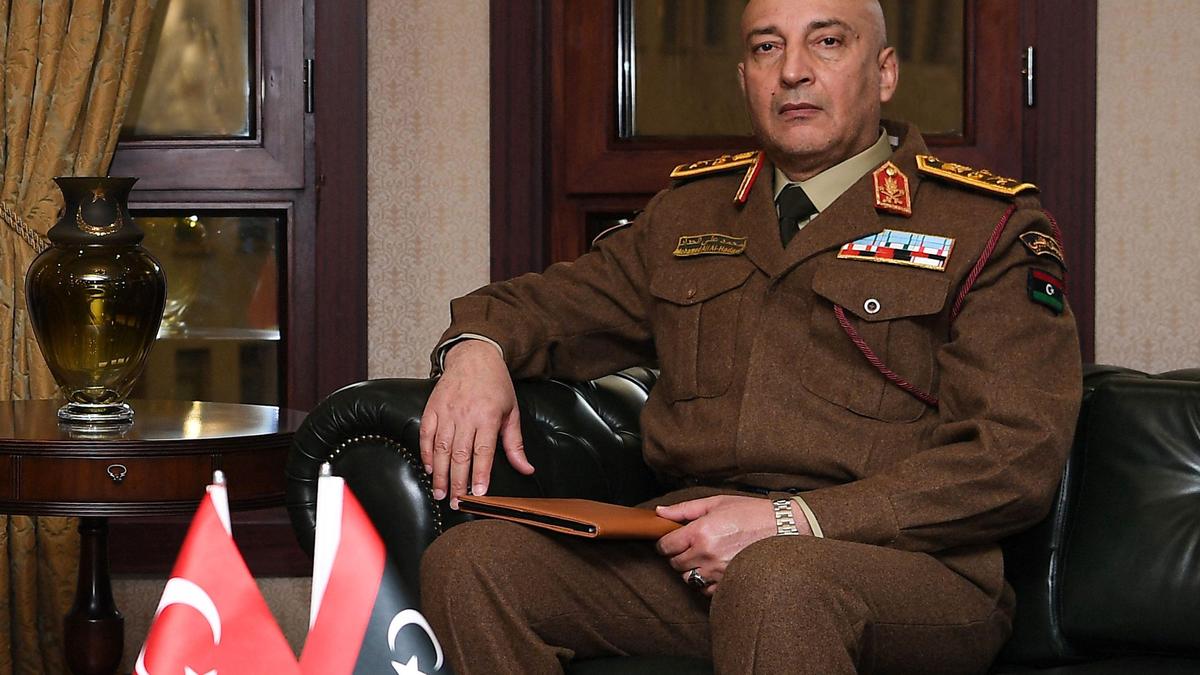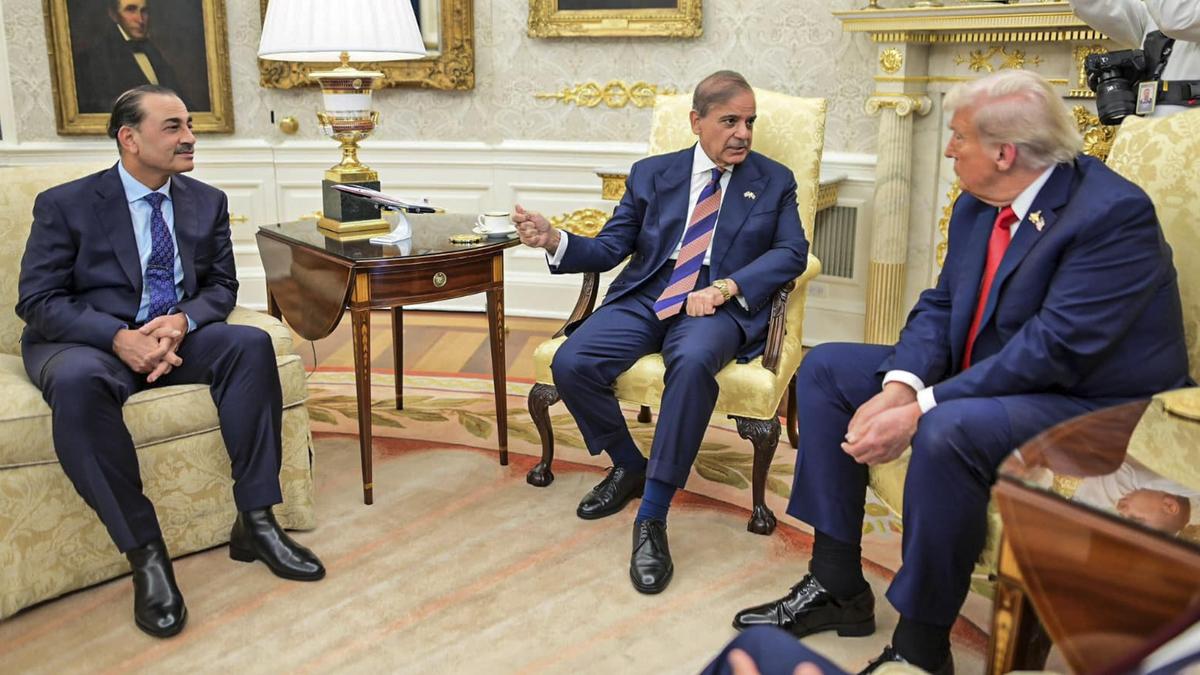
‘There is no grand strategy at play for Field Marshal Munir’. Photo: Special Arrangement
American scholar, the late Stephen P. Cohen, had once pontificated that Pakistan often finds itself in a place of political success because it negotiates with the world by putting a gun to its own head. While this has been proven true many a time, the recent victories, both with the United States and the less talked about, West Asia, have come as a boon for the state’s now all-encompassing and all-powerful Army chief, Asim Munir.
Field Marshal Munir’s grasp on power has come at a moment when geopolitical successes for Islamabad are not coming through much of a design, but by way of geopolitical churns plaguing the global order and its penchant to play the narrative game to the hilt, considering that Pakistan has little to lose to begin with. Nonetheless, Field Marshal Munir being called upon as “my favourite Field Marshal” by U.S. President Donald Trump, a self-christened military honour given to Field Marshal Munir by himself, Pakistan nominating Mr. Trump for the Nobel Peace Prize for his perceived role of stopping a full-blown India-Pakistan war following Operation Sindoor, and also strongly supporting the Gulf’s positions on Gaza, have brought Pakistan under an unexpected spotlight. “Much of our problems emanate from Pakistan Army,” India’s External Affairs Minister S. Jaishankar had recently reiterated.
Agreement with Saudi Arabia
The Strategic Mutual Defence Agreement (SMDA), signed between Pakistan and Saudi Arabia in September 2025, was another victory of perception for Pakistan, and an early sign of success for Field Marshal Munir. Over the past few months, Pakistan’s Prime Minister Shehbaz Sharif’s low public profile and photo-op appearances during international visits have showcased another shift from civil to military. For Gulf powers such as Saudi Arabia, a stable Pakistan is suddenly of consequence both from a utilitarian perspective of its military strength and its potential to supply foot-soldiers for work that Arab armies themselves would not want to do. This includes sizeable participation in any kind of international peace force in Gaza.
Editorial | Power grab: On Pakistan’s General Asim Munir
While the Gaza war has been on-going since 2023, its broader implications and the spread of Israel’s military campaigns across the region, from Yemen against the Houthis to directly targeting Iranian nuclear facilities inside the country along with the Americans, reshaped how Arab powers have viewed regional security till date. The point of no return also came in September 2025 when Israeli missiles, reportedly launched from the Red Sea region, targeted a compound in Doha, Qatar, housing Hamas’s political leadership. The strike ended up killing a Qatari security official. Prior to this, Qatar was also hit by Iran, in response to U.S. airstrikes as Tehran targeted the U.S.’s largest military installation in the region, the Al Udeid air base. In short, despite their own internal disagreements, Arab states have since moved towards a more collective ideation of defence, reading the tea leaves that the U.S. military may not come to their aid going forward.
The past
Previously, Pakistan had spent some time on the peripheries of West Asian diplomacy. On more than one occasion, the United Arab Emirates has suspended issuing of visas to Pakistani nationals on security grounds. Riyadh’s loans to Islamabad have come with strict conditions with relation to the country’s IMF bailouts. In 2015, Pakistan had refused to send its troops to participate in the Saudi campaign in Yemen against the Houthis fearing a fracture of relations with Iran, leaving a new and incoming Crown Prince Mohammed bin Salman in the lurch. In 2019, then Indian Minister for External Affairs Sushma Swaraj was invited to speak at the Organisation of Islamic Cooperation meet in Abu Dhabi, forcing Pakistan to lodge a protest and stage a walkout. Ms. Swaraj took a strong position against terrorism in her speech, aimed at Pakistan without naming it, but also appealing to a growing anti-extremism posture being taken by Arab powers themselves. New Delhi hosting Crown Prince Mohammed bin Salman in 2019 for a state visit, at the height of the Khashoggi issue, was a buy in, supporting these transformative changes in the cradle of Islamic ideology and theology.
The road ahead
But in 2025, Pakistan has found its way back into West Asia’s good graces and Field Marshal Munir has been pivotal to this design by way of taking advantage of prevailing geopolitical headwinds to merit his country’s importance in backing a revised security architecture for Arab powers. Finally, there is no grand strategy at play for Field Marshal Munir. He has consolidated abject power at a time when strategic crevasses in international and West Asian security order are palpable. However, opportunism has a shelf life and does not guarantee long-term dividends. Pakistan’s core economic and political crisis points remain intact and will not be overshadowed despite the victories of narratives it is currently clocking. For now, Pakistan military has utilitarian benefits for new West Asian security demands, but ideologically, the proverbial gun on its own head remains a long-term problem internationally.
Kabir Taneja is Deputy Director and Middle East Fellow, Strategic Studies, Observer Research Foundation
Published – December 24, 2025 12:08 am IST