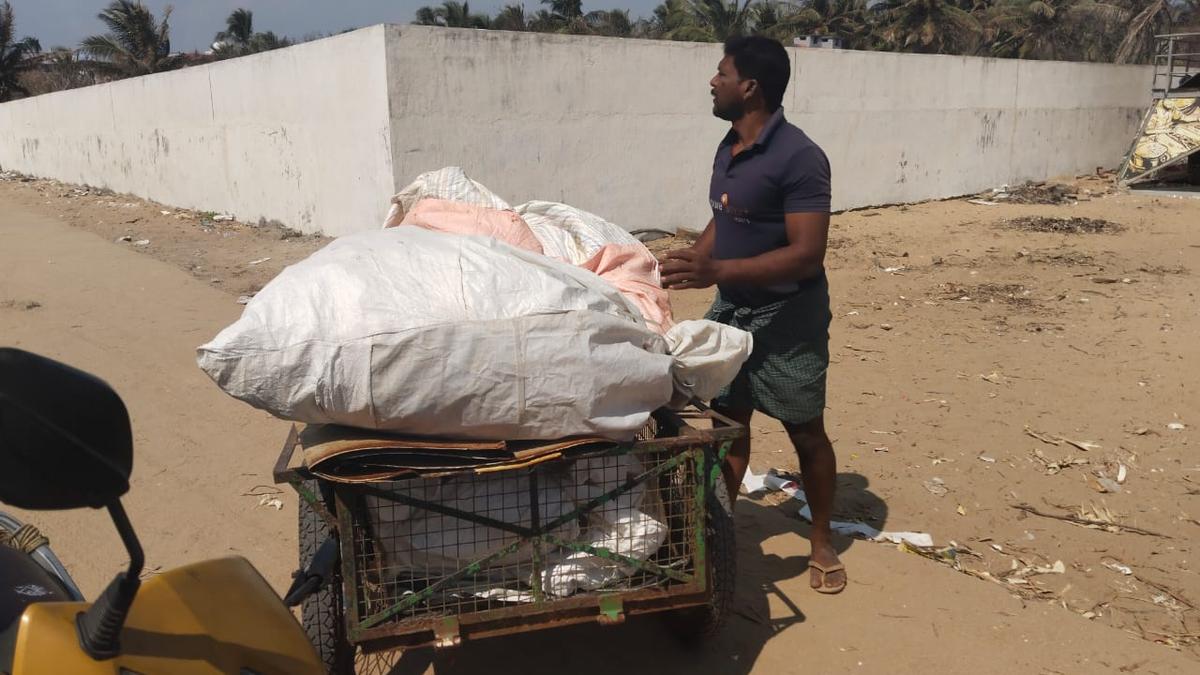
A local scrap dealer at a Circular Coastal Clean-up organised at Kovalam beach on January 22, 2026.
| Photo Credit: Special Arrangement
In certain parts of Chennai, “scrap shops” have. a way of popping up at recyclable drives conducted at apartments. These units mirror the local scrap shop across the street, the scrap dealer arriving with a tricycle in tow., But these shops have the longevity of adult mayflies, in fact shorter still, but the impact they have on the circular economy is far-reaching. They train residents to develop the habit of sorting out recyclables, as the money they receive incentivises the practice.

Waste management company Kabadiwalla Connect has been promoting this model for a year and half, and has started extending it ti the Chennai coast, working these shops into how beach clean-ups are planned and executed.
The beginnings
“We have done quite a number of pop up scrap shops in the Mylapore region; we have done almost over 100 pop-up collection events with neighbourhood associations. We have associated with Ganga Sridhar (a resident of Mandaveli Raja Street) in many of these events,” says Siddharth Hande, founder and CEO of Kabadiwalla Connect. “Basically the idea here is that on a Saturday morning, we get the scrap shop to come to an apartment and set up shop there, temporary shop. Over those two hours, people from the apartment, but now also more and more from that neighbourhood go and sell their recyclables to the scrap shop.”
Read |Recycling solutions for waste we ignore
Recently, on January 22, Kabadiwalla Connect was trying out the “amphibian” capabilities of the pop up scrap shop model by pairing it to a coastal clean-up at Kovalam beach. Even at a distance from the scene of activity, anyone with only a slightly perceptive mind would have sensed that something more than a regular coastal clean-up was unfolding.
A vital link
Siddharth Hande, founder and CEO of Kabadiwalla Connect, on the all-mighty scrap shop across the corner:
“In 2017, we mapped all the Kailan Kadais (local scrap shops) in Chennai. We discovered that there were about 2,000 Kailan Kadais across the city. These guys are very interesting because they are not just buying from waste pickers; they are also buying from the community. In fact, these 2,000 scrap shops were collecting something like 130,000 tonnes of waste every year. So that is about 24% of what the city generates on terms of recyclable waste. They are a key supplier in recycling. The community engagement idea that we had was what if you created simpler connection loops to these Kailan Kadais. And one of the things is we have a smartphone app (accessible on Google Play and App Store) that people can look up and find their closest scrap shop.”
At the centre of the congregating space was a sand artwork featuring a heap of undulating sand, simulating waves; turtles waddling around; and a tricycle with discards, small-sized real recyclables lodged in its sandy carrier body. The work of art was titled “Circular Coastal Clean-Up”, the words indented into the sandy artwork. A pop up scrap shop with shamiana for roof stood near by. Siddharth says Circular Coastal Clean-ups are the need of the hour because of the proportion of these clean-ups. He estimates that “on an average 200,000 beach-ups happen every year on the Indian coast”.
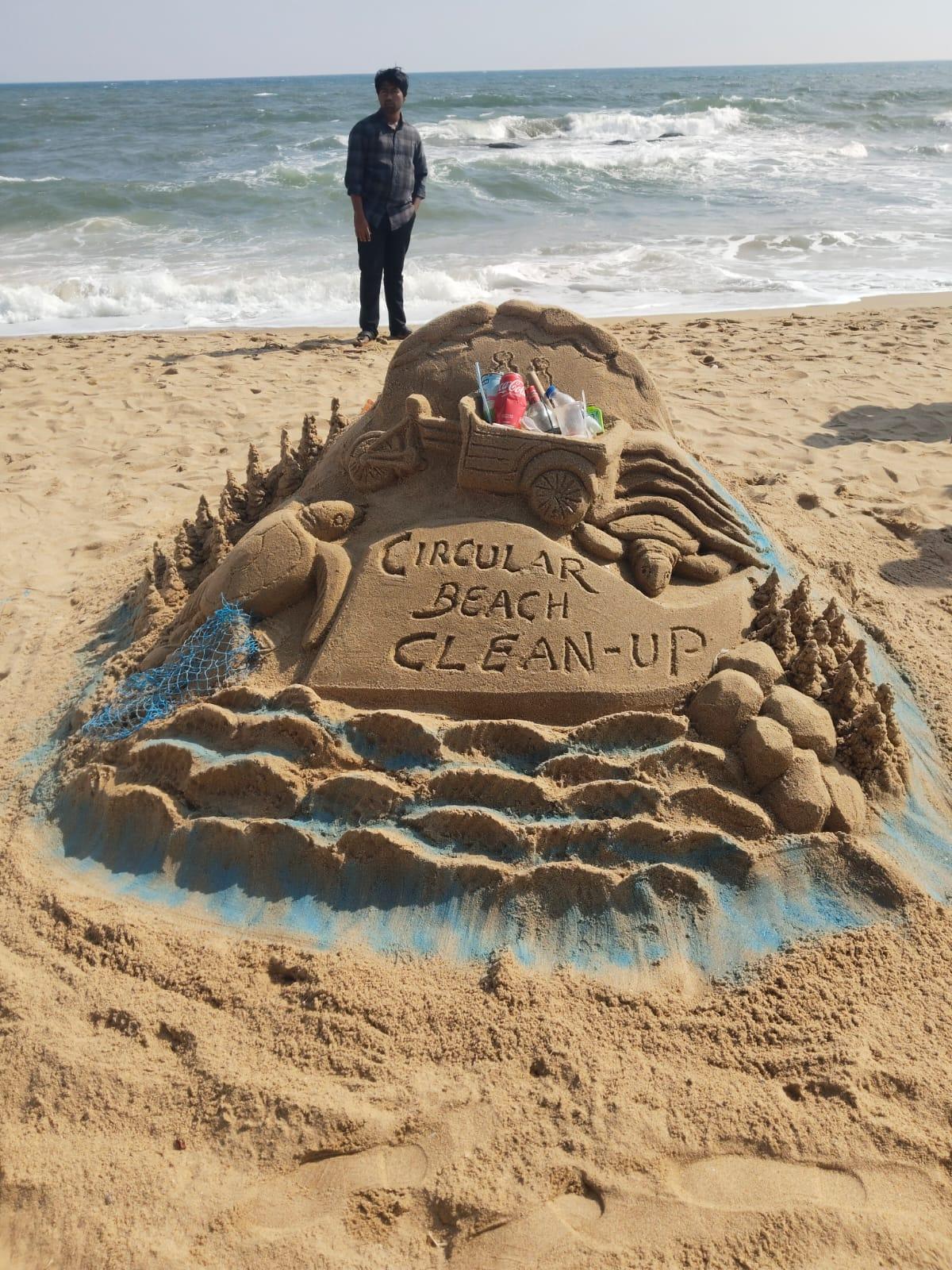
The Circular Beach Clean-up at Kovalam
“The idea is whenever somebody has a beach clean-up anywhere in the city, we can help find them the local scrap shop and ensure the scrap shop is a vendor or a partner of the clean-up. And that is what we call the circular clean-up,” says Siddharth. It generates instant value for a beach clean-up and an incentive to organise it more often.
Siddharth observes that they had actually tested the efficacy of the Circular Coastal Clean Up model much ahead of the event at Kovalam, which Kabadiwalla Connect organised in collaboration with Residents of Kasturbanagar Association (ROKA) and United Beings Foundation.
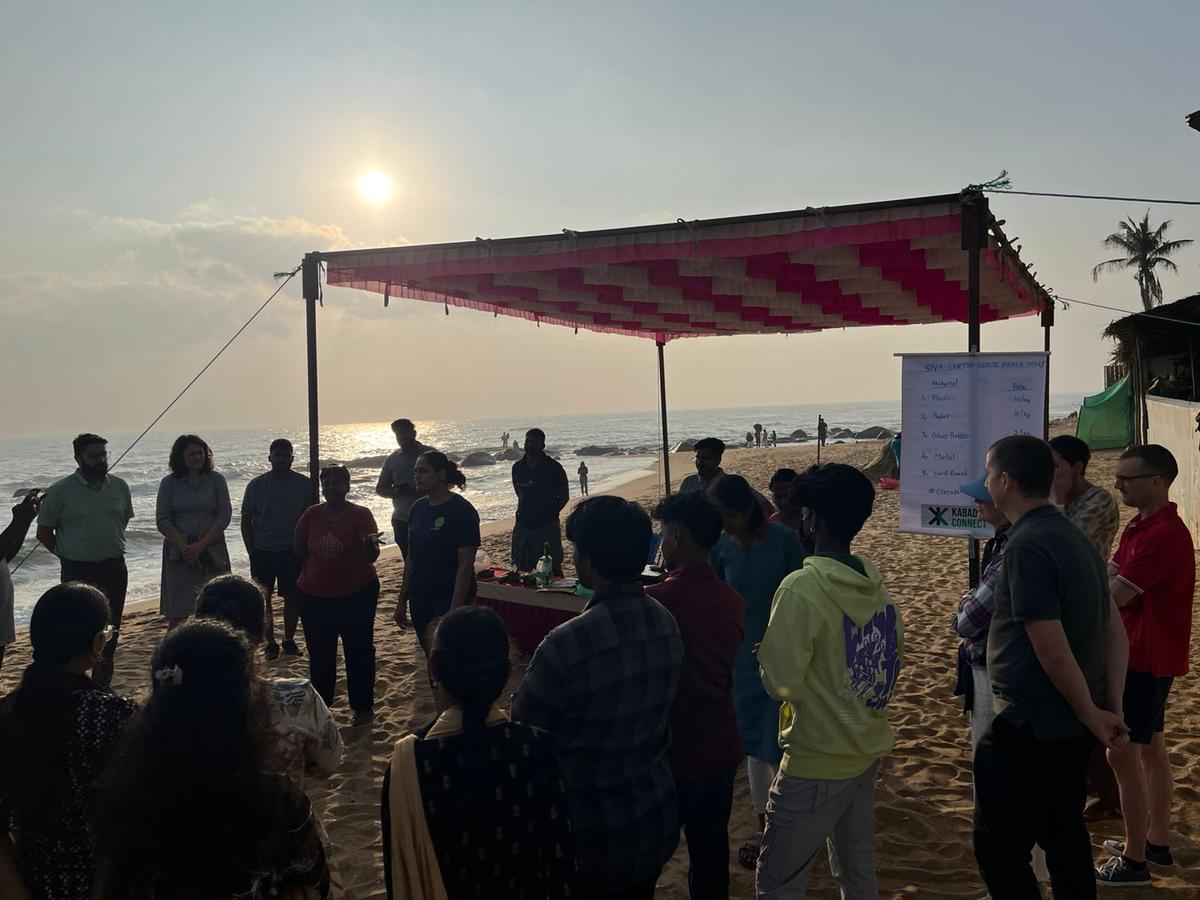
The pop-up scrap shop set up at the clean-up at Kovalam beach
“Before we did this work in Kovalam, we tested the model with the National Centre for Coastal Research (NCCR). During their International Coastal Clean-up Day last year, we did a pilot with them for Chennai, working at five beach clean-ups simultaneously in the city, bringing five different colleges on board.”
A key finding. “On an average, about 20 to 30% of the materials that get collected can be recycled into the local recycling supply chain if you do a pop-up activity with the scrap shop for a clean-up.”
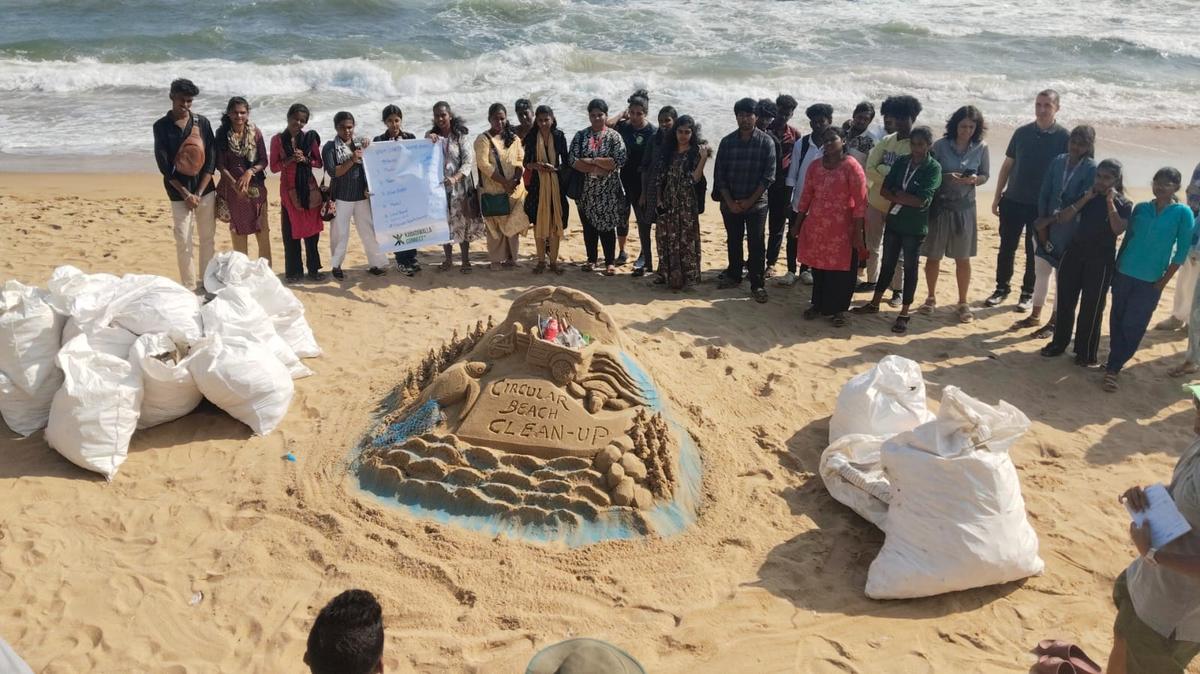
At Kovalam beach on January 22, 2026.
A word of advocacy. “What we are trying to advocate is: partner with your local scrap shop, ensure that the guy comes for your cleanup and 20 to 30% of the collected material will not go to Pallikaranai and Kodungaiyur. They can go back into the recycling ecosystem.”
Published – January 25, 2026 11:23 am IST