
A writer who values layered storytelling, linguistic precision, and social observation, Gaurav Solanki is one of the more quietly consequential voices to emerge in contemporary Indian screenwriting over the last decade.
Born in Meerut with roots in Rajasthan, the IIT Roorkee alumnus gravitates toward forms that allow him to grapple with class, caste, masculinity, and the suffocation of small-town life. His writing avoids offering easy comfort or feeling issue-driven.
Gaurav finds truth more dramatic than fiction. After making a name for himself with his clear-eyed lens on caste, censorship, and power in Article 15, Tees, and Tandav, Gaurav has penned Assi with director Anubhav Sinha. A persuasive courtroom drama on crimes against women, the social thriller has caught the critics’ eye, where, again, he doesn’t allow characters to become mouthpieces.
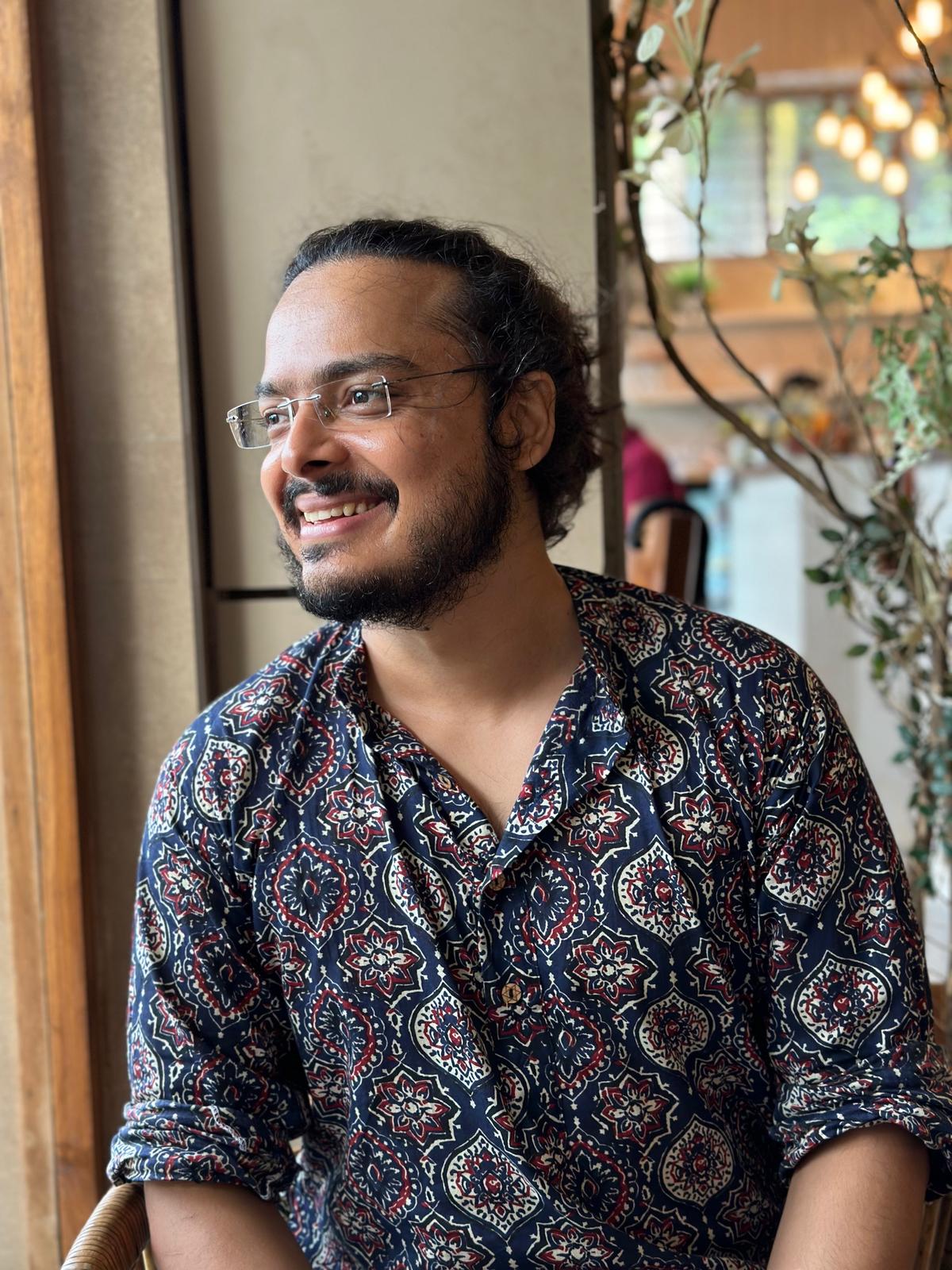
Gaurav Solanki
| Photo Credit:
Special Arrangement
Crime against women, he says, is an issue that hurts us every day, but we don’t talk about it in detail. “I often say this country has such diversity, but crime against women is a universal problem across villages, towns, and big cities. It tells something about us. We often say we are evolving, becoming more sensible, but these crimes are not stopping; the numbers are refusing to come down. Hindi films often just scratch the surface of a social issue; we took a deep dive.”

Gaurav says he took into account the available research on survivors’ and lawyers’ experiences. “The real quest was to go closer to the truth and not state the headlines, statements, and superficial justifications,” he adds. Conscious of screenplay turning into an essay, he says that years of practice have taught him that the research material should become “part of the soul and not constitute the outer body”.
Most films on this theme, Gaurav contends, focus primarily on the crime’s physicality. He wanted to “understand the psyche of the criminal and survivor”, and also how these crimes affect lawyers, police officers, and even children. He notes that people are becoming “desensitised to crime”, reacting only to brutal events, forgetting that perpetrators are often boys around us. “I try to better understand society, hoping my writing will lead to a more compassionate world,” he says.
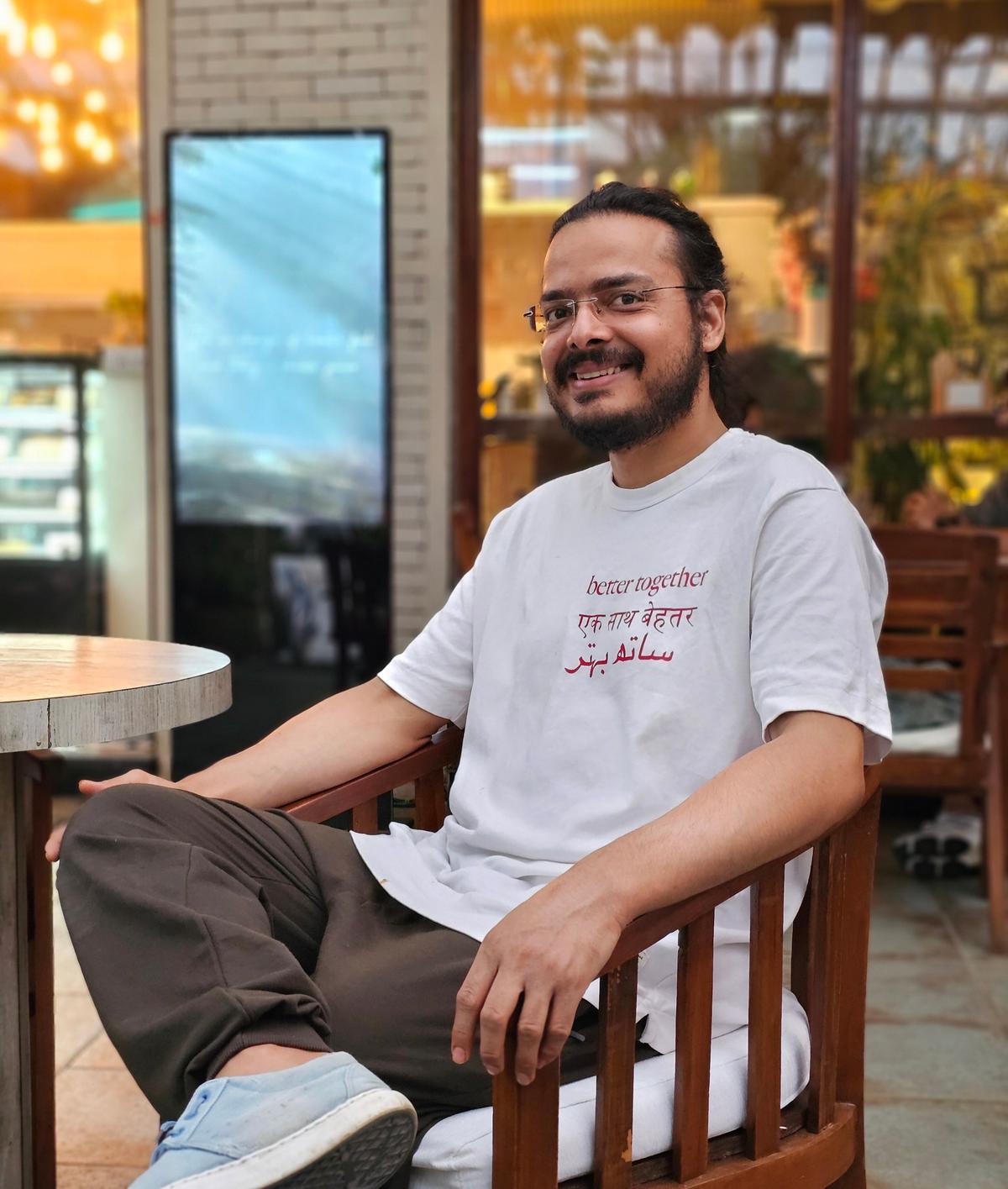
Gaurav Solanki
| Photo Credit:
Special Arrangement
Reflecting on his journey, Gaurav says that from childhood, he has had a certain restlessness. “It took me time to understand the urge to write.” Son of Government school teachers posted in Hanumangarh, Gaurav remembers that books were never in short supply at home. By 12, he had devoured the literature of Premchand and Sarat Chandra. “Perhaps the urge to seek a fair and compassionate world emerged from there. Films were not readily accessible, but I was bewitched by their charm. On weekends, I waited for interviews of film personalities such as Shekhar Kapur and Naseeruddin Shah on Doordarshan, which was different from the children of my age.”
Summers were about sucking sugarcane and bathing in a tubewell in his ancestral village in Meerut. Located at the northernmost tip of Rajasthan, Hanumangarh shares borders with Punjab and Haryana. “As I grew up listening to Bagari, Punjabi, Haryanvi, and dialects of western Uttar Pradesh, it later enriched my dialogue writing,” he relates.
Parental pressure and good marks pushed him from obvious options such as NSD and FTII towards Engineering. He aspired to a seat at IIT Mumbai, but his rank placed him at IIT Roorkee, where he sharpened his literary and organisational skills as the college magazine editor. “IIT gave me the exposure and confidence. I started writing poetry and short stories, but the aim was screenwriting.” By then, he recalls, Anurag Kashyap, Vishal Bhardwaj, and Dibakar Banerjee had changed the idiom of Hindi cinema. At 20, Rakeysh Om Prakash Mehra’s Rang De Basanti left a big impact on him.

His poetry collection, Sau Saal Fida won Gaurav the Bhartiya Jnanpeeth Navlkehan Award in 2012, but he rejected the award when the society deemed one of his short stories as morally inappropriate. It was later published by a reputed private publisher as the centerpiece of a short story collection, Gyaravin-A Ke Ladke. This moral policing and censorship perhaps formed the basis for the central character of Tees, who is also an author.
However, Gaurav doesn’t like to delve too deeply into his characters and leaves it to audiences and critics. “I consciously avoid analysing my characters because it hampers my creative process. For me, the characters become living people. I spend time with them. They come to me while writing other stories. They speak to me when I am alone. Like you can’t define your brother and friend. I don’t judge their actions,” he says.
Regarding the pressures on young writers to maintain their voice, Gaurav explains that the Hindi film industry comprises many different units. “There is a miasma about what audiences want. As someone who has lived in a village, small towns, and the metropolis, I believe people want stories grounded in real experiences. Whether set in Mumbai or Champaran, stories need to be both entertaining and engaging to appeal to a wide range of viewers. We see filmmakers in the South trying new ways to tell rooted stories through different styles.”
To Gaurav, being rooted means real stories about real-world people, whose conflicts are tangible, and whose social existence is truthful. “The love, discrimination, and violence of today are very different from that of the 1990s. Hence, the films should not be inspired by films, something we often see these days.”
He agrees that ‘rooted’ can also become a formula. “We saw it happening with small-town stories. In the beginning, a couple of filmmakers make them with complete honesty, and then those who invest in the cinema business lap it up as a safe genre. Unfortunately, by the time they release, the audience moves on to a new flavour. Something similar happened with sports films.”
The honesty, he says, doesn’t come just from lighting or production design. “Jabgaon ka aadmi, gaon ki kahani keh payega (when a common man gets to tell the story of his village), then we will get to see a new colour.”
But we have seen filmmakers from small towns being compromised by big Bollywood studios. “Filmmaking is a collaborative effort. If it is made to please a couple of people, it is unlikely to maintain its aesthetics and audience appeal. It is a dangerous curve, but I can see times are changing, and we will have more such stories,” he deliberates, cautioning young writers to be patient. “You can get success in the first year, and you might have to wait for 10 years as well.”

In such a situation, remuneration becomes important. Beyond the money he received for Assi, Gaurav says he values the film poster that celebrated the writer as the highest-paid crew member. “It was long overdue. The writer spends the most time with the film: from the conception to the dubbing stage.” There was a time when Gaurav used to write longhand. “Now, I usually type. Writing is a 24-hour job. When a thought comes in the middle of the night, I make voice notes on my mobile.” Gaurav prefers to be on set. “When you have a committed cast, they seek the writer’s thought behind a particular dialogue.”
Open to making last-minute changes if the situation demands it, Gaurav considers rewriting an important aspect of screenwriting. “Sometimes a scene becomes pointless or superfluous because what I wanted to say had already been captured through the previous three to four scenes,” he says.
Days spent cracking engineering codes haven’t proved futile for Gaurav. The writer believes that he has an intuitive quantitative sense in art, rooted in his strong background in mathematics. “With years of practice of balancing equations in mathematics, I start getting restless when something doesn’t add up, or after five to 10 minutes, there is no incremental value to what I am trying to say.”


