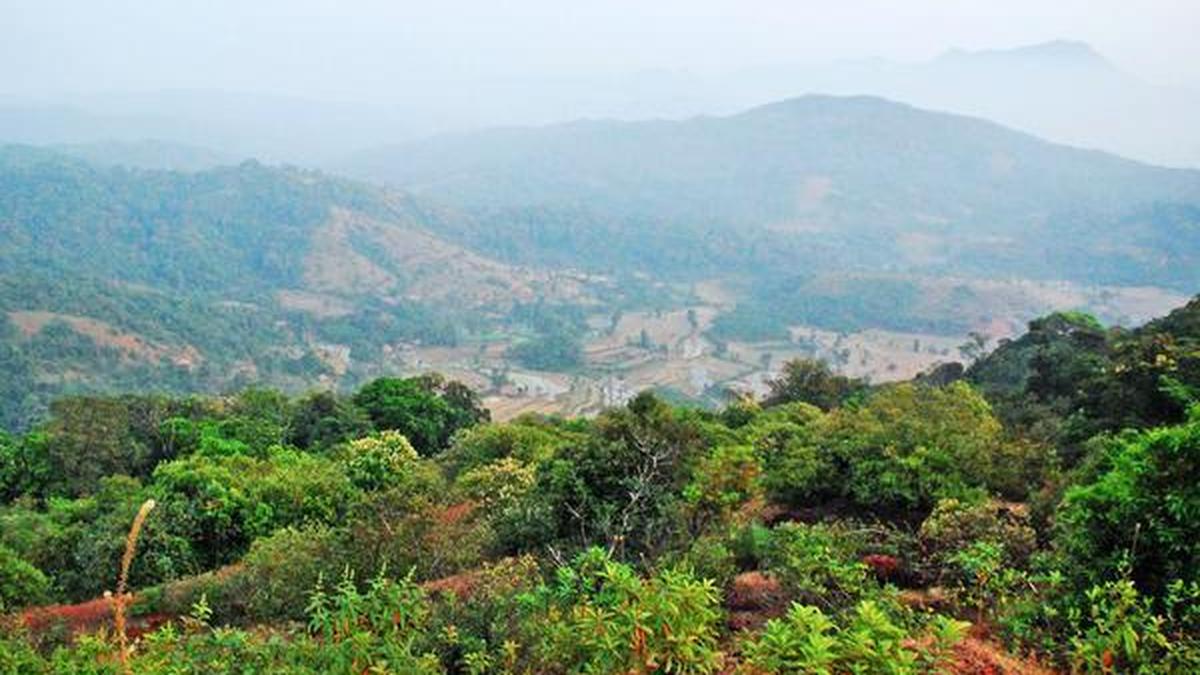
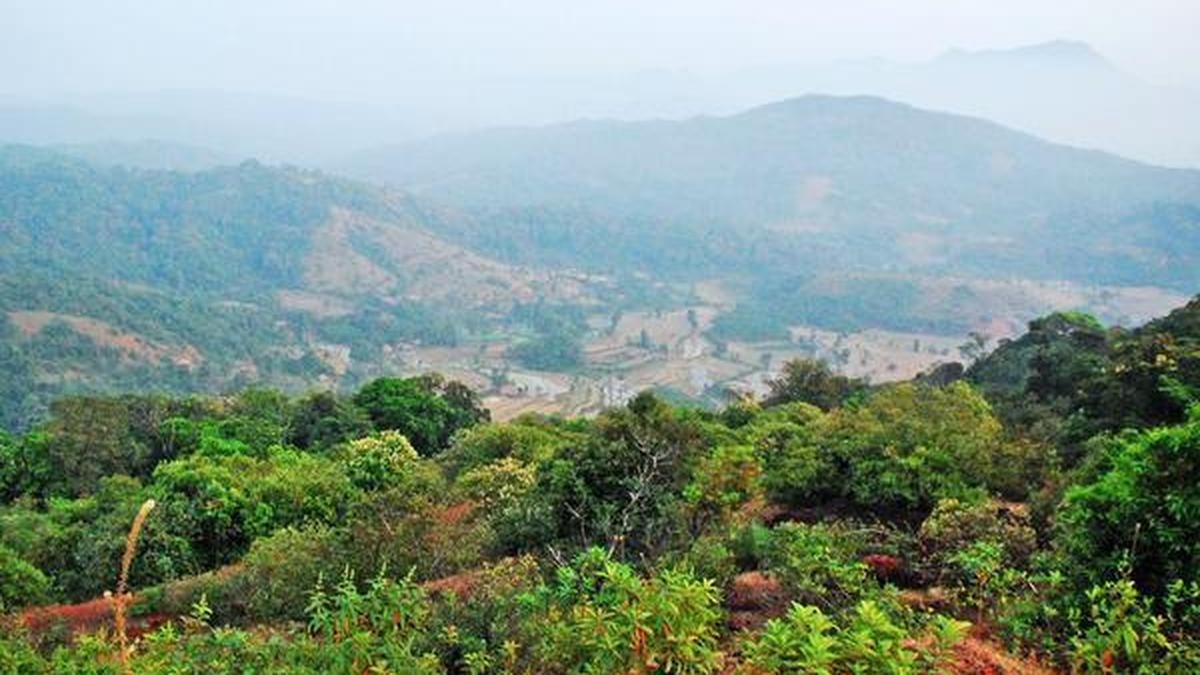
A group of environmentalists had moved the Karnataka High Court, challenging the State Wildlife Board’s approval for a pumped storage hydroelectric project in the Sharavathi Lion-Tailed Macaque Wildlife Sanctuary, which is part of the Western Ghats, and a biodiversity hotspot. File
| Photo Credit: The Hindu
The Karnataka High Court, earlier this month, directed the State government to stop work in the forest area for the Sharavathi Pumped Storage Hydroelectric Project, until further orders. A group of environmentalists had moved the Court, challenging the State Wildlife Board’s approval for the proposed project in the Sharavathi Lion-Tailed Macaque Wildlife Sanctuary which is part of the Western Ghats, and a biodiversity hotspot. The Court’s order boosted the morale of the environmentalists, who have been opposing the project since it was proposed in 2017.
The Karnataka Power Corporation Limited (KPCL) proposed the project in the valley of the Sharavathi river, which flows for about 130 km through the Western Ghats before reaching the Arabian sea. The river is already the State’s primary hydel power source, with four major power stations operating in its valley.
The KPCL aims to generate 2,000 MW through this project to meet peak-hour energy demands, which can touch 18,000 MW daily. The project has been defended on the grounds that the Central Electricity Authority has recommended a transition to clean energy, targeting 50% non-fossil fuel capacity by 2030. Th the cost of the project which was estimated to be around ₹4,800 crore in 2017, has gone up to nearly ₹10,240 crore.
Furthermore, while the project has received the approval of the State Wildlife Board and an in-principle approval from the National Board of Wildlife (NBWL), forest and environmental clearances are still pending.
Environmental concerns
The Karnataka State Wildlife Board gave its approval for the project in January 2025, with certain conditions. Initially, the KPCL had estimated that more than 16,000 trees were to be cut for the project. The board suggested that it be reduced to 7,000 to 8,000 trees.
Even so, the project continued to face stiff opposition from different groups. Environmentalists, locals, farmers’ organisations, and heads of religious institutions spread over the Shivamogga and Uttara Kannada districts have been protesting against the project. They have held several meetings and highlighted the destruction the project will cause to the forests and the endangered species of flora and fauna, including the lion-tailed macaques, who are endemic to the place. Local residents, who have witnessed frequent landslips during heavy rains in the past few years, are worried that the construction of the tunnel might cause irreparable damage to the region. They are also concerned that the implementing agency might take additional forest land to lay the lines needed to carry the power generated by the project. Petitioners, including environmentalist Akhilesh Chipli, have alleged that the project is against the laws that prohibit non-forest activities in the region.
Interestingly, a site inspection report filed by Praneetha Paul, Deputy Inspector General of Forest of the Regional Office of the Ministry of Environment, Forest and Climate Change (MoEF), did not recommend the project proposal. The officer stated that the construction of new roads, and the widening of existing roads and other structures would result in the complete destruction of the wet evergreen forests, and that cutting trees would isolate the population of lion-tailed macaques. Environmentalists have cited this report as a key document to support their arguments.
Considering the serious opposition from the public, representatives of the KPCL held meetings in parts of Shivamogga and Uttara Kannada in October 2025 to defend the project. A team official tried to convince the people that the impact of the project would be minimal. They also argued that the project was necessary considering the need to reduce dependence on fossil fuels for energy production.
Enduring fight
However, the KPCL’s efforts have failed to convince the protesters. Considering the stiff opposition, the MoEF sent an expert panel to visit the project site, and the panel, in its report, stated that the “limited operational benefit offered by the project seems outweighed by the irreversible ecological, environmental and social costs involved.”
The legal setback and the adverse expert report have created a significant hurdle for the project’s proponents. The KPCL’s next move before the Court and the NBWL will be keenly watched.
Published – March 18, 2026 01:17 am IST