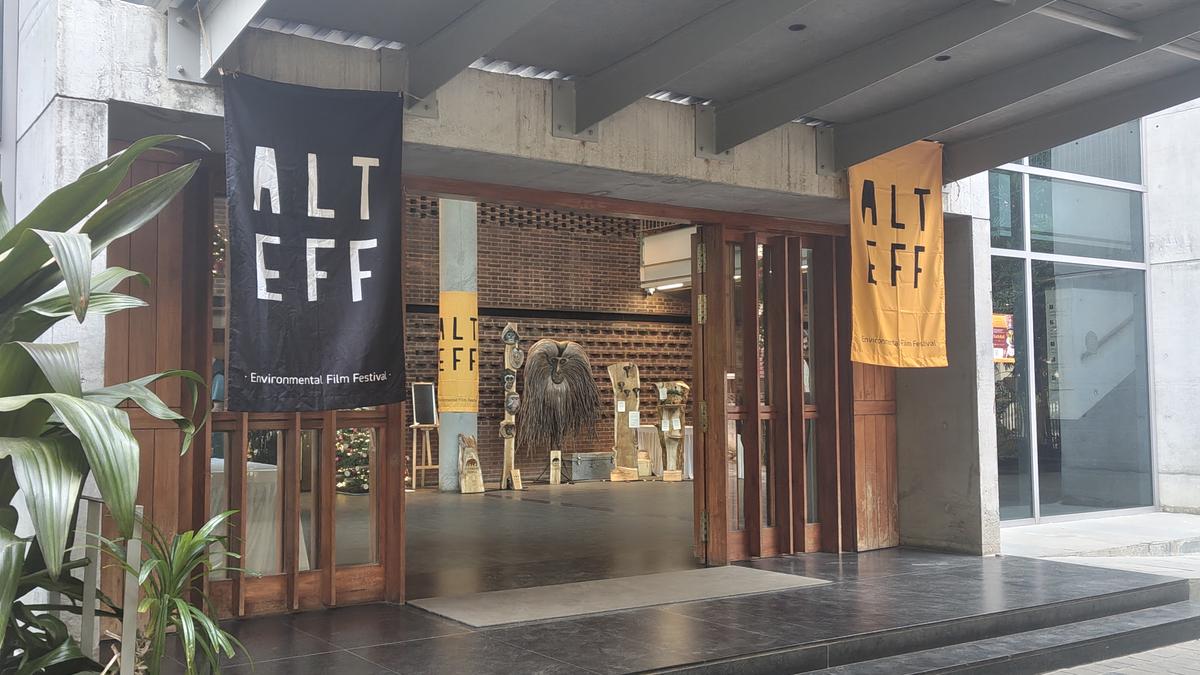
All Living Things Environmental Film Festival at BIC in Bengaluru
| Photo Credit: Deva Manohar Manoj
All Living Things Environmental Film Festival (ALT EFF)’s opening weekend in Bengaluru was about urgent conversations regarding the environment, and where those dialogues unfolded through the language of cinema.
Audiences got a glimpse into sewage systems and landfills, solar parks and wetlands, fungi and forests, folk theatre and immersive experiences, often in a single afternoon. For festival director and co-founder, Kunal Khanna, an economist‑turned systems thinker and permaculturist, the goal was clear: to bring together a range of films that would provide a way for people to take action.
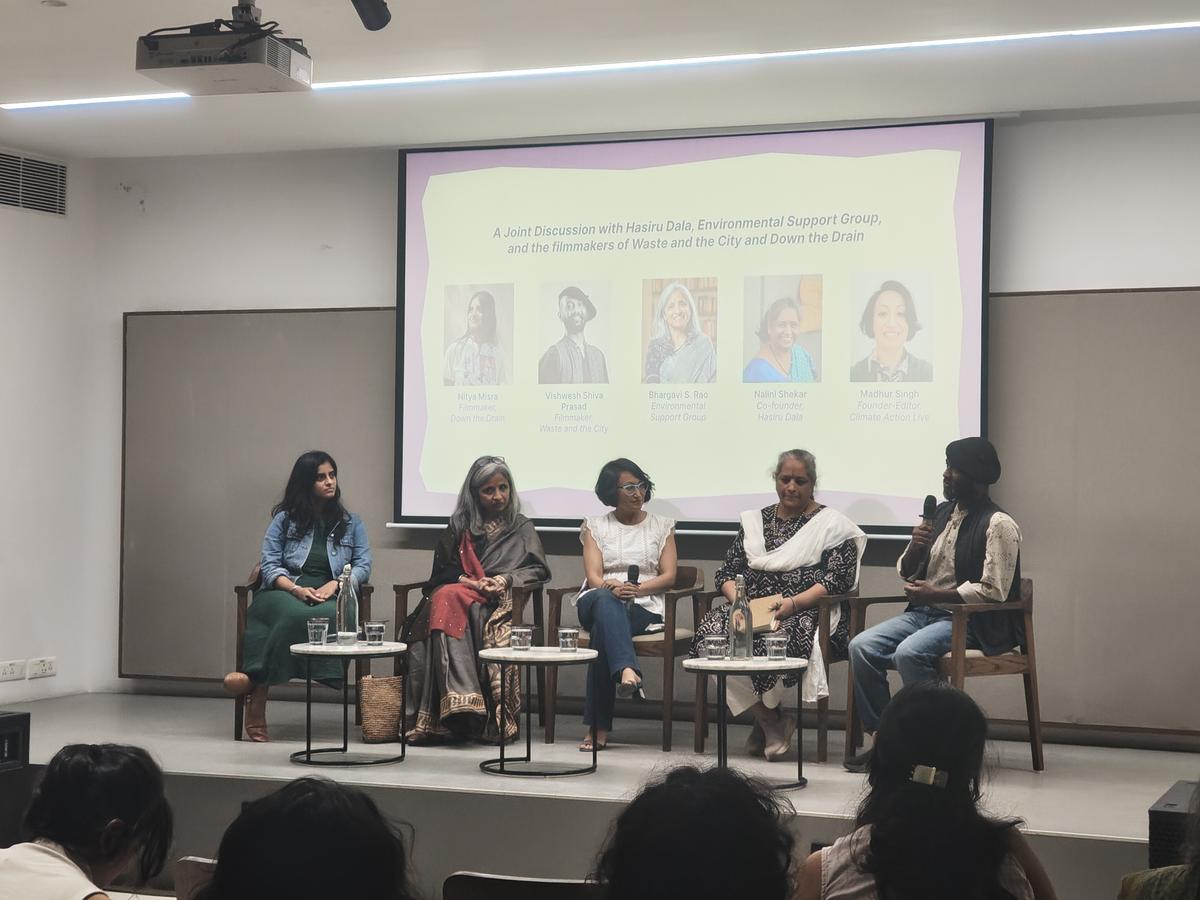
A panel discussion in action
| Photo Credit:
Deva Manohar Manoj
Human stories, the heart of climate cinema
Across the various rooms at Bangalore International Centre (BIC) where the festival was held, the importance of the environment never felt distant; it showed up in villages, cities, factories and forests. From stories such as Kentaro (Tilmann Stewart, Gaku Matsuda) and Future Council (Damon Gameau) making us see the “future” through the eyes of children, to Marching in the Dark (Kinshuk Surjan) following women living with the fallout of farmer suicides and institutional neglect and The Dooars World (Shaon Pritam Baral) stepping into a fragile corridor where wildlife and people coexist, the festival highlighted its core principles of change.
According to the team behind ALT EFF, the features they showcased were not just about the environment, but also about understanding the human connection to it.
“Big filmmakers are getting behind environmental narratives, and these stories are so strong, that the sub‑genre is about the environment, and the main narrative is human emotion,” says Laura Christe Khanna, who is also co-founder and producer of the festival.
The message holds a delicate balance between ecological urgency and emotional immediacy, something that is deliberate and not accidental. Even on stage, performances such as Beware of Plastic Asura, about a Yakshagana demon who embodies our plastic problem, pushed ideas of transformation, while immersive art experiences like The Giants, transported audiences into the heart of Australia’s ancient forests.
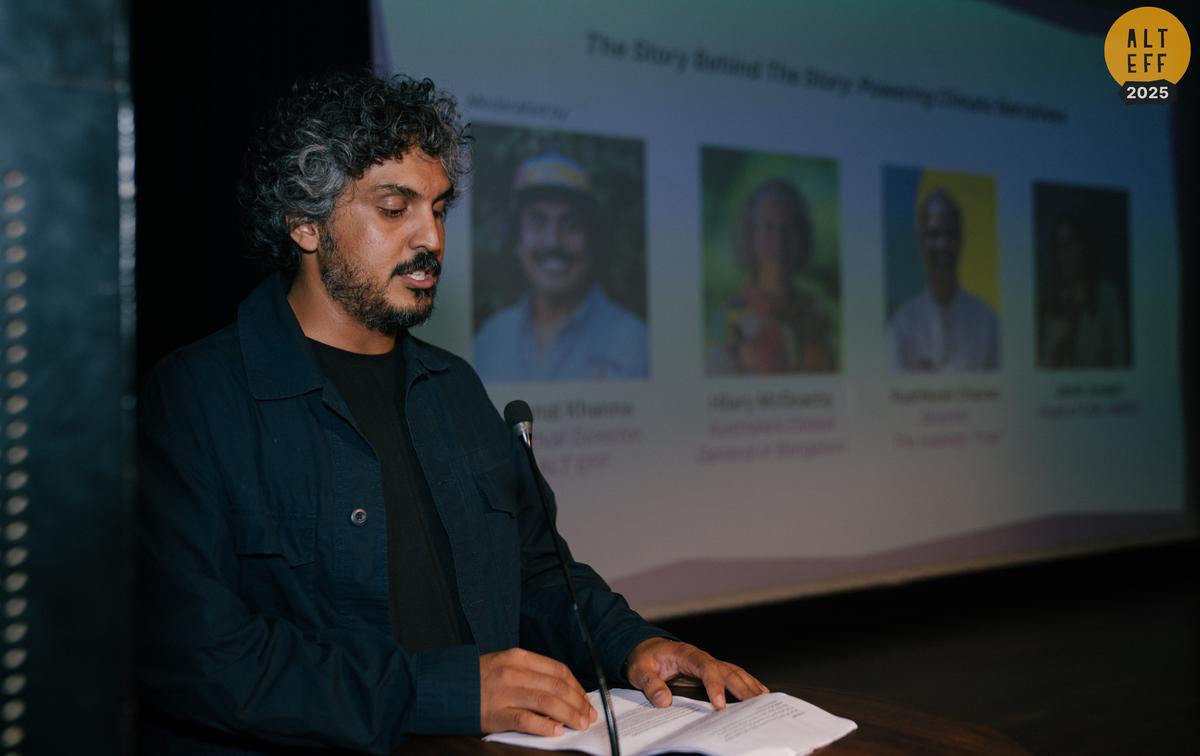
Festival director and co-founder, Kunal Khanna
| Photo Credit:
Special arrangement
Homegrown climate on the big screen
Though the festival covered experiences from all around the world, its gaze never left home for too long. Documentaries such as Down the Drain, a watch’s journey through the city’s sewage system, and Waste and The City, a revisitation of Mavallipura after years of protests and dumping, returned the focus to Bengaluru’s streets, pipes and landfills.
Nitya Misra (Down the Drain) and Vishwesh Bhagirathi Shivaprasad with Karishma Rao (Waste and The City) credit ALT EFF as a platform for audiences to take accountability as well as bring about positive justice.
In the same spirit, Beneath The Panel: The Hidden Losses of India’s Solar Parks, directed by Aparna Ganesan, also asked serious questions about what happens to people displaced in the name of clean energy, and gave audiences a lot to think about.
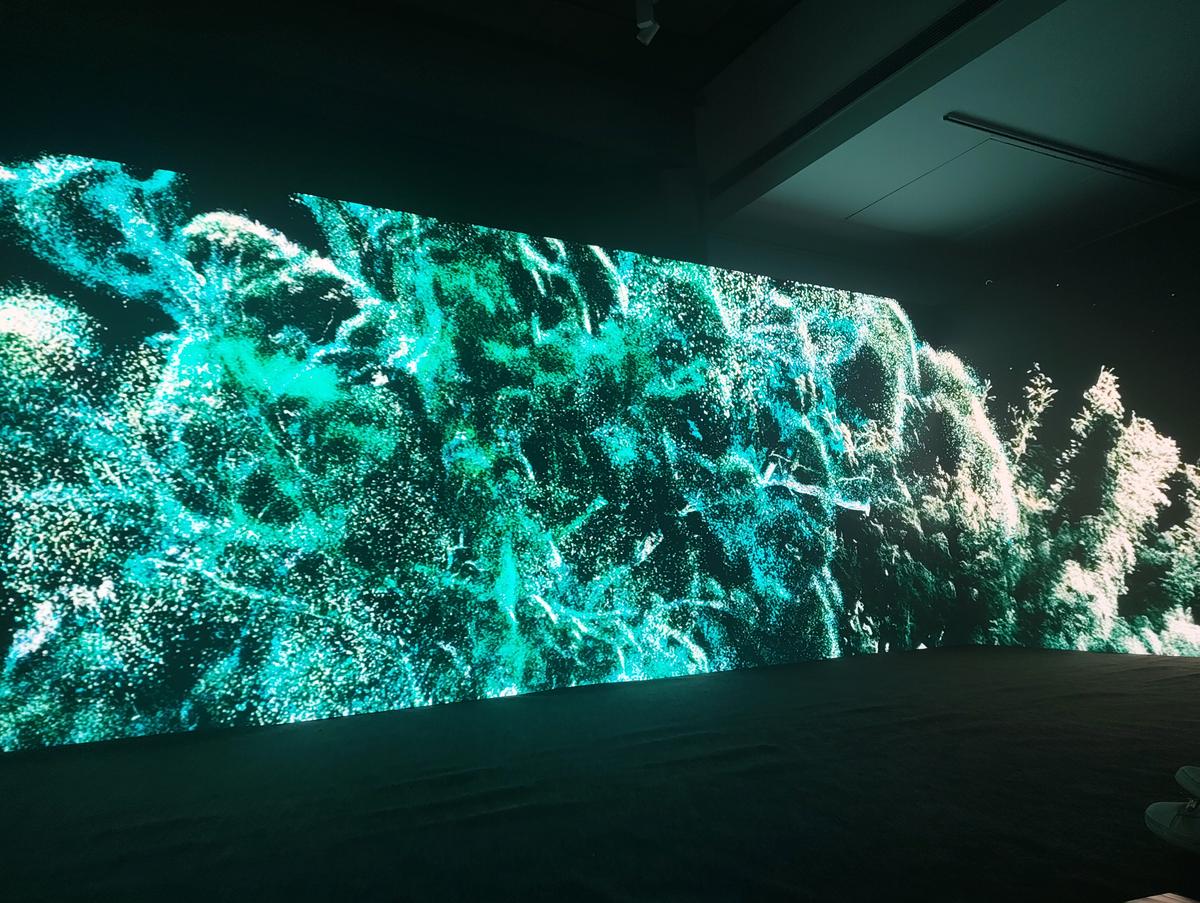
Immersive experience titled The Giants
| Photo Credit:
Deva Manohar Manoj
Talking about the future, Kunal is optimistic that festivals like ALT EFF with a decentralised nature, events hosted in multiple cities and a growing network of watch parties, will go a long way in sensitising people to burning issues surrounding the planet.
Published – December 10, 2025 03:17 pm IST