Usually, April- May would be scorching in Tamil Nadu and the period of ‘khatri’ or ‘agni nakshatram’ (meaning the spell of peak summer) would begin on May 4. But, in 1995, it was an uncommon sight of Chennai and many other parts of Tamil Nadu as the State was experiencing the impact of a deep depression over the Bay of Bengal. Yet, the political temperature of the State was on the rise.
The reason was that the Election Commission, on April 26, announced that Pudukottai and eight other Lok Sabha constituencies in India would face bye-election on May 27. Vacancy for Pudukottai arose in the wake of the death of the Congress three-time parliamentarian N. Sundararaj in September 1994.
Dravidian majors
At that time, the mood of the people was gradually turning against the ruling All India Anna Dravida Munnetra Kazhagam (AIADMK) and Chief Minister Jayalalithaa, who, in March 1993, broke her party’s ties with the Congress, which was ruling at the Centre. Even though there was no apparent unity among all the Opposition parties, some of them saw an opportunity in the scheduled bypoll for bringing all the anti-AIADMK forces together.
In 1994, the Dravida Munnetra Kazhagam (DMK) suffered a split with the formation of the Marumalarchi Dravida Munnetra Kazhagam (MDMK) led by Vaiko. The Communist Party of India (Marxist), which was an ally of the DMK in the 1991 Lok Sabha and Assembly polls, was inching closer to Mr. Vaiko.
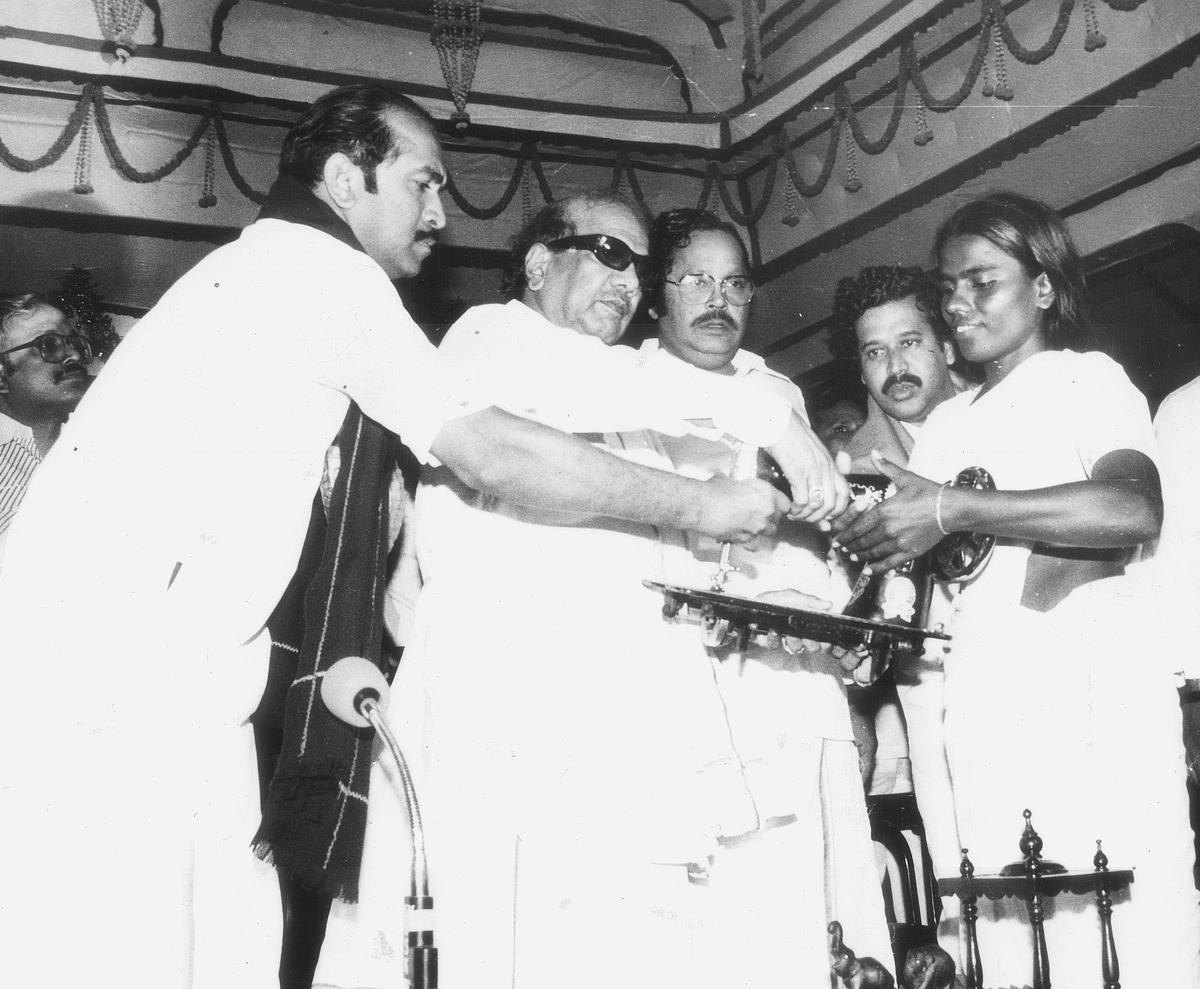
Vaiko (extreme left) and M. Karunanidhi (second left) during an event in Thoothukudi on September 12, 1989
| Photo Credit:
The Hindu Archives
‘Common candidate’
It was against this backdrop that Su. Thirunavukkarasar (then called Thirunavukkarasu, who ran an independent party – MGR ADMK) wanted a common candidate of the Opposition to be nominated and sought an opportunity to be given to his party at a meeting held by the DMK’s chief M. Karunanidhi with friendly parties, The Hindu reported on April 27, 1995. But, based on a consensus arrived at the meeting, it was decided that the DMK would contest the bye-election.
At the same time, former TNCC(I) president Vazhapadi K. Ramamurthy, who was briefly a Union Minister of State for Labour in 1991 during the Congress government led by P.V. Narasimha Rao, and leaders of other fraternal parties had constituted a six-member committee for the purpose of eliciting the views of Opposition parties on the scope for a consensus candidate for contesting the bypoll. Former Assembly Speaker and Minister in the Cabinets of Karunanidhi and M.G. Ramachandran, K. Rajaram, was the convenor of the panel, which had eventually zeroed in on Mr. Thirunavukkarasar.
In the meantime, the ruling AIADMK had announced the MGR Youth Wing’s Pudukottai district secretary R. Raja Paramasivam, as its nominee; DMK named its Pudukottai district secretary and former MLA A. Periannan and the MDMK announced former Minister K. Chandrasekaran as its candidate.
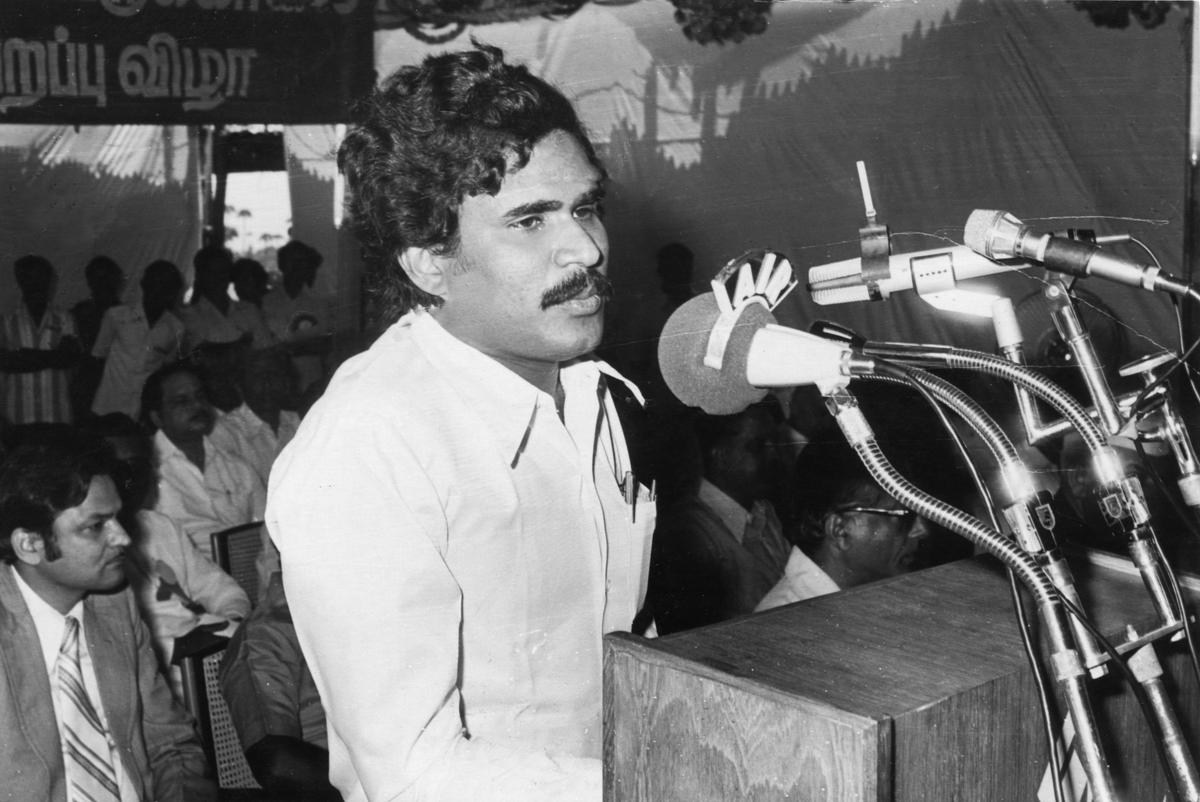
S. Thirunavukkarasar in 1982
| Photo Credit:
The Hindu Archives
Even as the situation was evolving, the then chief of the Tamil Nadu Congress Commitee (TNCC) Kumari Anandan, in the company of Rajaram, Mr. Thirunavukkarasar and the Leader of the Congress Legislature Party-Leader of Opposition S.R. Balasubramoniyan, announced, on the eve of the final date for filing of nominations, the name of Mr. Thirunavukkarasar as the “common candidate.”
This was done on the night of May 2 after “prolonged parleys among leaders of the Congress(I), the MGR ADMK, the UCPI [United Communist Party of India], the Indian National League, the Thayaga Marumalarchi Kazhagam, the Christian Democratic Front and the Tamil Nadu Muslim League, said a report of The Hindu on May 3.
Making it clear that the agreement for a common candidate was arrived at in response to an appeal made by Rajaram and other senior political personalities for putting up a joint fight against the ruling party, the TNCC chief appealed to all political parties opposing the “anti-democratic attitude of the AIADMK” to extend support to Mr. Thirunavukkarasar “in the larger interest of the State.”
But, there was a serious hitch to the idea of supporting the candidate sponsored by the Congress, as the two Communist parties and the Janata Dal (JD) were critics of the national party at the all-India level. Consequently, Rajaram issued a statement, asserting that it was wrong to say he was sponsored as a common candidate by the Congress and its fraternal parties.
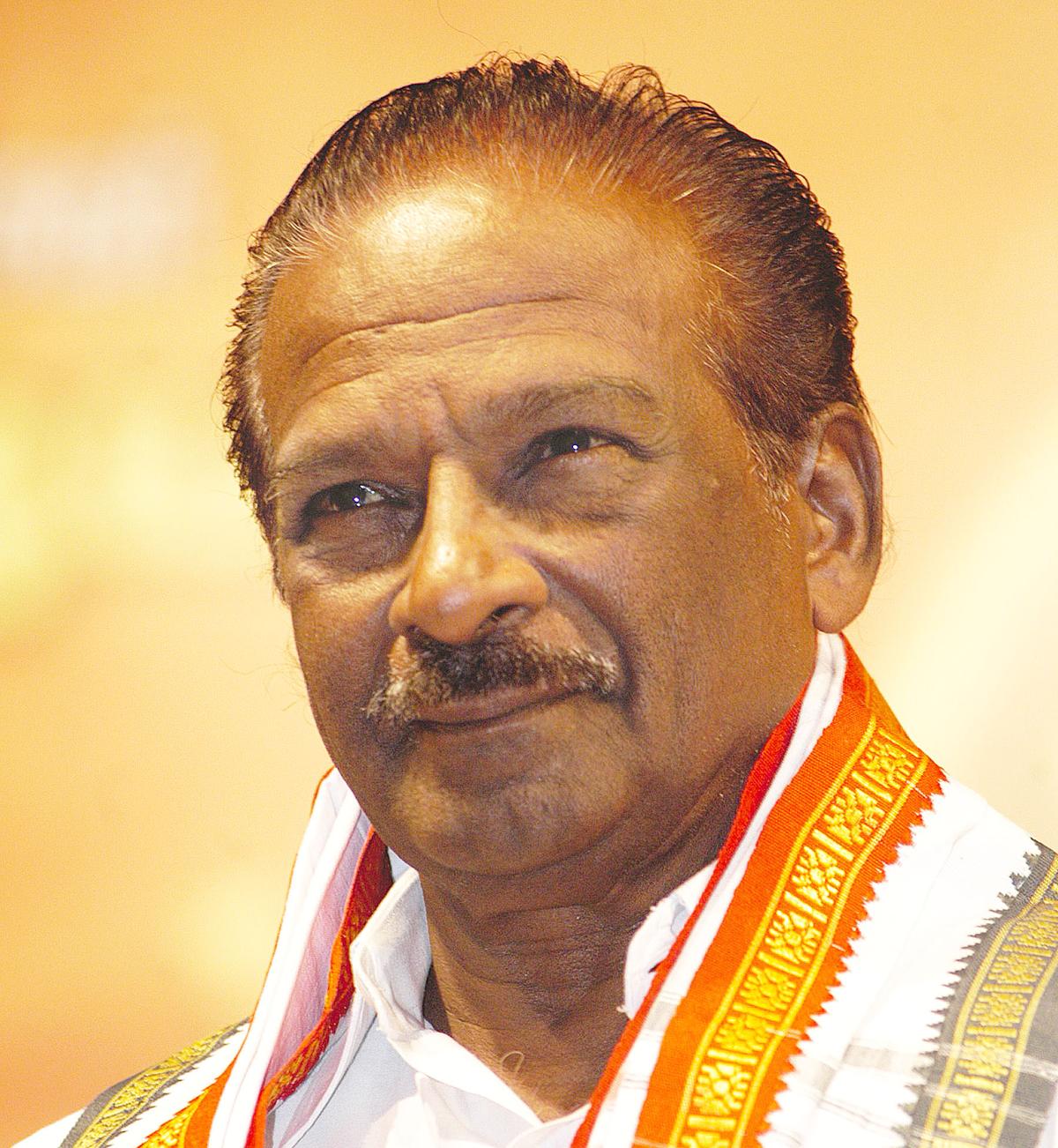
Kumari Ananthan in 2004
| Photo Credit:
The Hindu Archives
After a meeting presided by Anandan at the Satyamurti Bhavan, the headquarters of the national party, where the panel members and leaders of other fraternal parties took part, a resolution was adopted, describing the meeting as an all-party meeting.
At no place TNCC(I) was mentioned in the text of the motion as the sponsor of the meeting, the veteran leader clarified. At one stage, it was stated that the main reason for the Congress to come forward to support the “consensus candidate” was to eliminate the perception that the party was still soft towards Jayalalithaa even after the latter had snapped ties.
No support from Karunanidhi
Karunanidhi had a reason not to support Mr. Thirunavukkarasar as the common candidate. A news item of The Hindu on May 4 that year quoted him as having said that in the absence of a consensus for nominating a common candidate, he had no other option than fielding his party’s nominee. He told the six-member committee that the DMK was ready to fall in line if the chosen nominee was a non-party candidate or one supported by all the Opposition parties.
The suggestion was accepted by the committee but there was no favourable response from the committee subsequently. The DMK chief had also pointed out that leaders of the Communist Party of India (CPI) and JD, when contacted, expressed their inability to support Mr. Thirunavukkarasar sponsored by the Congress as a common candidate. The former TNCC chief Ramamurthy, who had originally mooted the idea of putting up a joint fight against the AIADMK, had felt that Anandan did not handle the matter properly.
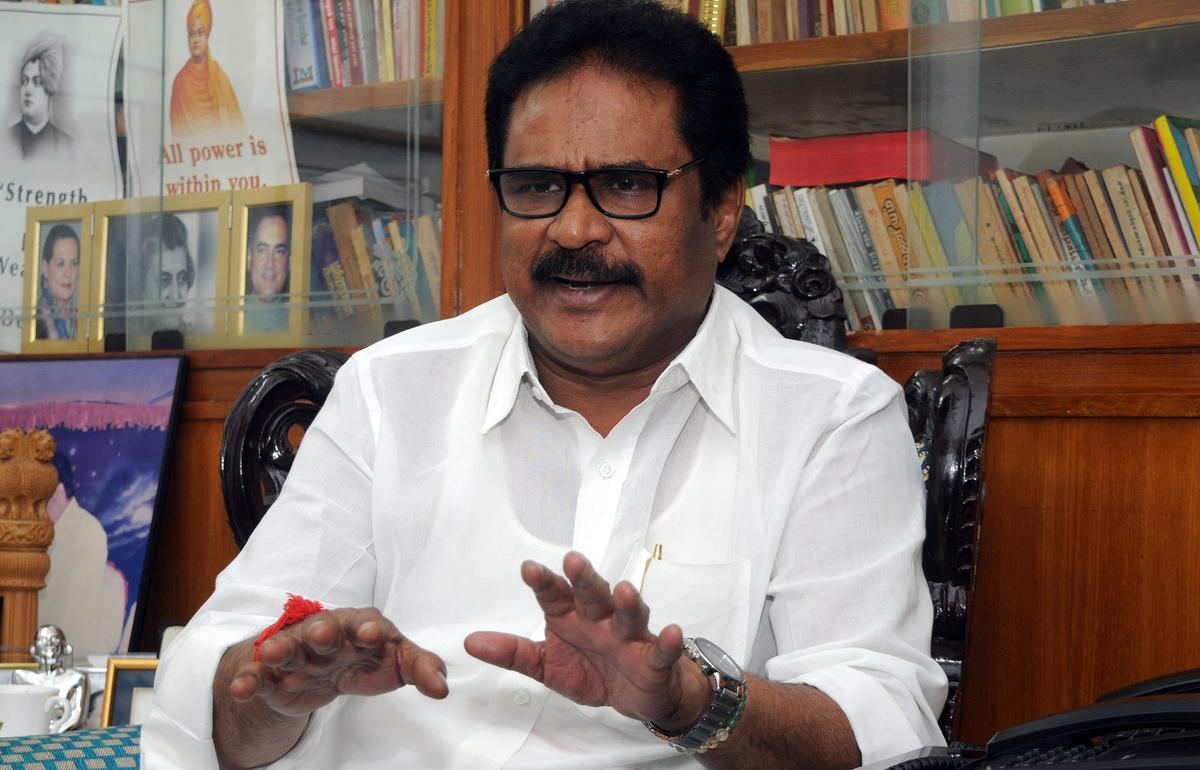
Thirunavukkarasar in 2017
| Photo Credit:
K. Pichumani
Plot twist
All the major candidates had filed their nomination papers but what eventually happened was anti-climax. The day before the date of withdrawal of nomination papers, the Election Commission (on the night of May 5) cancelled the proposed bye-elections to Pudukottai and eight other Lok Sabha constituencies.
The reason cited by the panel was a communication from the then Union Home Secretary, K. Padmanabhaiah, expressing the desire of the Centre for conduct of the next general elections in February 1996. The communication had argued that bye-elections to Lok Sabha at this juncture “would not serve any useful purpose,” this newspaper reported on May 6, 1995.
“The decision of the Commission heeding the request of the Union Home Secretary is indeed strange as it had turned down only last week the request made by all the major national political parties last fortnight for cancellation of the bye-elections on the same grounds,” the daily added.
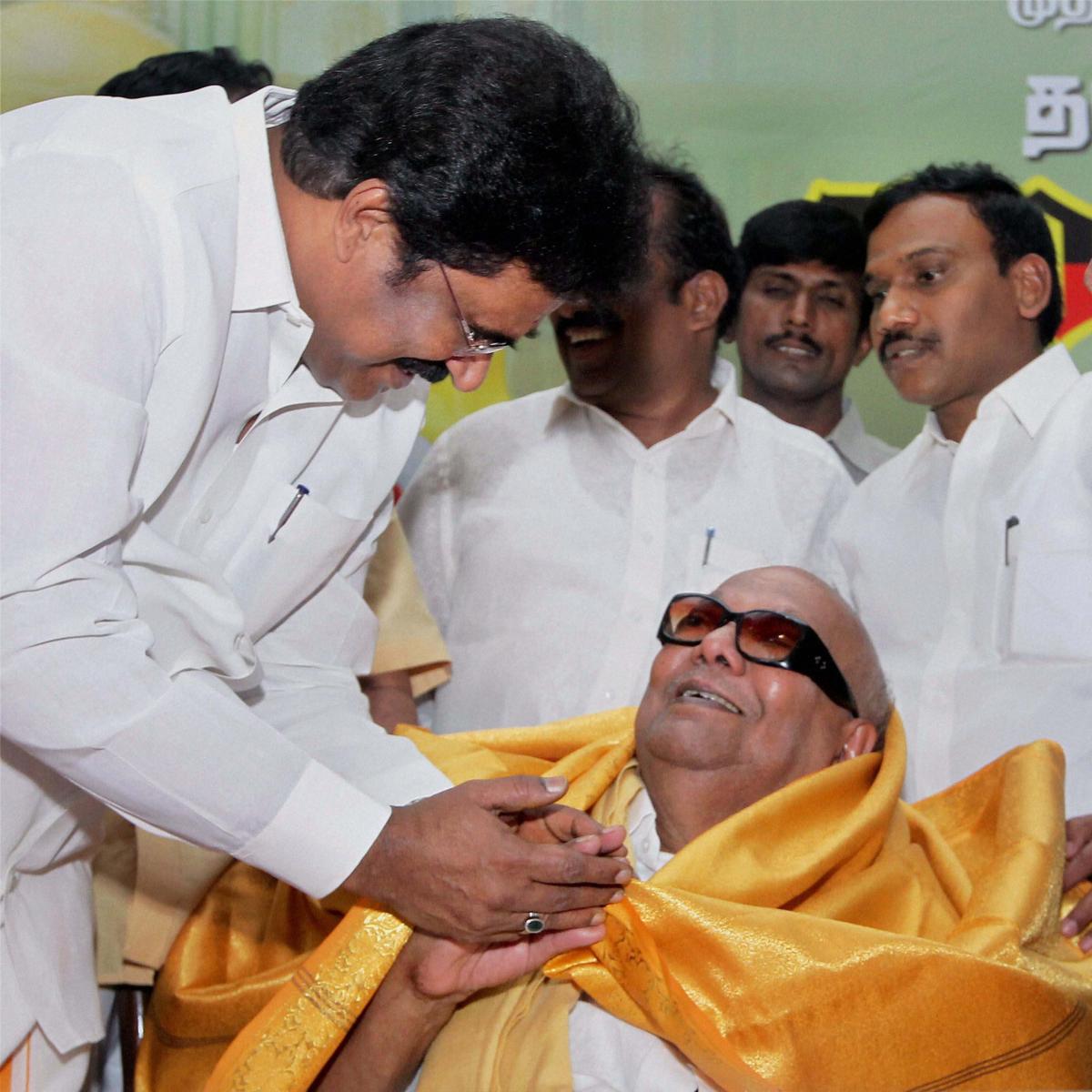
Thirunavukkarasar with M. Karunanidhi on his 90th birthday celebrations at DMK headquarters in Chennai on June 2013
| Photo Credit:
PTI
The Pudukottai episode, according to Mr. Thirunavukkarasar, had caused a considerable gap between him and the DMK leader, who did not call him subsequently for alliance talks in the run-up to the 1996 Assembly election. This was why he, in the words of Mr. Thirunavukkarasar, had to return to the AIADMK then.
However, three years later, Karunanidhi and the MGR ADMK chief patched up and the latter went on to become an MP of Pudukottai.