This article is part of the View From India newsletter curated by The Hindu’s foreign affairs experts. To get the newsletter in your inbox every Monday, subscribe here.)
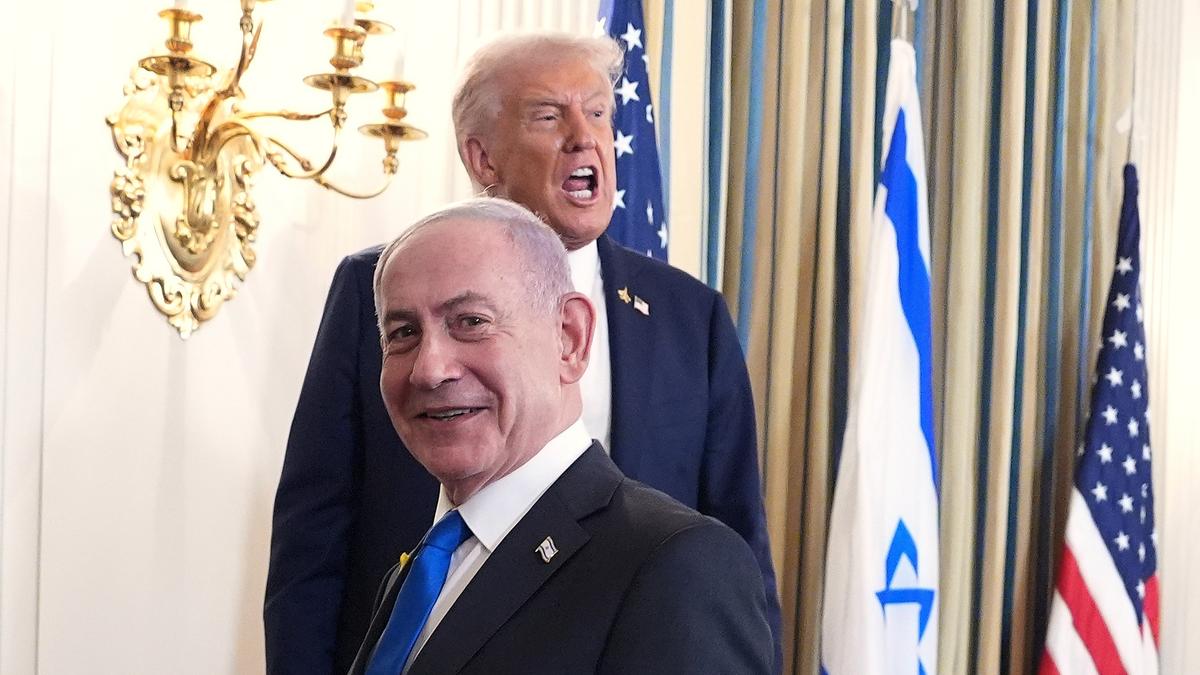
U.S. President Donald Trump’s 20-point ‘peace’ plan for Gaza has gained momentum after it was endorsed by Israeli Prime Minister Benjamin Netanyahu and partly accepted by Hamas. The plan, which promises to bring peace to Gaza and to the wider West Asia, has multiple phases. In the first phase, a ceasefire would be in place in return for the release of hostages. Hamas should release all hostages, alive and dead, while Israel will free 250 Palestinian prisoners, who have been sentenced to life, and some 1,700 Gazans who were detained after the October 7, 2023 Hamas attack. In the next phase, Hamas should be demobilised: if Hamas leaders agree to the terms, they will be provided amnesty and safe passage out of Gaza if they wish to leave the enclave. The plan also seeks to establish a temporary transitional governance committee, comprising Palestinian technocrats, to run day-to-today affairs of Gaza. The oversight of the committee will rest with a ‘Board of Peace’, an international body which will be chaired by Mr. Trump and will have members, including former British Prime Minister Tony Blair, one of the authors of the Gaza plan.
The U.S. will work with Arab and other “international partners” to develop a temporary International Stabilisation Force (ISF) to immediately deploy in Gaza. The ISF will provide security and train Palestinian police officers, in consultation with Jordan and Egypt. “This force will be the long-term internal security solution,” according to the plan. It says Palestinians will not be forced to leave Gaza and that Israel will not occupy or annex Gaza. But Israeli troops will retain a ‘security perimeter’ in the enclave, which will remain under the control of the Board of Peace until the Palestinian Authority’s “reform programme is faithfully carried out”. It offers no clear path or plan for a Palestinian state, but merely says once the plan is implemented, “the conditions may finally be in place for a credible pathway to Palestinian self-determination and statehood, which we recognize as the aspiration of the Palestinian people”.
Hamas did not reject the plan outright. It said it was ready to release the hostages in return for a ceasefire and would enter into talks to discuss other terms of the plan, including relinquishing power in Gaza. Hamas had earlier maintained that the remaining hostages (only 20 out of the 51 hostages are believed to be alive) would be released in phases provided Israel agreed to pull back from Gaza and end the war. It is now ready to release all hostages in return for a ceasefire. Israeli troops would pull back to the initial withdrawal line, but would still retain parts of Rafah in the south, Khan Yunus and a buffer zone in the north. While Hamas doesn’t address questions about its disarmament or demobilisation, Mr. Trump responded positively to Hamas’s initial reaction. “Based on the Statement just issued by Hamas, I believe they are ready for a lasting PEACE. Israel must immediately stop the bombing of Gaza, so that we can get the Hostages out safely and quickly… this is about long sought PEACE in the Middle East,” Mr. Trump wrote in a social media post on October 4. He later told Axios that he told Israeli Prime Minister Benjamin Netanyahu in a phone call that “This is your chance for victory”. The U.S. leader added: “He [Netanyahu] has no choice. With me, you got to be fine. Bibi took it very far [in Gaza] and Israel lost a lot of support in the world. Now I am gonna get all that support back.”
So Mr. Trump is effectively strong-arming the Israeli Prime Minister, who until recently dismissed every call for a ceasefire, into accepting a truce for hostages deal. His public demand for Israel “to stop bombing Gaza immediately” shows how frustrated Mr. Trump is with his ally over the Gaza war. While the developments offer a clear path towards a ceasefire, there are still unanswered questions about the possibility of a peace deal. Hamas is unlikely to sign on any agreement that demands its demobilisation. Hamas also insists that for lasting peace, the Israeli troops should withdraw from Gaza. On the other side, Israel, which initially said dismantling Hamas was one of the key objectives of its war, now says Hamas should be disarmed. Israel has also ruled out a complete withdrawal from Gaza. There are also unanswered questions about who all would make up the Board of Peace and which countries would contribute troops to the Stabilisation Force. That plan doesn’t offer a timeline, and provides little details on what kind of reforms the Palestinian Authority should undertake and who would oversee the reform process. The success of the Trump plan would depend on bridging the gaps between the Israeli and Hamas positions and finding answers to the unanswered questions. But to begin with, if there is a ceasefire in Gaza, it would be a major reprieve for over 2 million Palestinians in the enclave.
The Top Five
1. Tony Blair | A man of many wars
The former British Prime Minister, who implemented the Blair Doctrine of ‘humanitarian interventionism’ by sending British troops to Kosovo in 1999 and to Sierra Leone, and earned public opprobrium for cheerleading the 2003 Iraq war, is set to play a key role in governing Gaza, writes G. Sampath.
2. The course ahead for Trump’s Gaza ceasefire plan
The plan can be seen in two ways — as a statement of intentions on how to end the Gaza war, or an instrument of surrender, writes T.S. Tirumurti.
3. Sir Creek | A marshland of contention
The 96-km-long estuary that lies between Kutch and Pakistan’s Sindh is of enormous economic importance, and became a flashpoint following Pakistan’s May 8 strikes against India, writes Saurabh Trivedi.
4. The maritime signalling after Operation Sindoor
In the tensions between India and Pakistan after May 2025, the frontiers are shifting from airspace to sea, writes Hely Desai.
5. The battlefield, change and the Indian armed forces
Changing battlefield dynamics require an adaptive military, write Harsh V. Pant and Ankit K.
Published – October 06, 2025 04:16 pm IST