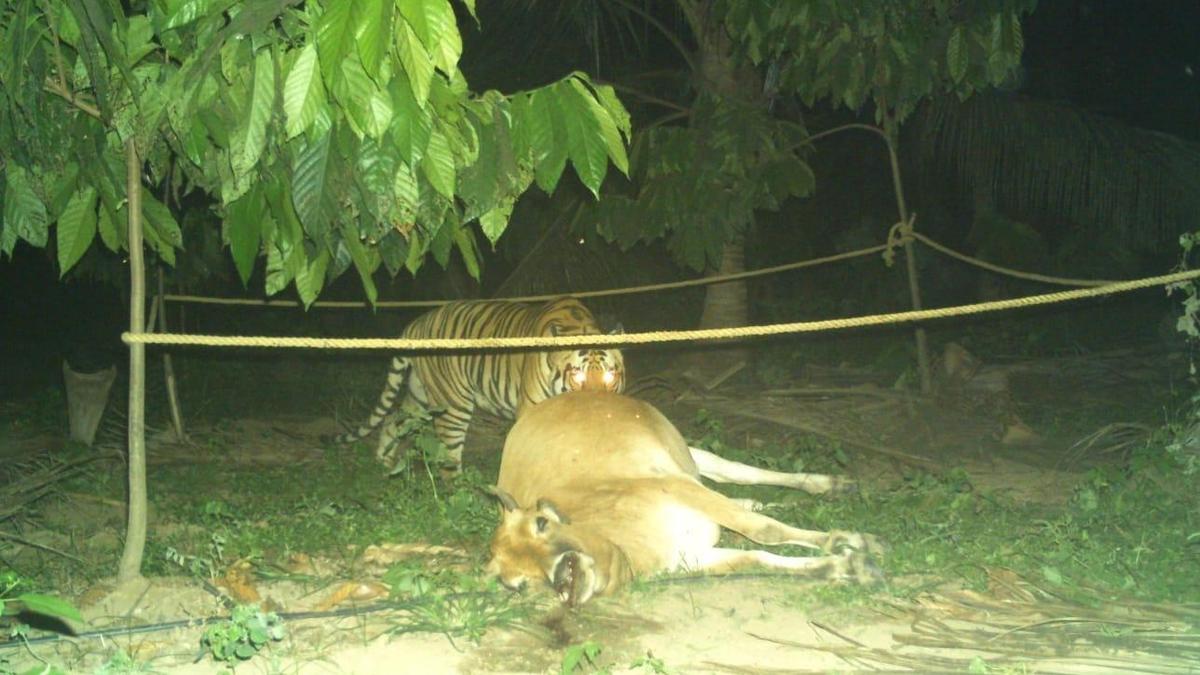
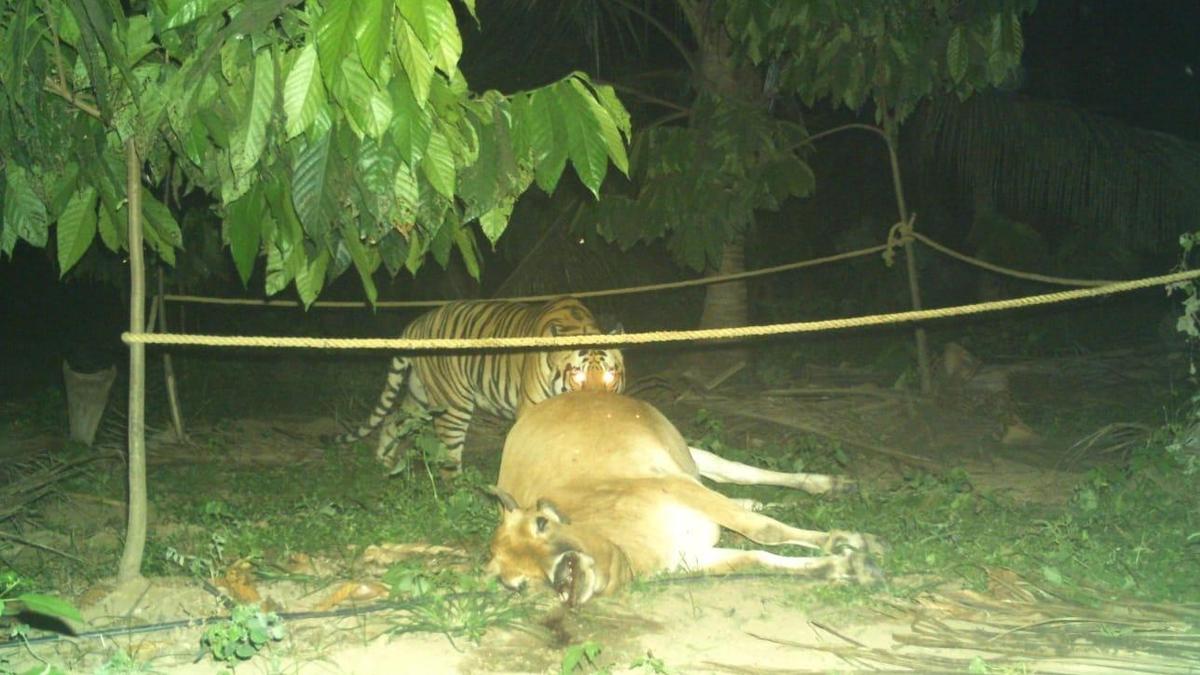
Image used for representation purpose only.
| Photo Credit: Special Arrangement
After eight days of anxious vigilance, residents of the Agency areas in Eluru district heaved a sigh of relief as forest officials confirmed that the tiger which had been roaming near human habitations has safely moved back into the Eco Sensitive Zone of Papikondalu National Park (PNP).
According to information, the tiger’s final pugmarks were found indicating that the tiger had retreated deep into its natural habitat. The tiger moved into the Eco Sensitive Zone from Lankalapalli via Ramanarasapuram in Buttayagudem mandal of the district.
When contacted, Divisional Forest Officer (DFO) Eluru, P. Venkat Sandeep Reddy, said the movement of Tiger is closely monitored using camera traps, which also captured a recent colour photograph of the big cat. It is presently in the ESZ and is moving towards the National Park,” the DFO said.
More than ten enclosed villages are located within the ESZ surrounding Papikondalu National Park. However, he assured that no incidents of cattle lifting or human-wildlife conflict have been reported so far.
The ESZ functions as a buffer or transition zone around National Parks and sanctuaries, acting as a “shock absorber” to reduce biotic pressure on protected habitats. “Usually, the ESZ extends up to 10 kilometres, though it may be smaller if notified.
The tiger’s movement had triggered panic across several villages after it strayed close to human settlements and attacked livestock. The big cat, believed to have crossed into Eluru district from Telangana’s Kavadigundla forest, after killing a calf there. The tiger entered the Nagavaram Mutha Reserve Forest in Eluru district via Pandirimamidigudem on January 21.
On January 22, five cows were killed near Nagulagudem, followed by the killing of two buffaloes in Gurugumilli and Kotanagavaram villages on January 24. The tiger crossed the Allicalva stream on January 25, reached Rayigudem, and killed a buffalo calf before moving through several villages in Koyyalagudem mandal. On January 26 and 27, further livestock attacks were reported before the animal finally entered the forest region.
Published – January 29, 2026 09:51 am IST