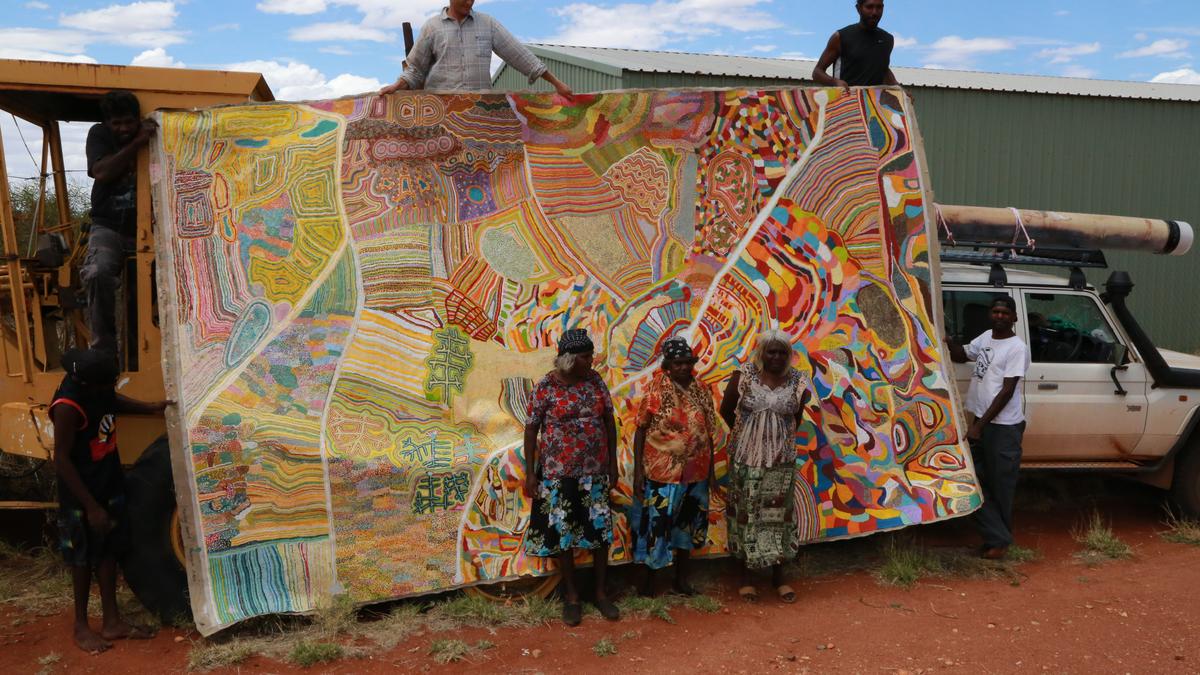
Across the vast deserts of western and central Australia, the land itself tells stories. For thousands of years, the First Nations people — the original custodians of the continent — have carried knowledge, culture, and tradition through song, dance, and art.
Until March 15, 2026, Delhi will become part of that storytelling tradition. The Humayun’s Tomb World Heritage Site Museum is hosting Songlines: Tracking the Seven Sisters, a multi-sensory exhibition jointly organised by the National Museum of Australia (NMA) and the Kiran Nadar Museum of Art (KNMA). It marks the first major NMA exhibition to tour India, a journey that traverses desert landscapes, ancestral lands, and star-lit skies.
Through nearly 300 works, including paintings, sculptures, soundscapes, photography, and multimedia installations, visitors are invited to follow the journey of the Seven Sisters. These ancestral women are pursued by a shape-shifting sorcerer, whose flight carved mountains, waterholes, and constellations into the Australian landscape.
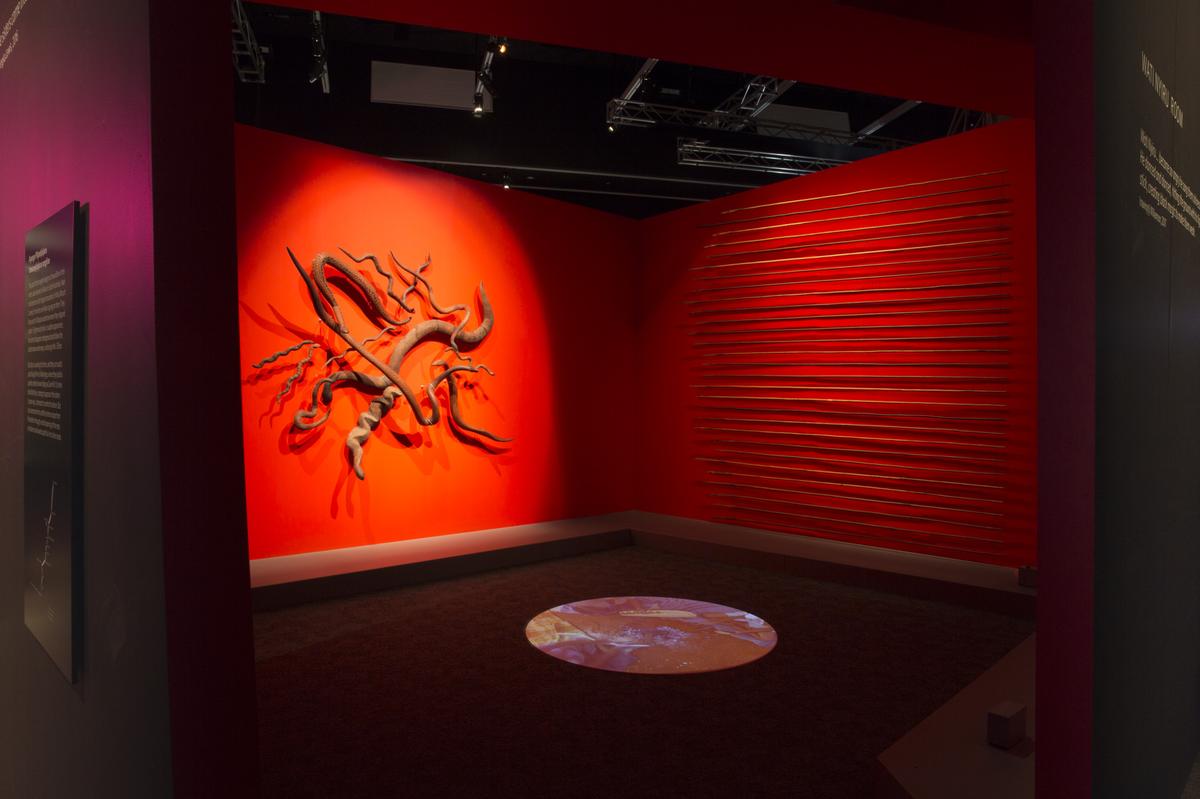
Snakes and spears – George Serras
| Photo Credit:
Special Arrangement
“Songlines are important expressions of culture, capturing rules of life, law, spirituality, and connection,” explains Jilda Andrews, deputy director, First Nations, NMA. “To convey this concept, indigenous artistes and knowledge holders bring together dramatic and visual artforms, song, and dance, making the message dynamic and compelling. Visitors gain insight into worlds vastly different from their own.”
Roobina Karode, director and chief curator at KNMA, adds, “It mirrors the cultural fabric of storytelling, song, dance, and ancestral knowledge woven into the landscape and guided by customary laws, much like our own folk and oral traditions.”
Traversing desert lands
Songlines traces the journeys of the Seven Sisters across three indigenous lands: the APY (Anangu Pitjantjatjara Yankunytjatjara) people in the central deserts, the Ngaanyatjarra people in the West, and the Martu people in the northwest of Australia. Delhi is the exhibition’s fifth international stop, after tours in the United Kingdom, Germany, France, and Finland.
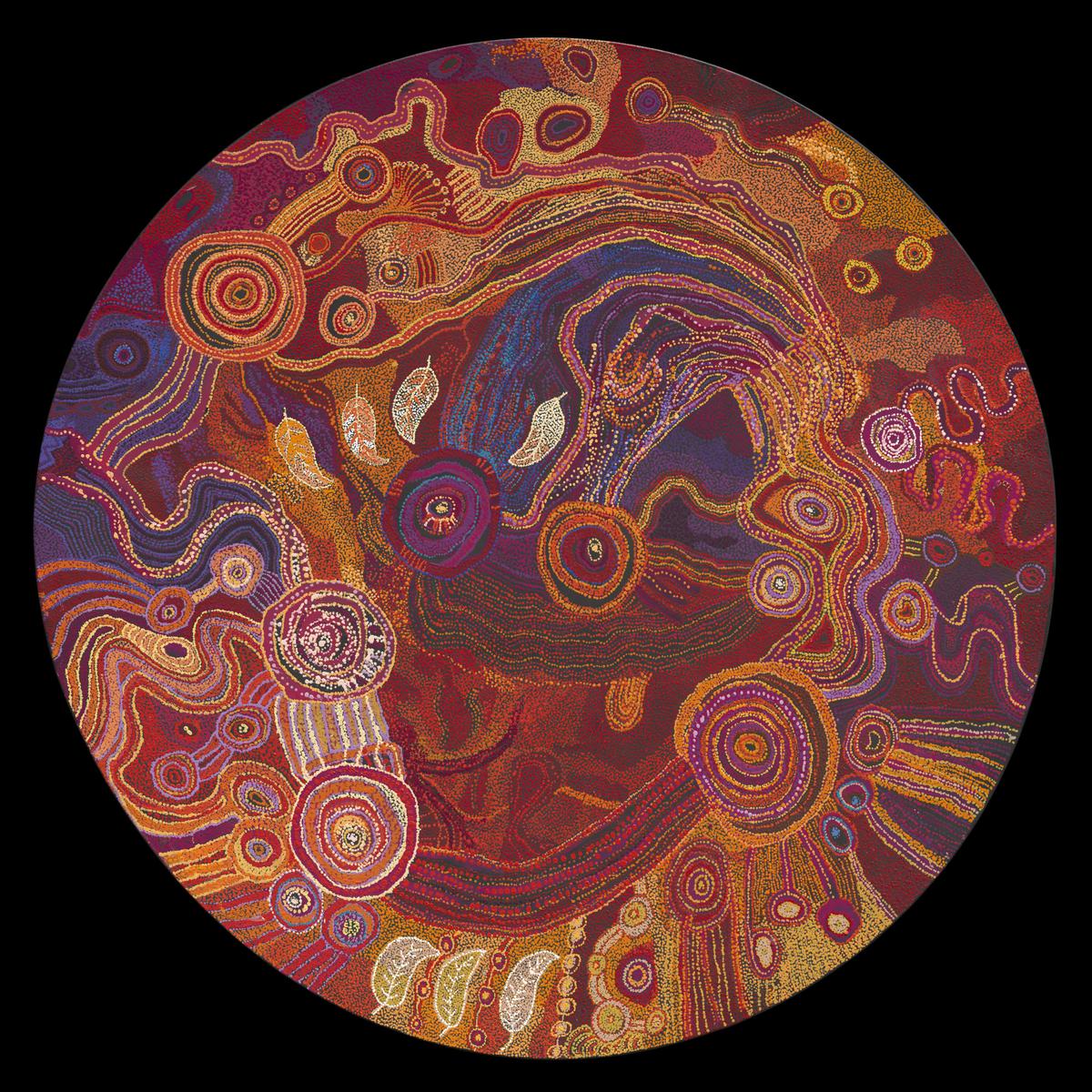
“The Seven Sisters story is essentially an expression of Tjukurrpa,” explains Jilda. “It reveals an interconnected web of relationships that spans this extensive region and illustrates the ways people are embedded within these landscapes.”
The narrative is multi-layered; as individuals gain seniority and experience, new dimensions of complexity and meaning emerge. “In many ways, the exhibition is more than a show for audiences — it is a ceremonial exchange with everyone who enters the space. The preparation, cultural obligations, and care involved are immense,” Jilda adds.
A multisensory experience
Unlike conventional art exhibitions, Songlinesis as much about geography as it is about imagery. The show features the world’s highest-resolution travelling DomeLab, immersing visitors in images of Seven Sisters rock art from the remote Cave Hill site in South Australia. Animated artworks trace the Orion constellation and the Pleiades star cluster, creating a sense of movement across sky and land.
Cultural ambassadors from remote desert communities have travelled to Delhi to perform inma, ceremonial dances that bring the story to life. The combination of painting, sculpture, multimedia, sound, and movement allows visitors unfamiliar with Aboriginal cosmologies to experience the story’s emotional and spiritual resonance.
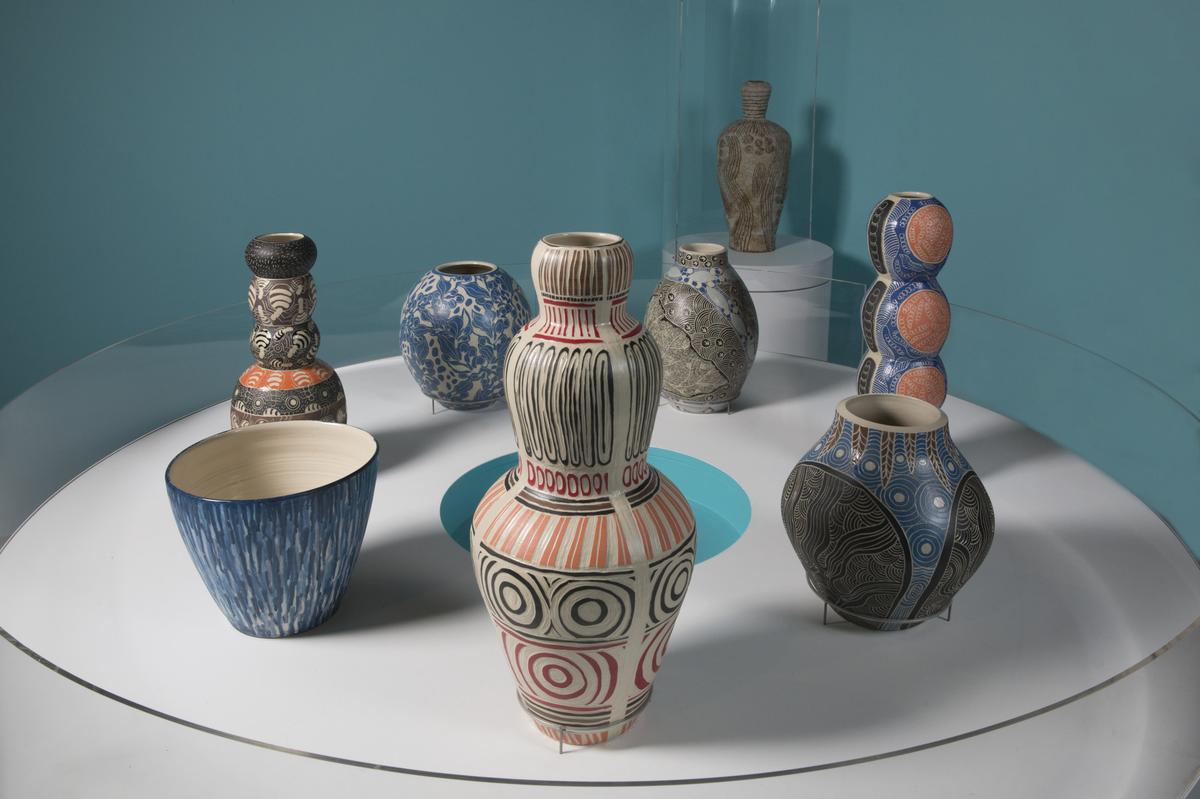
Roobina notes, “Even if visitors aren’t familiar with First Nations cosmologies, they can connect with ancestral wisdom, sacred landscapes, and storytelling traditions.”
“We hope that international audiences will glimpse the dynamism of First Nations Australia,” says Jilda. “Museums today hold the power to cultivate awe and inspiration in young people.”
For KNMA, presenting Songlines is also an opportunity to foster cross-cultural dialogue. “Both India and Australia inherit ancient civilisations grounded in spiritual relationships with the land,” Roobina observes. “This exhibition becomes a bridge, inviting reflection on heritage, continuity, and the power of living histories.”
The exhibition is on view at Humayun World Heritage Site Museum, Nizamuddin, Sunder Nursery, New Delhi, from 10am to 9pm (last entry at 8pm). The museum is closed on Monday and national holidays. The ticket price is ₹50
Published – January 27, 2026 02:07 pm IST