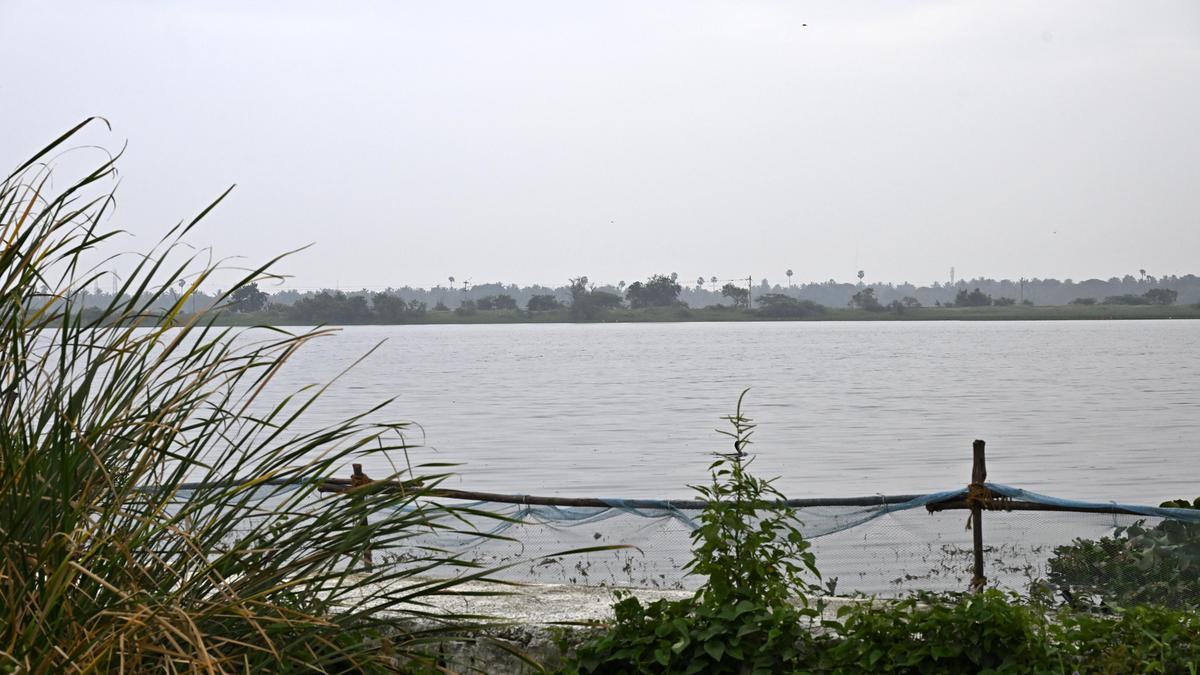
Over 500 species of plants have been recorded in and around Singanallur tank in Coimbatore.
| Photo Credit: File Photo
A study conducted on the floristic diversity of Singanallur tank in Coimbatore has identified 121 more plants in addition to the existing flora, taking the total number of plant species recorded in and around the urban waterbody to 574.
Botanical explorations were conducted in the tank between January 2023 and December 2024 resulting in the documentation of the 121 species, which are additions to the existing flora of 453 species.
The study ‘Additions to the Flora of Singanallur Lake, An Urban Wetland From Coimbatore, Tamil Nadu, India’ authored by B. Karthik, C. Kunhikannan, Vinny R. Peter and L. Joseph Reginald was published in the journal Indian Forester.

Three species recorded during the study were categorised as ‘threatened’ plants by the International Union for Conservation of Nature (IUCN) namely, Hyophorbe lagenicaulis as “Critically Endangered”, Gossypium hirsutum as “Vulnerable” and Reutealis trisperma as “Near Threatened”.
Of the 121 plants documented additionally, three are endemic species, namely Dicliptera cuneata, Viscum subracemosum and Cordia diffusa or Kovai Manjack.
Endemic to Karnataka, Kerala and Tamil Nadu, Dicliptera cuneata was observed with a population of about 200 plants under the shades tamarind trees along the eastern bund of the tank, which was declared as an ‘Urban Biodiversity Conservation Zone’ by Coimbatore Corporation in 2017.
Viscum subracemosum, a hemiparasitic epiphyte endemic to Karnataka and Tamil Nadu was observed with 10 plants on a Pongamia pinnata tree on the western bund.

A total of 12 matured plants of Kovai Manjack, a threatened plant and steno-endemic to Coimbatore, were recorded along the bunds on the tank.
As many as 95 (78%) out of the 121 species documented in the study were medicinal plants, followed by edible with 26 species, ornamental with 14 species, fodder with 12 species and timber with three species.
In terms of aquatic flora, the tank supported three species, including the common water hyacinth, which are known to proliferate in polluted water, indicating the entry of sewage. The study observed that excessive commercial fishing and deliberate maintenance of high water levels for fishing purposes contribute to the decline in aquatic plant diversity.
According to the study, unscientific clearance of natural vegetation using earth movers and setting of fires along the bunds were among significant threats observed. The cleared areas formed conducive conditions for the proliferation of weeds, including parthenium, which have have dominated and replaced the native flora, resulting in substantial changes in the ecological dynamics of the lake bund.
Published – March 05, 2026 07:40 pm IST